Safari Vehicle Types Explained: What You’ll Actually Ride In (The Complete Guide)
You’ve probably already pictured yourself on safari, camera in hand, scanning the horizon for lions and elephants. What you likely haven’t pictured is what you’ll actually be sitting in while you do it, and that detail changes almost everything about the trip. In this guide, we’ll break down every major safari vehicle type in Tanzania so you know exactly what to expect before you book.
Key Takeaways
- Safari vehicles fall into a few core categories, including open-sided 4x4s, pop-top Land Cruisers, and closed-roof minivans, each suited to different terrains and travel styles.
- Open-sided vehicles offer the best visibility and photography angles but expose riders to dust, sun, and weather.
- Pop-top roofs allow travelers to stand and photograph wildlife through an open hatch while still having walls for shade and storage.
- Closed-roof minivans are more common in budget East African safaris and are typically less ideal for uninterrupted wildlife viewing.
- Vehicle type often depends on the region and park regulations, since some reserves require closed vehicles or limit off-road driving.
- Seating capacity and window height directly affect photo quality, so travelers prioritizing photography should confirm vehicle specs before booking.
- Asking a tour operator about vehicle type in advance helps set realistic expectations for comfort, visibility, and group size.
What Are Safari Vehicles?
A safari vehicle is a specially modified 4×4 or truck designed for off-road wildlife viewing, typically featuring raised seating, open or retractable sides, and durable suspension for rough terrain. Unlike a standard car, it’s built to handle rutted tracks, seasonal mud, and river crossings while keeping passengers at a height that gives them a clear line of sight over tall grass. That combination of ruggedness and visibility is what separates a true safari vehicle from ordinary transportation.
Most safari vehicles are built on Toyota Land Cruiser or Land Rover Defender chassis, both prized for their reliability in remote bush conditions. First, the frame is stripped down and reinforced. Second, the roof is modified into a fixed hardtop, a pop-top hatch, or removed entirely along the sides. Third, tiered bench seating is added so every passenger has an unobstructed view, not just the people up front.
Tour companies in destinations like the Serengeti National Park run entire fleets of these purpose-built vehicles, because a standard rental car simply can’t cross a dry riverbed or navigate a rutted track after seasonal rain. For a broader sense of how these vehicles fit into a full itinerary, our Tanzania safari experiences page walks through what a typical multi-day trip looks like from arrival to departure.
How a Safari Vehicle Differs From a Regular Car
A regular car prioritizes comfort, fuel efficiency, and paved-road handling. A safari vehicle prioritizes ground clearance, visibility, and durability over thousands of kilometers of unpaved track. Ground clearance on a converted Land Cruiser typically exceeds 20 centimeters, letting it clear rocks and ruts that would strand a sedan. Seating height is raised so guests can see over shoulder-high grass, something no ordinary car is designed to do. As such, the two vehicle categories aren’t really comparable — they’re built for entirely different jobs.
Why the Type of Safari Vehicle Matters
The vehicle type you ride in directly shapes your comfort, visibility, safety, and photo quality throughout the trip. This one detail influences nearly every hour you spend on game drives, so it deserves attention before you book rather than after you arrive. For example, a family booking through our family safaris in Tanzania package has very different vehicle needs than a couple on a honeymoon safari who might prefer a private, open-sided vehicle for unobstructed photos.
At the same time, vehicle type affects safety and animal behavior. Wild animals in well-visited parks are generally habituated to vehicle shapes, meaning predators like lions often walk within meters of an open-sided Land Cruiser without reacting to it. That habituation depends on the animals recognizing the vehicle’s silhouette, which is one reason guides rarely leave designated tracks or let guests exit the vehicle near wildlife.
Moreover, vehicle type determines photography quality more than almost any other trip variable. Window height, roof design, and seating arrangement all affect your camera angle, and a few centimeters of extra window height can be the difference between a clean shot and a blocked one. Tanzania’s tourism sector welcomed a record 2,294,495 international visitors in 2025, up 7.1% year-over-year, with leisure travel accounting for 86.8% of all visits — Source: Tanzania International Visitors’ Exit Survey, 2025. That growth means more travelers than ever are choosing between vehicle types for the first time, often without knowing what separates one from another.
Plus, comfort matters over the course of a multi-day trip. Game drives in parks like Tarangire National Park can run four to six hours at a stretch, and a poorly suited vehicle turns that into an endurance test rather than an adventure. That being said, “better” isn’t universal — the right vehicle depends on your priorities, budget, and the specific parks on your itinerary.
In addition, vehicle type shapes group dynamics on shared trips. A tiered-seating pop-top vehicle gives every row a reasonably fair view, while a standard minivan concentrates the best sightlines in the front seats. This can matter more than people expect on a multi-day trip, since guests who feel stuck with a poor view for several consecutive days often enjoy the experience less, regardless of how good the wildlife sightings themselves were. Operators who are transparent about seating rotation, or who default to smaller private vehicles for luxury Tanzania safaris, tend to avoid this problem entirely.
What Are the Main Types of Safari Vehicles?
The main safari vehicle types are open-sided 4x4s, pop-top roof-hatch vehicles, closed-roof minivans, converted safari trucks, and specialty vehicles like boats and mokoro canoes used on water-based safaris. Each type trades off visibility, weather protection, and cost differently, and most travelers will experience more than one type across a single trip. Let’s explore each category in detail.
What Is an Open-Sided Safari Vehicle and When Is It Used?
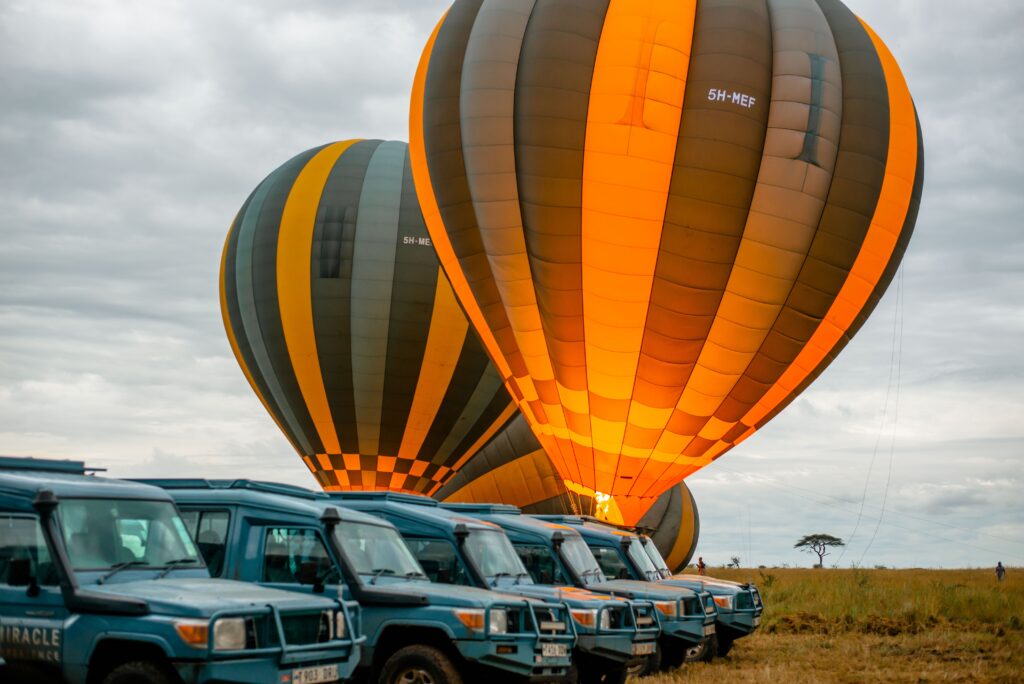
An open-sided safari vehicle is a 4×4 with no side windows or doors, offering unobstructed views and photography angles but limited protection from sun, dust, and rain. Picture a Land Cruiser with tiered bench seats, a canvas or metal roof for shade, and nothing but open air between you and the bush. You can lean out, shoot photos at any angle, and hear the environment around you without glass in the way.
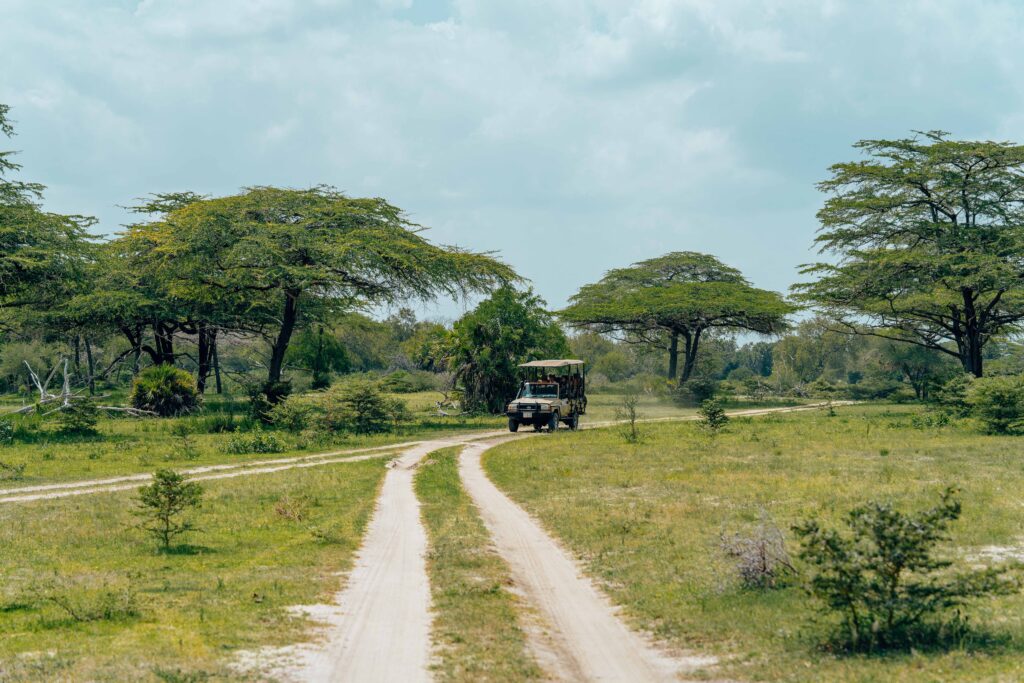
This type is standard in private conservancies and reserves bordering national parks, including many properties near Ngorongoro Crater, where off-road driving is often permitted outside the core protected zone. For example, a guide spotting a leopard in a tree can pull the vehicle close and let every passenger get a clear, unobstructed shot, something that’s much harder from behind a window. By doing this, open-sided vehicles consistently deliver the best wildlife photography results of any vehicle category.
The trade-off is exposure. Dust coats everything during the dry season, temperatures swing sharply between dawn game drives and midday sun, and sudden rain showers mean packing a rain jacket even when the forecast looks clear. This luxury Tanzania safari approach often pairs open-sided vehicles with hot-water bottles, blankets, and covered storage boxes to offset the discomfort, which is a detail worth asking about when comparing operators.
What Is a Pop-Top Safari Vehicle and Why Do Operators Use Them?
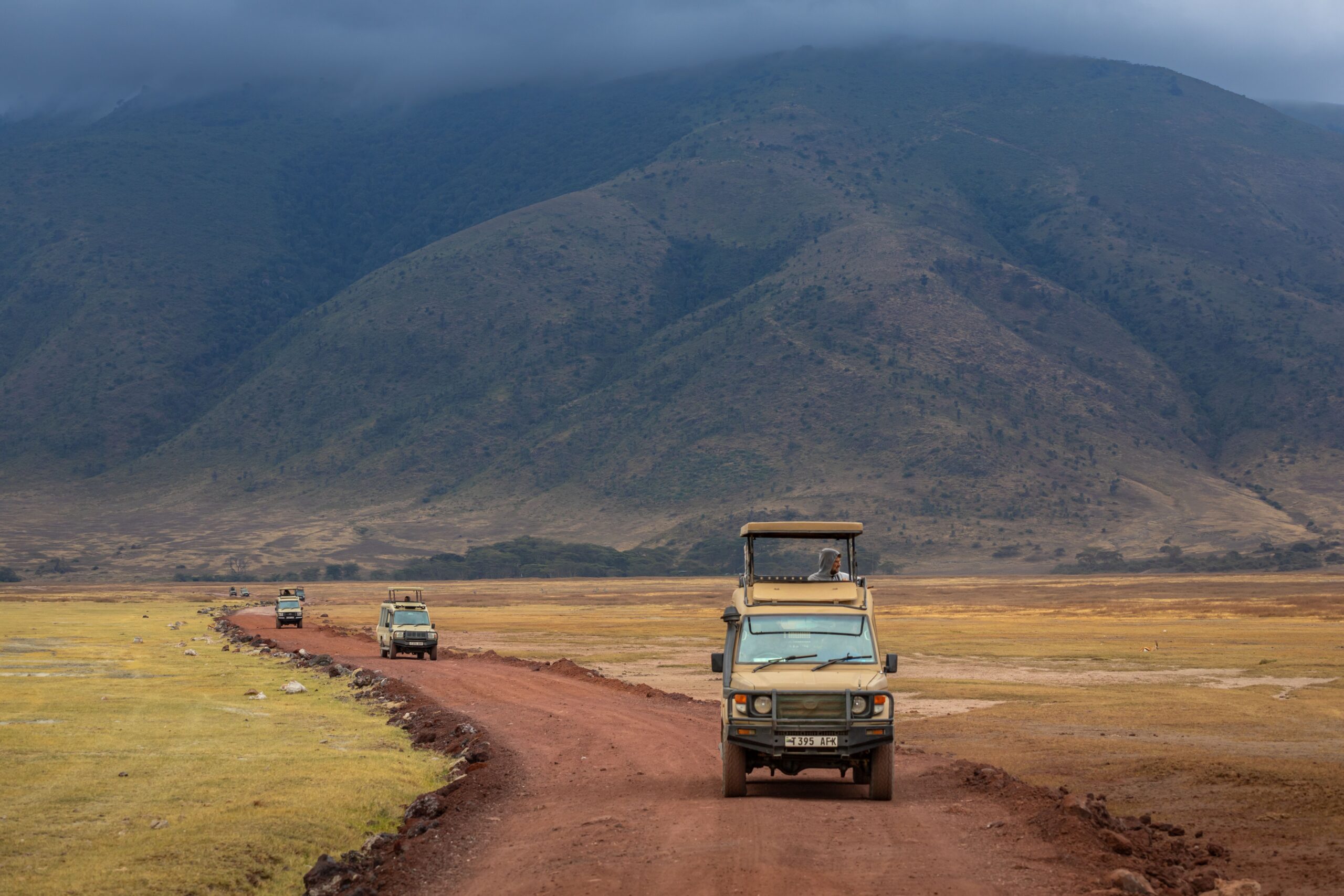
A pop-top safari vehicle involves a roof hatch that lifts up, letting passengers stand and view wildlife at eye level while retaining side walls for shade and storage. This design gives you the best of both worlds: closed sides for weather protection and dust control, plus an open roof for unrestricted 360-degree viewing when you want it. You simply stand up, and the hatch height clears your head and shoulders.
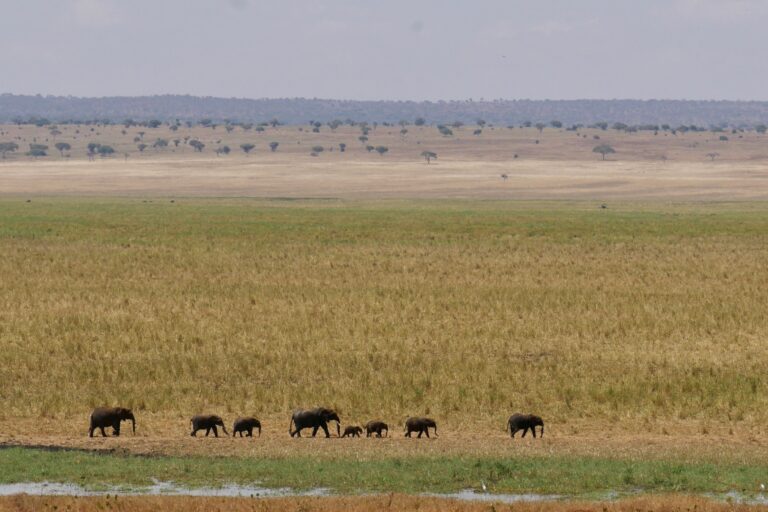
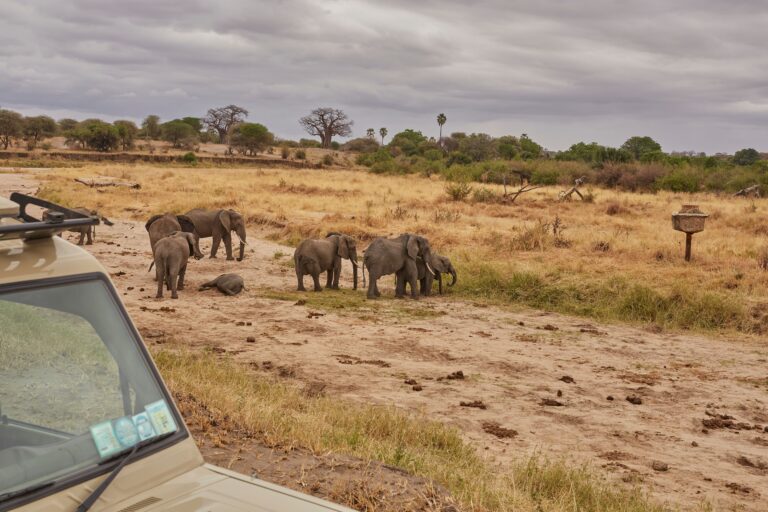
Operators favor this design because it balances comfort with visibility across long game drives. First, the closed sides keep dust and wind out during transit between sightings. Second, the pop-top opens instantly the moment something worth photographing appears. Third, the vehicle retains storage compartments and charging ports that an open-sided design typically can’t accommodate. This is the standard configuration used across much of Tarangire National Park, where elephant herds gather near the river and long viewing sessions are common.
For example, a mid-range safari operator running daily circuits through Lake Manyara National Park will typically use pop-top Land Cruisers because they hold up well to repeated daily use while still giving every guest a standing view during sightings. This mid-range Tanzania safari style has become the most common vehicle type across East Africa’s safari industry as a whole.
Are Closed-Roof Minivans Used on Safari, and Are They Worth It?
Yes, closed-roof minivans are used on some East African safaris, most commonly on budget-tier packages, though they generally offer a less immersive wildlife-viewing experience than open or pop-top vehicles. These vans resemble standard passenger minivans with tinted windows that slide open partway, rather than a purpose-built safari conversion. They’re common on Kenya’s more heavily trafficked routes and occasionally appear on entry-level Tanzania itineraries.
The appeal is straightforward: lower operating costs translate into lower prices for travelers. A budget Tanzania safari built around minivan transport can shave a meaningful amount off the total trip cost compared to a dedicated Land Cruiser convoy. However, the trade-offs are real. Windows sit lower and smaller than on a converted 4×4, seating is arranged in rows rather than tiers, and photography angles are noticeably more restricted.
As such, we’d recommend minivans mainly for travelers prioritizing budget over photography, or those combining a short safari with other travel. If wildlife photography or an immersive bush experience is your main goal, a pop-top or open-sided 4×4 is worth the extra cost. That’s a trade-off worth discussing directly with your operator before booking; you can contact our team if you want a side-by-side comparison of vehicle options for a specific itinerary.
What About Converted Trucks and Extended-Roof Vehicles?
Converted safari trucks are larger vehicles, often seating eight to twelve passengers, used mainly for group tours and overland expeditions rather than private game drives. These trucks trade intimacy for capacity, and they’re most common on budget group tours that combine several parks into one long overland route. Extended-roof 4x4s, by contrast, add a wider canopy over a standard Land Cruiser or Land Rover frame specifically to provide shade during long midday drives in hot, exposed parks.
This matters most in parks with sparse tree cover and intense midday heat, such as sections of Ruaha National Park, where an extended roof genuinely changes passenger comfort over a multi-hour drive. Operators running longer circuits through Nyerere National Park sometimes use these extended-roof configurations for the same reason, since drives there can stretch across wide, exposed floodplains.
Converted trucks also tend to appear on itineraries that combine wildlife parks with mountain destinations, since the same overland operators often run transfers toward Kilimanjaro National Park as part of a broader circuit. For travelers on a tighter budget, group trucks remain one of the most cost-effective ways to see multiple parks in a single trip, provided you’re comfortable trading some viewing flexibility for a lower price per person.
What About Specialty Vehicles for Water-Based Safaris?
Some safari regions rely on boats, motorized skiffs, or traditional mokoro canoes instead of, or alongside, road vehicles, particularly in wetland and river-delta ecosystems. These aren’t a replacement for 4×4 game drives so much as a complementary way to see wildlife from the water, where hippos, crocodiles, and waterbirds are easiest to observe up close. Boat safaris are especially relevant on itineraries that include river systems near Nyerere National Park, Tanzania’s largest protected area and home to extensive river frontage along the Rufiji.
For example, a guide piloting a small boat along a riverbank can approach a pod of hippos far more quietly than any road vehicle could manage from the bank. This combination of road and water transport is increasingly common on itineraries that mix classic savanna game drives with a slower, water-based day, and it’s worth asking your operator whether it’s included before you finalize your route.
Comparing Safari Vehicle Types Side by Side
The table below summarizes how the main vehicle types compare across the factors that matter most to travelers: visibility, weather protection, typical use case, and relative cost.
| Vehicle Type | Visibility | Weather Protection | Typical Use Case | Relative Cost |
|---|---|---|---|---|
| Open-sided 4×4 | Excellent, unobstructed | Low — exposed to sun, dust, rain | Private conservancies, photography-focused trips | Higher |
| Pop-top Land Cruiser/Defender | Very good when hatch is open | Good — closed sides, open roof on demand | Standard national park game drives | Moderate to higher |
| Closed-roof minivan | Limited, partial windows | Good — fully enclosed | Budget group tours, multi-country itineraries | Lower |
| Converted truck (group) | Moderate, shared sightlines | Good, varies by design | Overland group tours, large groups | Lower per person |
| Extended-roof 4×4 | Good | Very good — added shade | Hot, sparsely shaded parks, long drives | Moderate |
| Boat / mokoro | Excellent for water wildlife | Low to moderate | River deltas, wetland ecosystems | Varies, often add-on |
Bold takeaway: no single vehicle type is objectively “best” — the right choice depends on which parks you’re visiting, your budget, and how much you prioritize photography over cost.
How Do Safari Vehicles Differ Between East Africa and Southern Africa?
Safari vehicles in East Africa are more commonly pop-top or closed vehicles due to park regulations, while Southern African reserves more frequently use fully open-sided 4x4s, especially in private concessions. This regional difference comes down largely to park rules rather than operator preference. Many East African national parks, including large sections of the Serengeti, restrict off-road driving to protect fragile grassland, which reduces the practical advantage of a fully open vehicle and makes pop-top designs the more common standard.
Southern African private reserves, by contrast, often permit controlled off-road driving and night drives, conditions under which open-sided vehicles with spotlights genuinely shine. First, off-road access lets guides position the vehicle for optimal photography. Second, private concessions typically limit visitor numbers, reducing the crowding that can make closed vehicles feel more necessary elsewhere. Third, the terrain in many Southern African reserves is drier and dustier, which some operators offset with higher vehicle standards rather than closed windows.
That said, this isn’t a strict rule. Private conservancies bordering parks like Arusha National Park and Lake Manyara National Park increasingly offer open-sided vehicle options even within East Africa, so it’s always worth confirming vehicle type directly with your specific operator rather than assuming based on region alone.
Vehicle fleet standards also vary by park popularity and infrastructure investment. Parks that draw heavier visitor volume, including the Serengeti’s central circuit, tend to have newer, better-maintained fleets simply because operators can spread vehicle costs across more bookings. Quieter destinations, like Gombe National Park or Mikumi National Park, may have smaller fleets, which isn’t a downside so much as a trade-off for a less crowded experience. Travelers heading to quieter parks should simply confirm vehicle availability and condition slightly earlier in the planning process.
Which Safari Vehicle Type Is Best for Wildlife Photography?
Open-sided 4x4s and pop-top vehicles with the hatch open are best for wildlife photography because they eliminate glass reflections and allow shooting at multiple angles simultaneously. Glass windows introduce reflections, tinting, and restricted angles that noticeably degrade photo quality, especially in low, golden-hour light. For example, a photographer trying to capture a lioness at sunrise through a minivan’s partially open window will lose sharpness and color accuracy compared to shooting from an open vehicle in the same light.
Seat position matters almost as much as vehicle type. Front-row and aisle seats in a pop-top vehicle generally offer better angles than middle-row window seats, since middle rows often have obstructed sightlines when other passengers lean toward the same side. As such, if photography is your priority, it’s worth requesting a specific seat, not just a specific vehicle type, when you book.
Beyond the vehicle itself, guide skill plays a major role in photography outcomes. A guide who understands light, animal behavior, and vehicle positioning can turn even a modest pop-top vehicle into a strong photography platform by approaching sightings from the right angle and distance. That’s one more reason vehicle type should be one factor among several when you’re comparing Tanzania safari experiences, rather than the only one.
Lighting conditions interact with vehicle type in ways many first-time travelers don’t anticipate. Early morning and late afternoon drives produce the richest color and softest shadows, and these are exactly the hours when standing through an open pop-top hatch matters most. For example, a golden-hour sighting of elephants at a waterhole in Tarangire will look dramatically better shot from a raised, open position than through a tinted window, regardless of camera quality. This is one of the clearest, most concrete ways vehicle type translates directly into the photos you actually bring home.
Are Safari Vehicles Safe to Ride Near Wild Animals?
Yes, purpose-built safari vehicles are safe to ride in near wild animals when guests remain seated and follow their guide’s instructions, because most animals in visited parks treat the vehicle as a single, non-threatening shape rather than as individual humans. This habituation effect is well documented across East African parks and is the entire basis for how close guided vehicles can safely approach lions, elephants, and other large wildlife. Standing up unexpectedly, exiting the vehicle, or making loud noises breaks that perception and increases risk, which is why guides give clear instructions before every close sighting.
For example, guides operating in Ngorongoro Crater routinely park within a short distance of resting lions, an approach that would be dangerous on foot but is low-risk from within a vehicle the animals recognize as neutral. That said, safety standards vary by operator, so it’s reasonable to ask any company you’re considering about their guide training, vehicle maintenance, and radio communication protocols before booking.
How Many People Typically Ride in a Safari Vehicle?
Most private safari vehicles seat between four and seven guests, while shared group vehicles and overland trucks can carry eight or more passengers per drive. Seating capacity directly affects your experience, since fewer passengers per vehicle generally means better window or aisle access and more flexibility for the guide to reposition for a good sighting. A private vehicle booked exclusively for one family, similar to what’s arranged through our family safaris in Tanzania packages, gives every seat a strong view, whereas a shared vehicle with unrelated travelers means compromising on stops and pacing.
Group size also affects cost. A shared vehicle splits the operator’s costs across more travelers, which is one reason budget Tanzania safaris often use larger shared vehicles rather than private ones. By contrast, couples booking a private vehicle for a honeymoon safari typically pay a premium specifically for that exclusivity and flexibility.
Choosing and Booking the Right Safari Vehicle
Once you understand the main vehicle categories, the next step is matching one to your specific trip rather than picking based on price alone. A private vehicle with a photography-friendly layout suits a couple prioritizing images, while a family with young children may prioritize a stable, enclosed pop-top with easy in-and-out access instead. Similarly, a group of friends splitting costs across a longer circuit through multiple parks, including Mikumi National Park or the Udzungwa Mountains, may find a shared vehicle perfectly adequate.
Questions to Ask a Tour Operator About Their Vehicles
Before booking, ask your operator directly what type of vehicle you’ll be riding in, whether it’s shared or private, and how many total seats it has. First, confirm whether the vehicle is open-sided, pop-top, or closed-roof, since operator marketing photos don’t always represent the actual fleet you’ll ride in. Second, ask how many other travelers will share the vehicle, since a “private safari” label sometimes still means a shared vehicle unless explicitly stated otherwise. Third, ask about window height and seat configuration if photography matters to you.
It’s also worth asking about age and maintenance of the fleet, since older vehicles in remote parks can mean more frequent mechanical delays. A reliable operator should be able to answer these questions clearly and specifically. If you’d like a direct comparison for your own itinerary, our team is happy to walk through vehicle options when you get in touch about planning your trip.
What to Pack for Different Vehicle Types
Packing changes depending on which vehicle type you’ll be using most. For open-sided vehicles, pack a lightweight scarf or buff for dust, a warm layer for early morning drives, and a rain jacket regardless of season. For pop-top vehicles, a smaller daypack works well since storage compartments are more limited than in fully open trucks. For closed-roof minivans, motion sickness remedies are worth packing, since window-based views on uneven roads can be harder on your stomach than an open vehicle’s fresh air.
Camera gear deserves special attention regardless of vehicle type. A dust-resistant camera bag, a rain cover, and a beanbag or window mount for stabilizing shots will serve you well across nearly every vehicle category described in this guide. Confirming your vehicle type in advance, ideally when you review your final itinerary for a trip to somewhere like Zanzibar and mainland Tanzania combined, lets you pack precisely rather than guessing.
Seasonal Considerations for Safari Vehicles
Vehicle experience shifts noticeably with the seasons, and it’s worth factoring this in alongside vehicle type itself. During Tanzania’s dry season, open-sided vehicles mean more dust exposure but also easier off-road access on firmer ground. During the wetter months, closed and pop-top vehicles handle sudden downpours far more gracefully, though muddy tracks can occasionally slow progress between sightings regardless of vehicle type. Average visitor spending in Tanzania reached USD 289 per person per night in 2025, up 19% from the previous year, reflecting a broader shift toward higher-value, better-equipped safari experiences — Source: Tanzania International Visitors’ Exit Survey, 2025. That trend has pushed more operators toward well-maintained pop-top fleets as a middle-ground standard that performs reasonably well across both seasons.
What’s Next: Planning Your Own Safari Around the Right Vehicle
Now that you understand the main safari vehicle types, the next step is applying that knowledge to your own trip planning. Start by identifying which parks are on your itinerary, since regulations in places like the Serengeti differ from private conservancies elsewhere. Then decide how much weight to give photography versus budget versus group size, since those three factors will point you toward different vehicle types more reliably than price alone.
If your trip centers on the Great Migration, timing matters just as much as vehicle type, since river-crossing season draws larger crowds and busier tracks; our guide to the best time to see the Great Migration can help you plan around that. And if this is your first time putting a safari together entirely, our Tanzania safari guide for first-time travelers covers the broader planning questions this article doesn’t, from visas to vaccinations to choosing a season.
Finally, don’t hesitate to ask questions before you commit. A good operator will tell you plainly whether you’ll be riding in an open-sided Land Cruiser, a pop-top vehicle, or a shared minivan, and will adjust recommendations based on what matters most to you. Reach out through our contact page if you’d like help matching a vehicle type to your specific park list and travel dates.
Conclusion
The vehicle you ride in on safari isn’t a minor logistical detail; it shapes your comfort, your safety, and the quality of every photo you bring home. Open-sided 4x4s deliver the best visibility at the cost of weather exposure, pop-top vehicles balance protection with standing views, minivans keep costs down at the expense of sightlines, and specialty options like boats add an entirely different perspective on parks with rivers and wetlands. Now that you know the difference between them, you’re equipped to ask the right questions, compare operators with confidence, and choose the setup that actually fits the trip you’re picturing. Your dream safari starts with getting these details right long before you ever set foot in the vehicle.