
Gombe National Park: Chimpanzee Trekking in Tanzania
Tanzania's smallest national park — wild chimpanzees, forested hills above Lake Tanganyika, and the landscape where Jane Goodall's pioneering primate research began in 1960.
Gombe National Park at a Glance
| Location | Kigoma Region, western Tanzania |
|---|---|
| Nearest town | Kigoma |
| Area | Approximately 52 km² |
| Main attraction | Wild chimpanzee tracking |
| Major landmark | Lake Tanganyika |
| Famous association | Jane Goodall's chimpanzee research |
| Main access | Boat from Kigoma |
| Main safari style | Guided walking and primate tracking |
| Other activities | Forest walks, birdwatching, hiking and swimming |
| Best-known wildlife | Chimpanzees, baboons, red colobus, red-tailed and blue monkeys |
Where Is Gombe National Park?
Gombe National Park is on the eastern shore of Lake Tanganyika in western Tanzania, approximately 16 kilometres north of Kigoma town. The park lies within Kigoma Region and is part of Tanzania's Western Safari Circuit.
Its position beside Lake Tanganyika is important to the safari experience. Gombe is a narrow, mountainous forest landscape where steep valleys descend towards the lake. The terrain rises from the lakeshore into forested hills, so chimpanzee trekking can involve considerable walking on uneven and sometimes steep trails.
The park's relative isolation is also one of its defining characteristics. There are no conventional road safaris through Gombe. Travellers normally reach the park by boat from Kigoma, making the journey itself part of the experience.
Why Visit Gombe National Park?
Gombe appeals to a different type of safari traveller. It is not primarily about ticking off a long list of large mammals. Instead, the focus is on observing chimpanzees in their natural forest environment and understanding the ecosystem around them.
1. Chimpanzee Trekking
Chimpanzee trekking is the main reason travellers visit Gombe. Guided walks take visitors into the forest to search for habituated chimpanzee communities. Unlike wildlife viewing from a safari vehicle, tracking chimps requires following forest trails and responding to where the animals are located that day.
2. Follow the Legacy of Jane Goodall
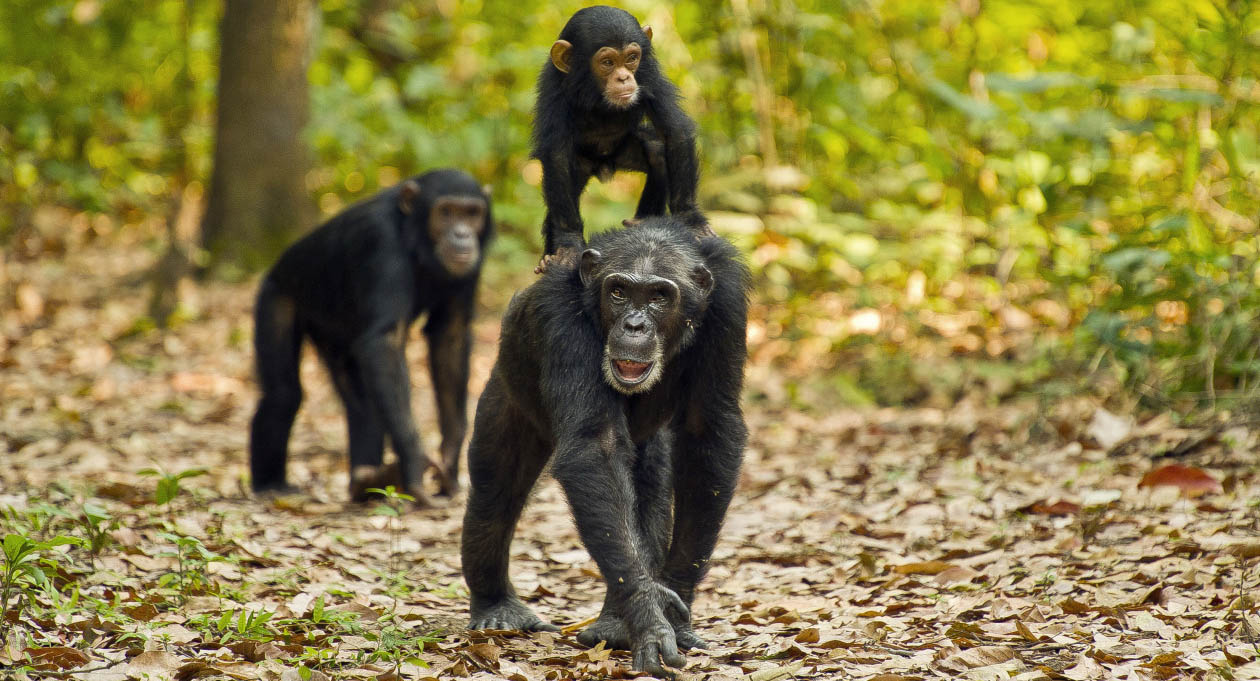
Gombe occupies an important place in the history of primatology. Jane Goodall began her pioneering field research on chimpanzees in Gombe in 1960. Her observations helped demonstrate that chimpanzees use tools, display complex social relationships and have individual behavioural characteristics. Her long-term work became one of the world's most influential studies of a wild animal population.
For visitors, this history adds scientific context to chimpanzee trekking. You are not simply visiting a forest containing chimpanzees; you are entering a landscape that has been central to decades of research into wild primate behaviour.
3. Explore Lake Tanganyika
Gombe's location on Lake Tanganyika gives the destination a second dimension beyond forest wildlife. Depending on the itinerary and local conditions, travellers can combine chimpanzee tracking with activities such as swimming, hiking and exploring the lakeshore. The combination of forested mountains and the lake makes Gombe particularly different from Tanzania's open savannah parks.
4. See Other Primates and Forest Wildlife
Chimpanzees are the headline attraction, but Gombe supports several other primate species. Visitors may encounter:
- Olive baboons
- Red colobus monkeys
- Red-tailed monkeys
- Blue monkeys
- Bushbuck
- Bushpigs
- Small forest mammals
- Numerous forest and lakeshore bird species
The park is therefore particularly suited to travellers interested in primates, birding and forest ecosystems rather than conventional large-game viewing.
Chimpanzee Trekking in Gombe: What to Expect
A typical chimpanzee tracking experience starts with a guided walk into the forest. The guides and rangers use knowledge of chimpanzee movements and recent sightings to determine where to begin the search.
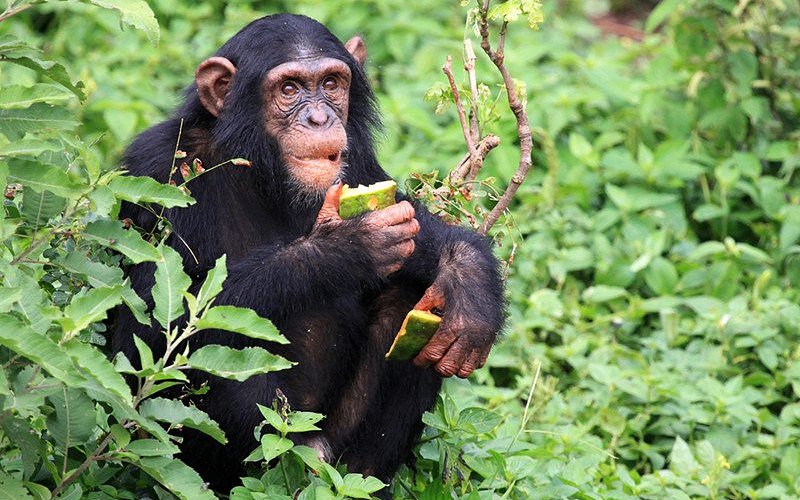
Once chimpanzees are located, visitors observe them from an appropriate distance while following park regulations designed to protect both people and wildlife.
The experience can vary considerably from one day to another. Some groups may be relatively close to the starting point, while others may require a longer hike through steep forest terrain. This makes Gombe better suited to travellers who enjoy active wildlife experiences rather than those looking for a predictable, vehicle-based safari.
Best Time to Visit Gombe National Park
The dry season from around July to October is generally regarded as one of the best periods for chimpanzee trekking. During this period, forest trails are typically easier to navigate and chimpanzees are often found on the lower slopes, making tracking more manageable.
However, Gombe can be visited outside the peak dry-season months.
| Period | What to Expect |
|---|---|
| July – October | The preferred period for travellers prioritising trekking conditions and chimpanzee tracking. Generally drier weather, with firmer hiking trails. |
| November – April | A wetter period, with higher humidity and rainfall. Forest conditions can be more challenging, but the landscape remains green and wildlife experiences can still be rewarding. |
| May – June | A useful balance between the wetter and drier periods, although weather conditions can vary. |
If chimpanzee trekking is the main purpose of your trip, we recommend planning around the conditions and allowing enough time for more than one tracking opportunity rather than choosing dates solely around the calendar.
How to Get to Gombe National Park
Getting to Gombe requires more planning than visiting Tanzania's northern safari parks.
Step 1: Travel to Kigoma
Most Gombe itineraries begin in Kigoma, the main gateway to the park. Travellers can connect to Kigoma by domestic flight, with onward arrangements made for the boat transfer.
Step 2: Take a Boat to Gombe
From Kigoma, the journey continues by boat across Lake Tanganyika. The exact travel time depends on the type of boat and conditions on the lake. Public lake transport can take considerably longer, while a private motorboat can provide a faster transfer. Current travel information indicates that private motorboats can make the journey in less than an hour, while slower lake taxis can take several hours.
This boat transfer is an important part of planning a Gombe safari and should be arranged as part of the overall itinerary.
Gombe National Park Entrance Fees
Gombe's park fees are set by the Tanzania National Parks Authority (TANAPA) and can change with new tariff schedules.
At the time of writing, TANAPA lists the Gombe Stream National Park conservation entry fee for non-residents at US$94.40, with separate rates for EAC citizens and residents.
A Gombe safari budget should not be based on the park entry fee alone. The total trip cost may also include:
- Chimpanzee tracking or activity fees
- Guide and ranger services
- Boat transfers
- Accommodation
- Meals
- Domestic flights
- Ground transfers
- Other activities
For this reason, travellers should request a current, itemised quotation rather than relying on a generic "Gombe safari price." Our budget, mid-range and luxury safari pages give a sense of how accommodation level affects overall trip cost, though a remote destination like Gombe should always be quoted individually.
Accommodation in and Around Gombe
Accommodation around Gombe is more limited than in Tanzania's major safari circuits.
Options can include lodge-style accommodation, park-managed facilities and accommodation in Kigoma. Because Gombe is remote and visitor numbers are comparatively low, availability should be confirmed before travelling.
Some travellers also choose to stay in Kigoma and arrange boat excursions to Gombe, while multi-day itineraries can include overnight accommodation closer to or inside the park. Recent traveller discussions highlight the importance of confirming accommodation and boat arrangements in advance.
For a comfortable safari, Serengeti Trails Safaris can structure the itinerary around your preferred accommodation level and the number of days available.
How Many Days Do You Need for Gombe?
For a dedicated Gombe safari, 2–3 days is a practical starting point.
A two-day itinerary can focus on travel to Gombe and chimpanzee trekking, while a three-day trip gives more flexibility for tracking, forest walks and Lake Tanganyika experiences.
Travellers coming from another part of Tanzania should consider additional time for flights and connections to Kigoma.
A longer Western Tanzania itinerary can combine Gombe with destinations such as Katavi National Park and Mahale Mountains National Park, depending on transport connections and available time. (Dedicated guides for Katavi and Mahale are coming soon — ask our team for current details.)
Gombe National Park vs Mahale Mountains National Park
Gombe and Mahale are Tanzania's best-known destinations for chimpanzee experiences, but they offer different travel experiences.
| Park | Character |
|---|---|
| Gombe | Smaller, strongly connected to Jane Goodall's research and conveniently linked to Kigoma by boat. Particularly attractive to travellers interested in chimpanzees, primate research and a compact forest environment. |
| Mahale Mountains National Park | A larger wilderness setting with mountains, forest and Lake Tanganyika, also renowned for chimpanzee trekking. |
The choice depends on your itinerary, budget, preferred accommodation and how much time you want to spend in western Tanzania. For travellers with limited time, Gombe can be a compelling choice because its location near Kigoma makes it possible to build a focused chimpanzee experience around the town.
Is Gombe National Park Worth Visiting?
Yes, particularly if your priority is chimpanzee trekking rather than a conventional Big Five safari.
Gombe is worth considering if you want:
- Wild chimpanzee encounters
- Guided forest trekking
- A destination connected to Jane Goodall's research
- Lake Tanganyika scenery
- Primate-focused wildlife viewing
- A quieter alternative to Tanzania's busiest safari parks
- An active safari experience away from safari vehicles
Explore Tanzania's savannah destinations:
Frequently Asked Questions About Gombe National Park
Where is Gombe National Park located?
What is Gombe National Park famous for?
Can you see chimpanzees in Gombe National Park?
How do you get to Gombe National Park?
How big is Gombe National Park?
What other animals can you see in Gombe?
Is chimpanzee trekking difficult?
What is the best time for a Gombe safari?
How long should I stay in Gombe?
Plan a Gombe National Park Safari
Because access requires a connection through Kigoma and a boat transfer, a well-organised itinerary makes a significant difference. We can arrange the flights, Kigoma transfers, boat transportation, accommodation and guided chimpanzee trekking as part of a customised western Tanzania safari.
Get a Free Quote