
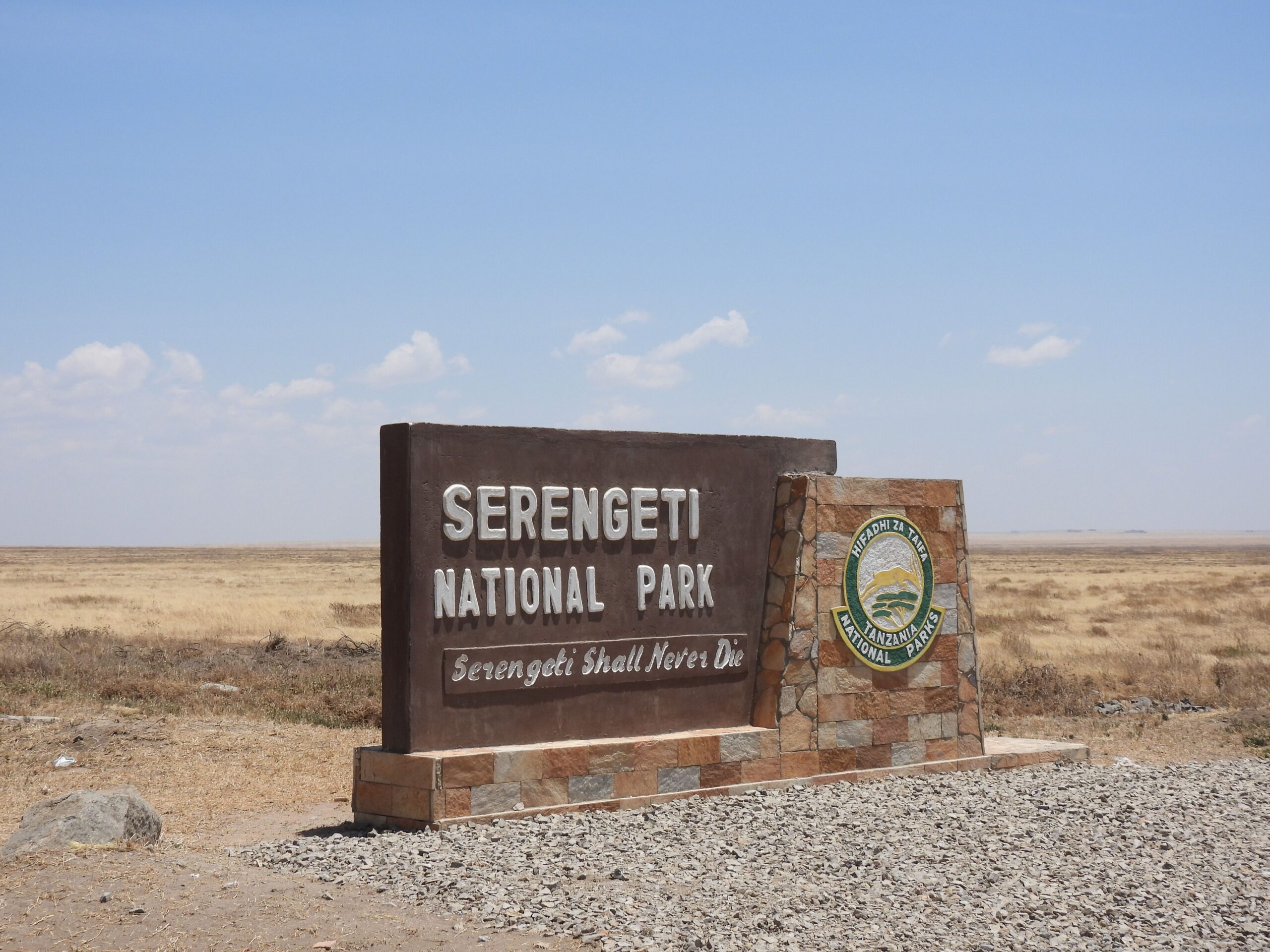
Serengeti: The Ultimate Guide to How Many Days to Stay
Most travelers planning a Tanzania safari already know they want to see the Serengeti — but almost none of them know exactly how many days that actually requires. What they don’t realize is that too short a trip can mean missing key wildlife areas entirely, while too long a trip can eat into budget and vacation days unnecessarily. This guide breaks down exactly how many days you need based on your travel style, budget, and what you most want to see.
Key Takeaways
- Most travelers need a minimum of 3 full days in the Serengeti to experience meaningful wildlife viewing without feeling rushed.
- A 4-5 day Serengeti safari is the ideal length for most first-time visitors, allowing time to explore multiple regions of the park and increase the odds of major sightings.
- Trip length should be based on priorities such as budget, migration timing, and whether the Serengeti is combined with other parks like Ngorongoro or Tarangire.
- Travelers focused on the Great Migration’s river crossings often benefit from 6-7 days to allow flexibility around unpredictable herd movement.
- Shorter 2-3 day trips are possible but limit access to the park’s northern and western regions, reducing overall wildlife diversity.
- Combining the Serengeti with Zanzibar or the Ngorongoro Crater typically adds 3-7 days to a standard itinerary, depending on pacing.
- Building in one flexible buffer day is recommended for any trip length, since weather and animal movement can affect daily plans.
What Does “Days in the Serengeti” Actually Mean?
“Days in the Serengeti” refers to the number of full or partial safari days you spend actively inside the park, not the total number of days on your broader Tanzania trip. This distinction matters more than most first-time planners realize, since travel time to and from the park often isn’t counted the same way.
For example, if you fly into Kilimanjaro International Airport, spend a night in Arusha, then transfer into the Serengeti the next day, that transfer day is usually not counted as a full Serengeti day, even though it’s part of your overall trip length. As such, a “4-day Serengeti safari” typically means four full days of game drives inside the park boundaries, bookended by arrival and departure logistics that add extra days to your total travel calendar.
Moreover, because the Serengeti spans roughly 5,700 square miles, a single day rarely covers more than one or two regions of the park. This is why understanding what a “day” actually buys you — in terms of ground covered and wildlife access — is the real starting point for figuring out how many you need. Our Serengeti National Park safari guide breaks down the park’s different regions in more detail, which is worth reviewing before you commit to a specific day count.
To put that scale in perspective, the Serengeti ecosystem covers an area larger than the state of Connecticut — Source: Tanzania National Parks Authority, 2025. That’s a significant amount of terrain to cover on rough, unpaved roads, which is exactly why day count and ground covered are so closely linked. A traveler who underestimates the park’s size often ends up spending more time in transit than actually watching wildlife.
Why Serengeti Days Aren’t Interchangeable With Other Park Days
A day in the Serengeti isn’t directly comparable to a day in a smaller park like Ngorongoro Crater or Lake Manyara, since those parks concentrate wildlife into a much smaller, more accessible area. For example, the Ngorongoro Crater floor covers roughly 100 square miles, meaning a single day there can deliver a genuinely comprehensive experience in a way that a single Serengeti day simply cannot.
This distinction matters when comparing itineraries from different operators, since a “7-day Tanzania safari” that spends only 2 days in the Serengeti and 5 days across smaller parks offers a very different experience than a 7-day itinerary weighted more heavily toward Serengeti time. As such, always check exactly how many of your total trip days are allocated specifically to Serengeti game drives, not just the overall trip length.
Full Days vs. Partial Days
A full Serengeti day typically includes a morning game drive, a midday break at your camp or lodge, and an afternoon or evening game drive, while a partial day might only include one drive due to arrival or departure logistics. First and last days of a trip are almost always partial days, since flights and road transfers eat into game-drive time.
For example, a traveler flying into the Serengeti’s Seronera airstrip at 11 a.m. will typically only get an afternoon game drive on their first day, not a full day of wildlife viewing. That being said, many operators still count that arrival day toward the overall trip length, which is part of why day counts can vary slightly between different itinerary proposals for what looks like “the same” trip.
Why the Number of Days Matters for a Serengeti Safari
The number of days you spend in the Serengeti matters because the park’s size, road conditions, and migration timing all directly affect how much wildlife you can realistically see. Unlike a smaller reserve where most sightings happen within a short drive of your camp, the Serengeti requires real travel time between its distinct ecosystems.
First, consider that driving between the southern plains and the northern Mara River region can take four to six hours on rough roads. As such, a two-day trip generally limits you to just one region of the park, while a five-day trip allows you to experience two or three distinct ecosystems and their associated wildlife.
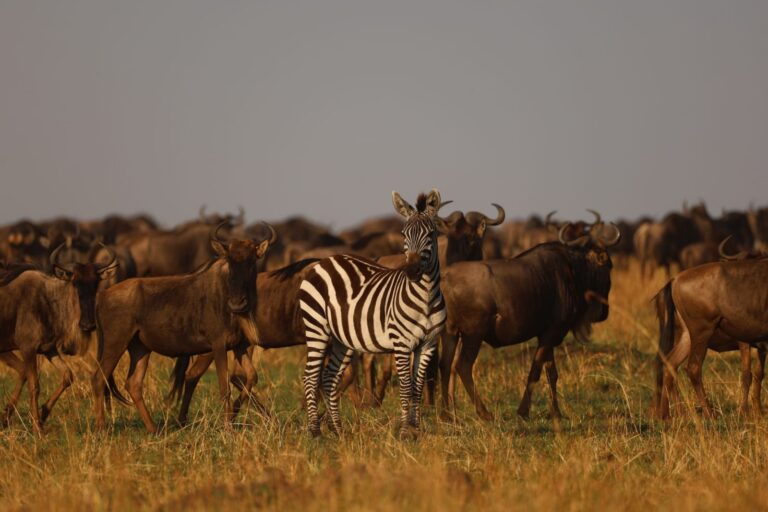
Second, migration timing plays a major role in how many days you should budget. The Great Migration moves through different sections of the Serengeti-Mara ecosystem throughout the year, and travelers hoping to witness a specific event — like a river crossing — often need extra days simply to allow for the unpredictability of exact herd movement. For a deeper look at how migration timing affects trip planning, see our guide to Great Migration safari itineraries.
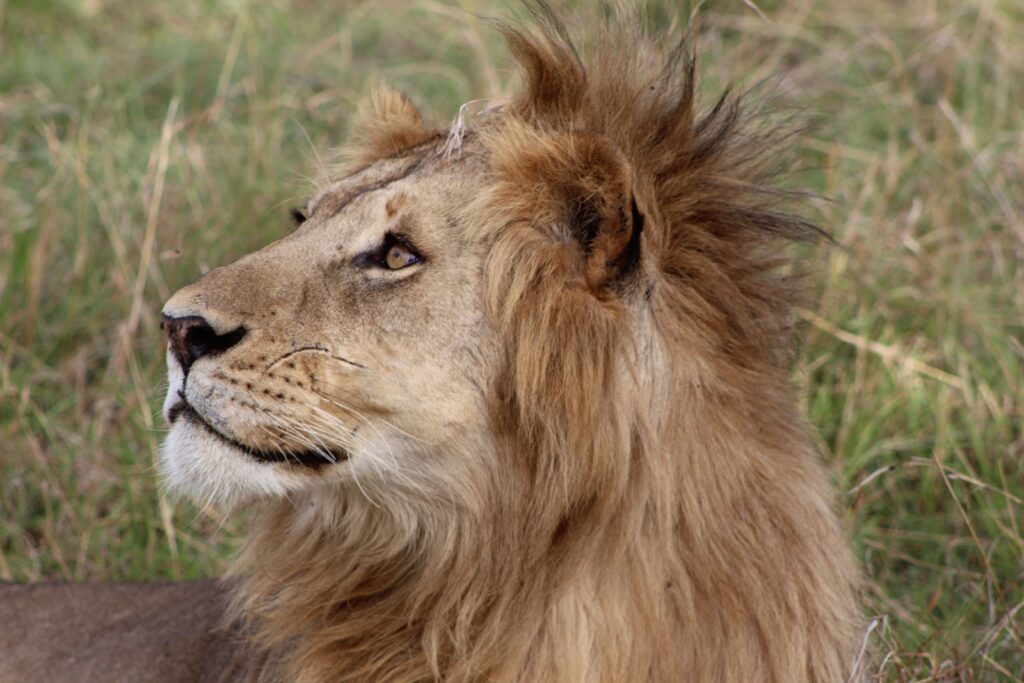
At the same time, trip length affects overall trip cost, vacation time off work, and jet lag recovery — all practical factors that matter just as much as wildlife access. That’s why the right number of days isn’t a single fixed answer; it’s a balance between what you want to see and what you’re able to commit in time and budget.
For example, a traveler with only 7 total vacation days available needs to weigh 2 international travel days against however many are left for the actual safari, which often makes a tightly focused 3-4 day Serengeti trip more realistic than an ambitious 7-day itinerary. Roughly 60% of first-time Tanzania safari travelers cite limited vacation time, not budget, as their primary constraint when choosing trip length — Source: African Travel and Tourism Association, 2025. Recognizing this trade-off early in the planning process helps set realistic expectations before you start comparing specific itineraries.
What Is the Minimum Number of Days Needed in the Serengeti?
A Serengeti safari requires a minimum of 3 full days to allow for meaningful wildlife viewing across more than one region of the park. Fewer than three days generally means restricting your entire visit to a single area near your camp, which significantly limits the variety of wildlife and landscapes you’ll experience.
For example, a 3-day itinerary typically allows for two full days of game drives plus a partial arrival or departure day, giving you enough time to see major predators, large herds, and at least one distinct habitat type — whether that’s open plains, riverine forest, or kopjes (rocky outcrops). This is considered the practical floor for a worthwhile Serengeti experience by most experienced safari planners.
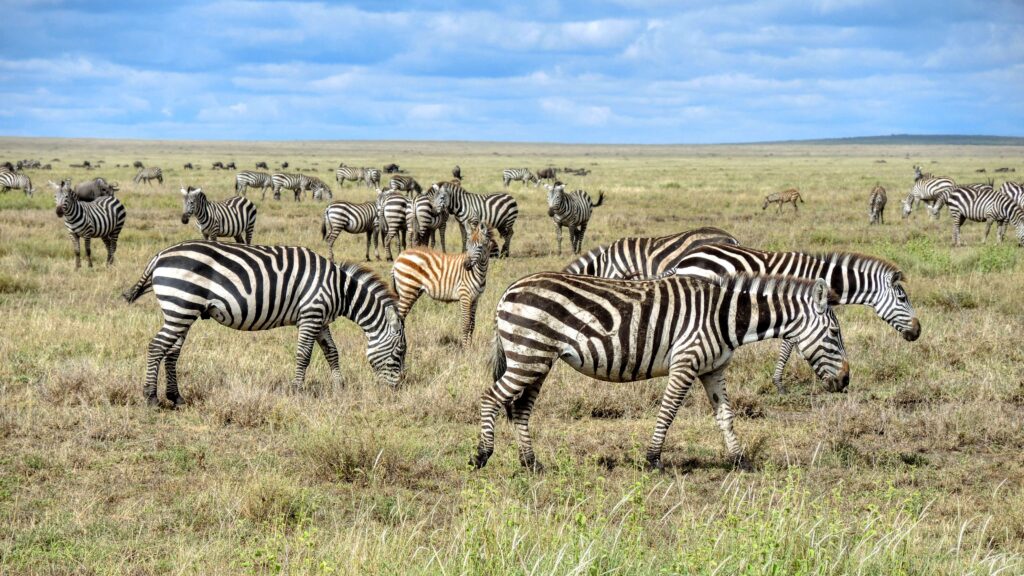
That said, three days works best for travelers with tight budgets or limited vacation time who are combining the Serengeti with other parks on a broader northern circuit itinerary. Travelers with more flexibility should strongly consider extending beyond this minimum, since additional days meaningfully increase both wildlife diversity and the odds of witnessing rarer sightings like a kill or a river crossing.
Is a 2-Day Serengeti Safari Worth It?
A 2-day Serengeti safari is worth it only if your schedule genuinely can’t accommodate more time, since it severely limits you to a single small area of the park. In practice, a 2-day trip usually means one full day of game drives plus partial arrival and departure days, which isn’t enough time to explore more than one ecosystem.
For example, a traveler on a 2-day trip who flies into the western Serengeti will likely miss the park’s northern and southern regions entirely, along with any chance of witnessing a river crossing if the migration happens to be elsewhere that week. As such, while a 2-day trip is far better than no Serengeti visit at all, most experienced operators recommend it only as a last resort for travelers with genuinely restrictive schedules — for example, a short stopover between other East Africa destinations.
How Many Days Is Ideal for a First-Time Serengeti Safari?
Most first-time travelers should plan for 4 to 5 days in the Serengeti, which provides enough time to explore multiple ecosystems and increases the likelihood of major wildlife sightings. This range strikes a practical balance between cost, vacation time, and the variety of experiences most first-timers hope to have.
First, a 4-day trip typically allows for three full days of game drives, which is enough to cover two regions of the park — for example, the central Seronera area known for year-round predator activity, plus one additional zone depending on the season and migration location. Second, a 5-day trip adds meaningful flexibility, allowing for a slower pace with fewer rushed transfers and more time to simply wait and watch at a promising sighting.
Moreover, this 4-5 day window tends to align well with first-time travelers’ broader itinerary goals, since it leaves room to combine the Serengeti with the Ngorongoro Crater or a short Zanzibar extension without requiring a two-week vacation commitment. For a full walkthrough of how to sequence these decisions, our first-time safari planning checklist covers the planning process from initial research through final booking.
To make this more concrete, a typical 5-day itinerary might look like: Day 1 arrival and afternoon game drive in the central Seronera area; Days 2-3 exploring the southern plains or western corridor depending on season; Day 4 repositioning toward a second ecosystem, such as the north if migration timing allows; and Day 5 a final morning game drive before departure. This structure balances thorough wildlife coverage with a manageable pace that doesn’t leave travelers exhausted by constant repositioning.
| Trip Length | Full Game-Drive Days | Regions Typically Covered | Best For |
|---|---|---|---|
| 2 days | 1 | 1 | Tight schedules, stopovers |
| 3 days | 2 | 1-2 | Budget travelers, combo itineraries |
| 4-5 days | 3-4 | 2-3 | Most first-time visitors |
| 6-7 days | 5-6 | 3-4 | Migration/crossing-focused trips |
| 8+ days | 7+ | 4+ | Repeat visitors, photographers |
How Many Days Do You Need to See the Great Migration River Crossings?
Travelers prioritizing the Great Migration’s river crossings often need 6 to 7 days, since crossing timing is unpredictable and requires flexibility built into the itinerary. Unlike a general game drive, a river crossing can’t be scheduled to a specific date, which means extra days function as insurance against a quiet week.
For example, herds may gather at a crossing point for several days before actually crossing, or they may cross earlier or later than the historical average for that month depending on rainfall. As such, a 6-7 day trip positioned in the northern Serengeti during peak crossing season (roughly July through October) gives you enough buffer time to be in the right place when a crossing finally happens, rather than having to leave just as the action begins.
That being said, even a shorter 4-5 day trip during peak crossing season can still offer a reasonable chance of witnessing a crossing, particularly with an experienced ground operator tracking daily herd reports. However, travelers who have specifically built a trip around this single bucket-list moment should lean toward the longer end of the range to protect against bad timing. Our Great Migration safari itineraries are built with this exact flexibility in mind.
Does Trip Length Change Based on the Season You Visit?
Yes, trip length recommendations shift somewhat based on the season, since different times of year offer different concentrations of wildlife across the park. During calving season (January-March), wildlife is densely concentrated in the southern plains, which means even a 3-4 day trip can deliver excellent, efficient game viewing without much driving between areas.
By contrast, during the dry season crossing months (July-October), wildlife is more spread out across the northern Serengeti and Maasai Mara border region, which favors longer trips of 6+ days to allow for the unpredictability discussed above. Green season travel (April-June, November-December) tends to fall in between, with 4-5 days offering a solid balance of coverage and flexibility.
How Trip Length Changes by Travel Style and Priority
The ideal number of Serengeti days depends heavily on your travel style and priorities, since honeymooners, families, photographers, and budget travelers each have different goals for their time in the park. Below is a breakdown of how trip length recommendations shift by traveler type.
Honeymooners and milestone travelers often benefit from 5-6 days, allowing for a more relaxed pace with fewer early wake-up calls and more time built in for private, romantic camp experiences. Since this is typically a once-in-a-lifetime trip, most couples prefer to avoid feeling rushed between sightings. Our Tanzania honeymoon safaris are designed around this exact pacing, with luxury camps positioned to minimize long transfer days.
Families with children generally do well with 4-5 days, balanced with shorter daily game drives that account for kids’ shorter attention spans and energy levels. For example, a family itinerary might alternate a longer morning game drive with a lighter afternoon activity at camp, rather than back-to-back full-day drives. See our family safaris in Tanzania for age-appropriate pacing options.
Photographers typically need 7 or more days, since capturing specific behaviors — a hunt, a crossing, golden-hour lighting in the right location — requires patience and repeat opportunities rather than a single pass through an area. Photographers often revisit the same promising spot across multiple days rather than covering as much ground as possible.
Budget-conscious travelers should consider the 3-4 day range paired with budget Tanzania safari packages, which keep costs manageable while still delivering a genuine Serengeti experience. Travelers who want a middle ground between cost and comfort can also review mid-range Tanzania safaris, which typically support the 4-5 day range comfortably.
Repeat safari-goers chasing a specific experience — a particular predator behavior, a specific park region they haven’t visited, or a return trip during a different migration phase — often plan shorter, more targeted 3-4 day trips focused on one goal, since they’ve already covered general wildlife viewing on a previous visit.
How Many Days Do You Need for the Serengeti Plus Other Parks?
Combining the Serengeti with the Ngorongoro Crater typically adds 1 to 2 days, while adding a Zanzibar beach extension typically adds 3 to 5 days to a standard itinerary. Most first-time travelers on Tanzania’s northern circuit choose to combine at least one additional park with their Serengeti safari, since several complementary destinations sit along the same travel route.
How Many Days Should You Spend If Combining the Serengeti With Ngorongoro Crater?
A Serengeti-plus-Ngorongoro itinerary generally adds just 1-2 days, since the Ngorongoro Crater can typically be explored thoroughly in a single full day thanks to its compact, concentrated wildlife viewing within the crater floor. For example, a traveler doing a 5-day Serengeti safari might add one extra day for Ngorongoro on the way in or out, bringing the total trip to 6 days.
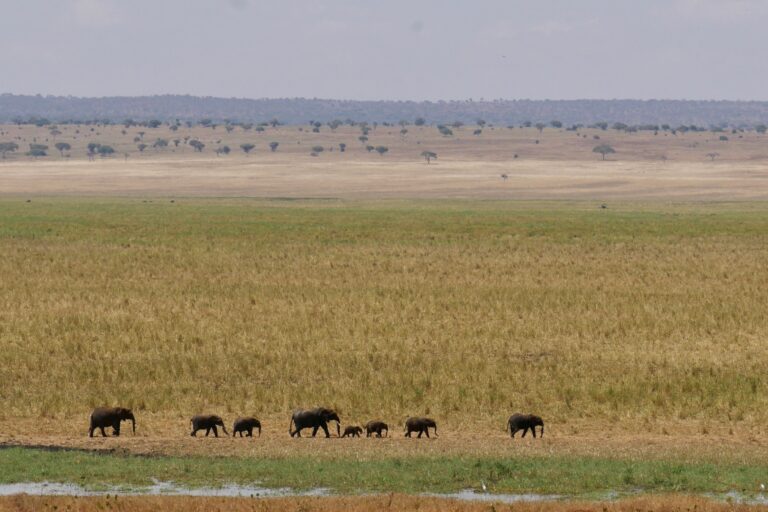
This combination is popular precisely because it’s efficient — the crater delivers extremely dense wildlife viewing without requiring the multi-hour transfers typical of Serengeti’s larger regions. Many itineraries also add a stop at Tarangire National Park, known for its massive elephant herds and baobab trees, which adds roughly 1-2 additional days depending on pacing.
How Many Days Do You Need for the Serengeti Plus Zanzibar?
A Serengeti-plus-Zanzibar itinerary typically adds 3-5 days, since most travelers want enough beach time to genuinely unwind after a physically demanding safari schedule. For example, a common combination itinerary might include 5 days in the Serengeti followed by 4 days on Zanzibar’s beaches, for a total trip length of roughly 9-10 days including travel days.
This pairing has become one of the most popular Tanzania itinerary combinations, since it balances the adrenaline of wildlife viewing with pure relaxation, and the flight between the northern safari circuit and Zanzibar is short — typically under two hours. Travelers with more time available sometimes also add a stop at Lake Manyara National Park, known for its tree-climbing lions, adding roughly one additional day to the route between Arusha and the Serengeti.
Tools and Resources for Planning Your Day Count
Planning the right number of Serengeti days relies on a combination of sample itineraries, direct operator consultation, and current migration tracking data, rather than a single generic recommendation. Since the “right” number depends on so many personal factors, the most reliable planning approach combines general guidelines with real, current conditions on the ground.
Sample itineraries from experienced operators give you a realistic starting framework, showing exactly what a 4-day, 5-day, or 7-day trip actually looks like day by day — including drive times, camp locations, and typical activities. These are useful for setting initial expectations before you finalize your own custom plan.
Direct operator consultation allows you to adjust a generic itinerary based on your specific priorities, whether that’s a slower pace for young children, extra flexibility for photography, or a tighter budget. An experienced operator can also flag when a proposed day count doesn’t realistically match your stated goals — for example, telling a traveler hoping for guaranteed river crossings that a 3-day trip carries real risk of missing the event entirely. Our team at Serengeti Trails Safaris works through this exact conversation with every client before finalizing a day count.
Migration tracking data, compiled from ranger reports and historical movement patterns, helps determine whether your chosen dates should lean toward a longer, more flexible trip or whether a shorter trip is reasonable given where the herds are expected to be. This data becomes more accurate and specific as your travel dates approach, which is why many operators recommend confirming exact day allocations 60-90 days before departure rather than locking everything in a year in advance.
To explore the full range of activities and pacing options available across different trip lengths, browse our Tanzania safari experiences, which cover everything from classic game drives to walking safaris and cultural visits that can be layered into a longer itinerary.
Most Serengeti itineraries also route through Arusha National Park or the nearby town of Arusha itself, which serves as the main gateway city for Tanzania’s northern safari circuit. Factoring in an overnight stay in Arusha before or after your Serengeti days is common practice, since it allows for a smoother transition between international flights and small-aircraft transfers into the park. For ongoing seasonal updates and planning advice, our planning tips section and destination guides are refreshed regularly as conditions change.
What to Do Next: Building Your Serengeti Itinerary
Building your Serengeti itinerary starts with identifying your top priority — whether that’s budget, a specific migration event, or a particular travel style — and then working backward to determine the day count that realistically supports that goal. This sequencing prevents the common mistake of picking a day count first and then trying to force too many priorities into too little time.
First, decide what matters most: guaranteed wildlife diversity, a specific migration event, relaxed family pacing, or photography opportunities. Second, use the trip-length ranges outlined above to set a realistic day count for that priority. Third, factor in whether you’re combining the Serengeti with Ngorongoro, Tarangire, Zanzibar, or another destination, adding the appropriate extra days for each.
A Practical Planning Checklist
Use the following sequence once you’re ready to move from research to booking:
- Identify your top priority — general wildlife viewing, a specific migration event, family pacing, or photography — using the breakdowns above.
- Set a baseline day count for the Serengeti portion alone, using the 3-day minimum, 4-5 day ideal, or 6-7 day migration-focused ranges as your starting point.
- Add days for any combination destinations, such as 1-2 days for Ngorongoro or 3-5 days for a Zanzibar extension.
- Build in one buffer day, since weather and animal movement can shift daily plans regardless of how carefully you’ve planned.
- Confirm your final day count with an experienced operator, ideally 6-12 months ahead for peak season travel, so camps with the best positioning for your goals are still available.
- Reconfirm your itinerary 60-90 days before departure, allowing your operator to fine-tune specific camp placements based on more current migration data.
A single flexible buffer day is recommended for any Serengeti itinerary length, since weather and wildlife movement can shift daily plans even with the most careful preparation. Ready to map out your exact day count? Plan your Serengeti itinerary with our team, who can match your priorities to a realistic, well-paced schedule.
How Far in Advance Should You Book a Multi-Day Serengeti Itinerary?
Most travelers should book a multi-day Serengeti itinerary 9 to 12 months in advance for peak season travel, since camps in high-demand areas — particularly those positioned near river crossing zones — have limited inventory and fill quickly. Camps in the northern Serengeti during peak crossing season can sell out 10-12 months ahead of the actual travel dates — Source: Tanzania Tourism Board, 2025.
For example, a traveler planning a 7-day migration-focused trip for August should ideally start booking by the previous October or November, since the specific camps best positioned for crossing access are the first to fill. By contrast, shorter 3-4 day trips during green season months generally have more availability closer to the travel date, sometimes with reasonable options available just 3-4 months out.
That being said, earlier booking isn’t just about availability — it also gives your operator more time to build a well-paced itinerary around your specific day count and priorities, rather than scrambling to fit available camps into a rushed timeline. As such, even for shoulder-season trips, booking at least six months ahead is a reasonable rule of thumb.
Conclusion
There’s no single universal answer to how many days you need in the Serengeti — but there is a clear, well-reasoned framework for finding your number. A 3-day trip covers the practical minimum, 4-5 days suits most first-time travelers, and 6-7 days gives migration-focused travelers the flexibility they need for river crossings.
Whatever your priorities — a honeymoon, a family trip, a photography-focused visit, or a tightly budgeted adventure — matching your trip length to what you most want to experience is what separates a good safari from a truly great one. If you’re ready to turn this framework into an actual itinerary, reach out to our team and we’ll help you build a day-by-day plan that fits your goals, your budget, and your available time.

2 Comments