
Lake Manyara National Park: The Ultimate Guide to Tree-Climbing Lions, Flamingos and a Half-Day Safari
You’ve probably already circled Serengeti, Ngorongoro, and maybe Kilimanjaro on your Tanzania map. But there’s a smaller park tucked against the Great Rift Valley escarpment that surprises even seasoned safari-goers, and most first-time planners give it far less credit than it deserves. In this guide, we’ll explain exactly what makes Lake Manyara National Park worth the stop — from its famous tree-climbing lions to its flamingo-lined lake — and how to plan a half-day safari that actually delivers.
Key Takeaways
- Lake Manyara National Park is a compact Tanzanian park known for its alkaline lake, groundwater forest, and rare tree-climbing lions.
- Tree-climbing lions are a behavioral rarity found in only a few African lion populations, and Manyara is one of the most reliable places to observe it.
- The park’s alkaline lake regularly attracts large flocks of flamingos, with numbers fluctuating by season and water levels.
- A half-day safari at Lake Manyara can realistically cover the groundwater forest, lake shoreline, and key wildlife viewing areas without feeling rushed.
- The park supports diverse habitats within a small area, including forest, grassland, and lake ecosystems, hosting elephants, hippos, baboons, and hundreds of bird species.
- Dry season months typically offer better wildlife concentration near the lake, while the wet season favors birdwatching, including flamingo sightings.
- Lake Manyara is commonly combined with Ngorongoro Crater, Tarangire, and Serengeti National Park as part of Tanzania’s Northern Circuit.
What Is Lake Manyara National Park?
Lake Manyara National Park is a Tanzanian national park centered on a shallow alkaline lake bordered by groundwater forest and the Great Rift Valley escarpment. Gazetted in 1960, the park sits in the Manyara Region of northern Tanzania, roughly a two-hour drive from Arusha and close to the start of the Northern Circuit. It covers around 330 square kilometers, and a large portion of that area is the lake itself, which means the land you actually drive through is compact by safari standards.
That small footprint is part of what makes Lake Manyara distinctive. Within a short game drive, you move from dense groundwater forest, where troops of baboons and elusive bushbuck hide in the shade, into open grassland dotted with acacia trees, and finally out along the lake’s edge, where flamingos and pelicans gather in the shallows. Few parks in Tanzania compress this many habitats into such a short driving loop.
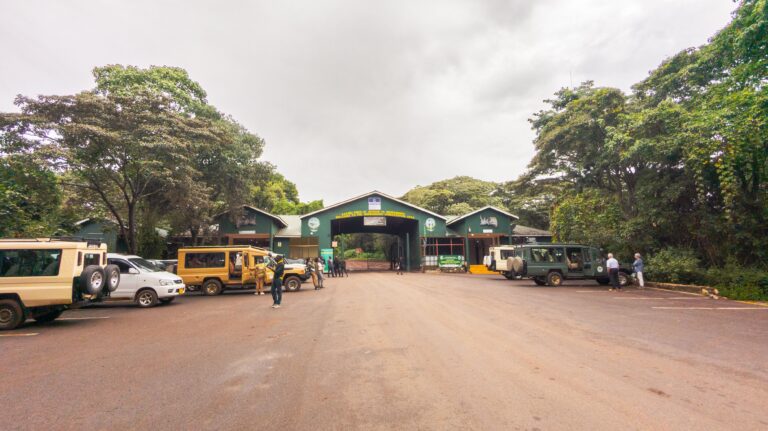
The escarpment that runs along the park’s western edge is a visual signature too. It rises sharply from the valley floor, and safari vehicles often stop at a viewpoint near the entrance gate for a first look over the lake and forest canopy below. That view alone gives most visitors a sense of why the park earns a place on so many itineraries, even a short one.
Where Is Lake Manyara National Park Located?
Lake Manyara National Park sits at the base of the Great Rift Valley escarpment in northern Tanzania, between the towns of Mto wa Mbu and Karatu. It is one of the first stops travelers reach when driving from Arusha toward Ngorongoro and the Serengeti, which is why so many itineraries fold it in as an easy add-on rather than a standalone destination.
Why Lake Manyara National Park Matters
Lake Manyara matters because it delivers a genuinely different safari experience in a short window of time, which makes it one of the most efficient stops on Tanzania’s Northern Circuit. Many travelers assume that smaller parks mean smaller rewards, but Manyara consistently proves otherwise. Its habitat diversity, birdlife, and unusual lion behavior give it a reputation that punches above its size.
For travelers piecing together a Tanzania safari itinerary, Manyara solves a real planning problem: how do you see something distinct without sacrificing a full day that could go toward Ngorongoro or the Serengeti. Because the park is small, a half-day safari is genuinely enough to experience its highlights, which makes it a natural stop on the drive between Arusha and Karatu rather than a detour that eats into your schedule.
Manyara also matters ecologically. The lake is part of a Ramsar-recognized wetland system, and its alkaline waters support an unusual food chain that draws in flamingos, pelicans, and storks in numbers rarely seen at Tanzania’s larger, freshwater parks. That combination of forest, savanna, and wetland in one park is uncommon, and it gives visitors a preview of nearly every habitat type they will see across the rest of a Northern Circuit trip.
Why Do Lions Climb Trees at Lake Manyara?
Tree-climbing lions are a rare behavioral adaptation seen in only a handful of African lion populations, and Lake Manyara National Park is one of the most reliable places to observe it. Most lions rest on the ground, so watching a lioness stretched along a horizontal acacia branch, tail dangling below, is one of the more unusual sights in African wildlife viewing.
Researchers and guides offer a few working theories for this behavior, and no single explanation has been confirmed as definitive. First, escaping biting insects is a common explanation, since the ground near Manyara’s forest and lake edge holds humidity that attracts tsetse flies and other pests, and getting off the ground offers relief. Second, some guides point to heat management, arguing that a breeze moving through the canopy cools lions more effectively than shade on the ground during Manyara’s warmer months. Third, elevated branches may simply offer a wider vantage point over the grassland below, letting lions spot prey or rival predators more easily than they could from ground level.
It’s worth noting that tree-climbing lions are not unique to Manyara. Similar behavior has been documented in Uganda’s Queen Elizabeth National Park and occasionally elsewhere, which suggests it is a learned behavior passed within specific prides rather than a trait tied to one location. That said, Manyara’s population is considered one of the more dependable places in East Africa to spot the behavior, particularly because its acacia woodland offers exactly the kind of low, horizontal branches lions favor for climbing.
Where and When Are Tree-Climbing Lions Most Often Spotted?
Sightings cluster in the acacia woodland south of the lake, where mature trees provide sturdy horizontal branches at a height lions can reach without much effort. Guides generally recommend the mid-morning to early afternoon hours, since that is when lions are most likely to be resting up in the canopy rather than moving through the grass. Sightings are never guaranteed on any single visit, and experienced guides will tell you honestly that some days produce nothing more than fresh tracks near the base of a favored tree.
Where Can You See Flamingos at Lake Manyara?
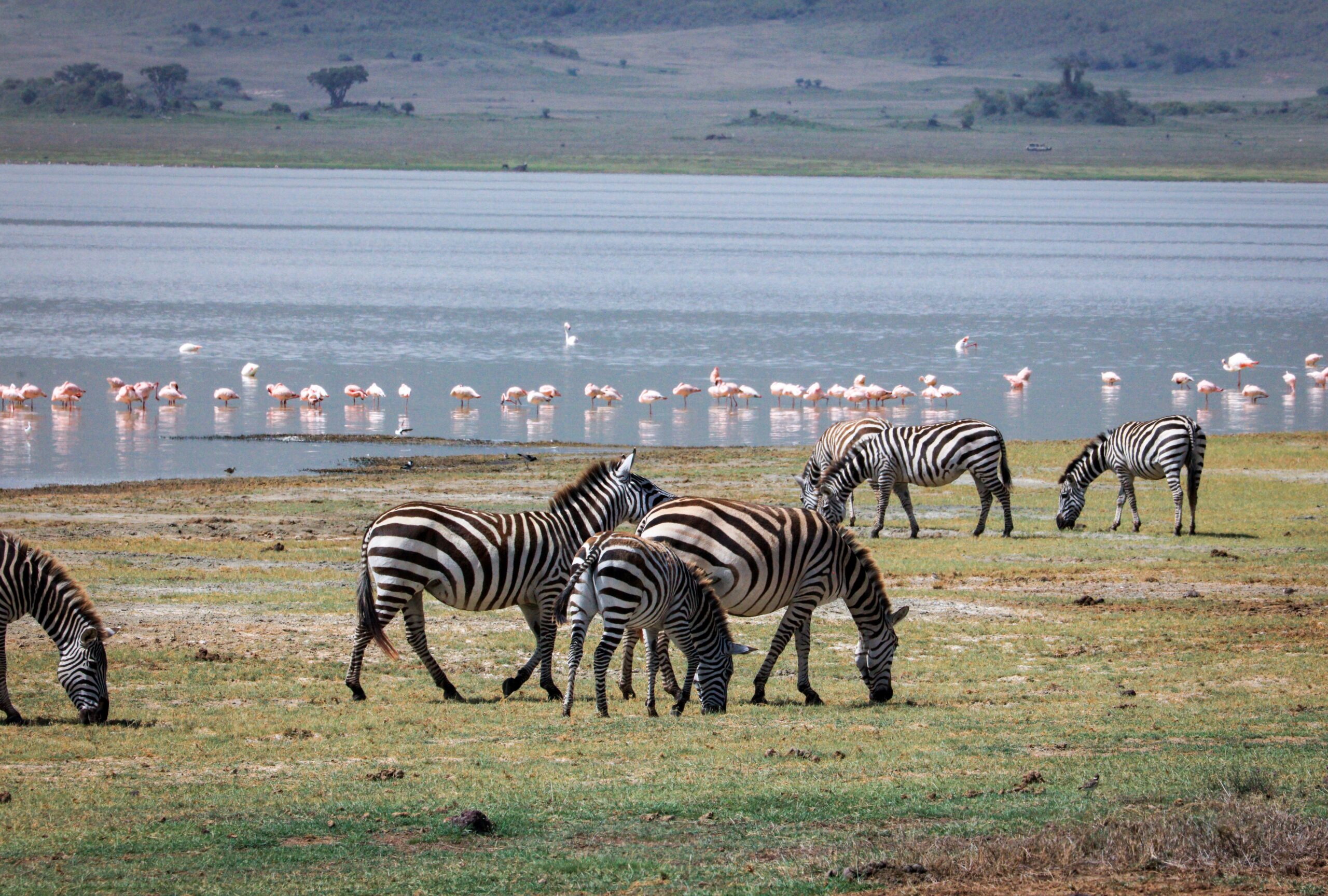
Flamingos gather at Lake Manyara because the lake’s alkaline chemistry supports the algae and small invertebrates the birds feed on. Both lesser and greater flamingos are recorded at the lake, and from a distance their pink-tinged flocks can turn entire stretches of shoreline into a shifting wash of color.
The best viewing typically happens from the shoreline drives and designated viewpoints along the lake’s eastern and northern edges, where the water is shallow enough for wading birds to feed comfortably. Flamingo numbers at Manyara fluctuate significantly, and that variability comes down to water levels. When the lake shrinks during drier stretches, exposed mudflats concentrate the algae flamingos feed on, which can draw dense flocks. When heavy rains raise the water level, some birds move on to other Rift Valley lakes such as Natron or Eyasi, which are also known for large flamingo populations.
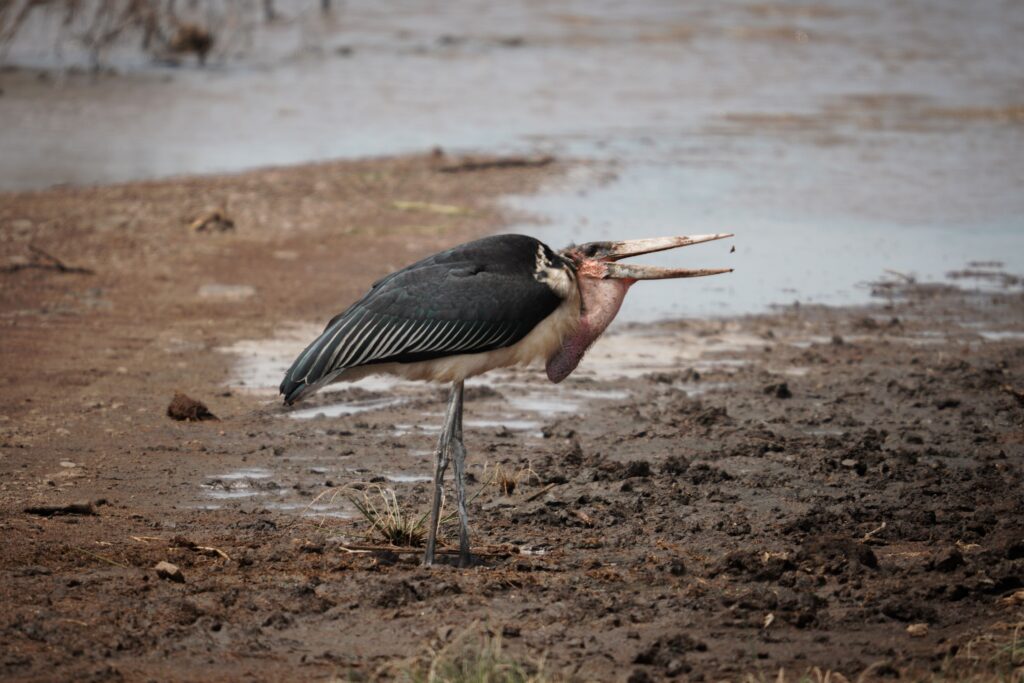
Flamingos share the shallows with other waterbirds worth watching for, including pink-backed pelicans, yellow-billed storks, and various species of egret. For anyone building a trip primarily around birdlife, our guide to birdwatching across Tanzania’s national parks covers additional hotspots beyond Manyara worth adding to an itinerary.
Why Does Flamingo Presence Change Season to Season?
Flamingo presence at Lake Manyara shifts with rainfall and water chemistry rather than a fixed calendar. Because the lake has no permanent outlet, its depth and salinity respond quickly to seasonal rain, and flamingos follow the conditions that produce the richest feeding grounds. This is one of the reasons experienced guides recommend checking recent sightings before a visit rather than relying solely on general seasonal guides.
What Animals Can You See at Lake Manyara National Park?
Lake Manyara supports a wide range of wildlife within a small area, including elephants, hippos, baboons, and more than 400 recorded bird species. The park’s habitat diversity is the main reason for this density, since forest, grassland, and lake shoreline each support different species within a short drive of one another.
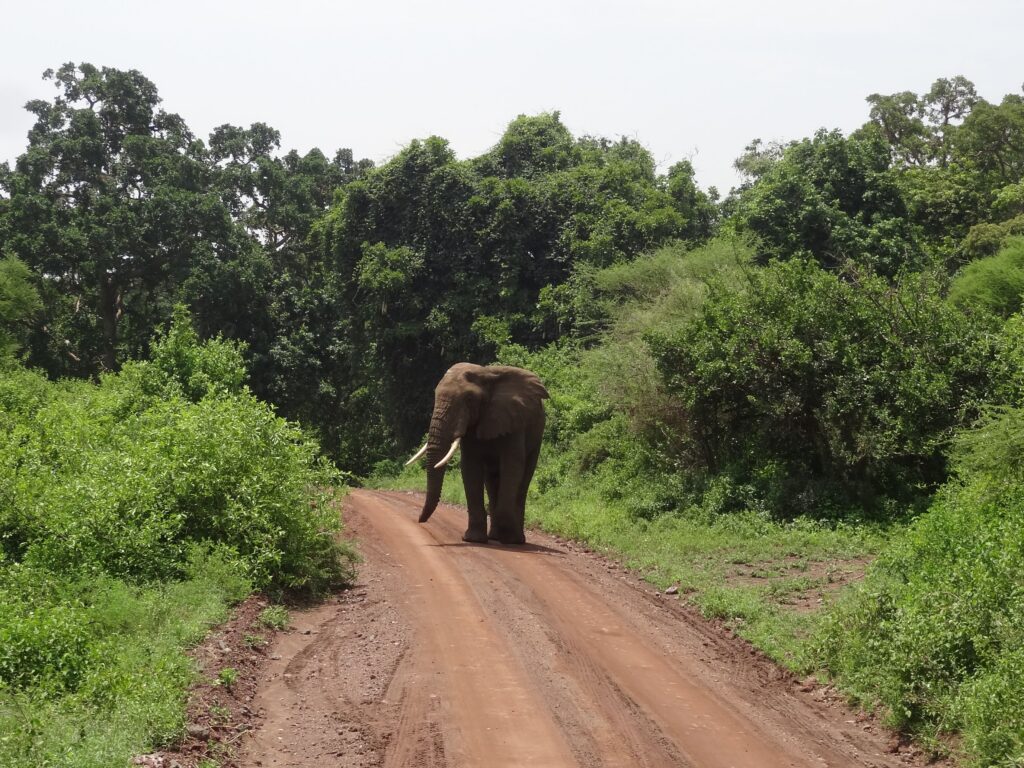
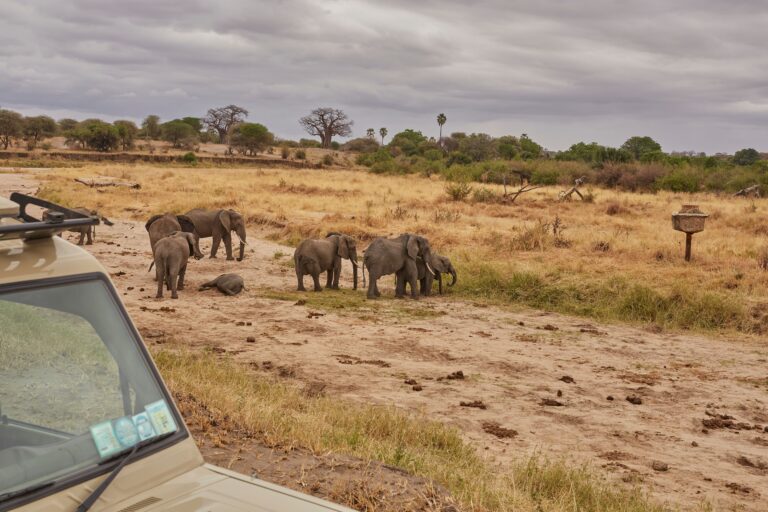
Elephants move through the groundwater forest in family groups, often visible browsing among the fig and mahogany trees near the entrance gate. Hippos congregate in the pools closer to the lake, particularly during drier months when shrinking water forces them into visible, concentrated groups. Olive baboons are among the most reliably spotted primates in the park, with large troops often seen along the forest road foraging or grooming close to the vehicle track. Blue monkeys, while shier, also inhabit the denser forest canopy.
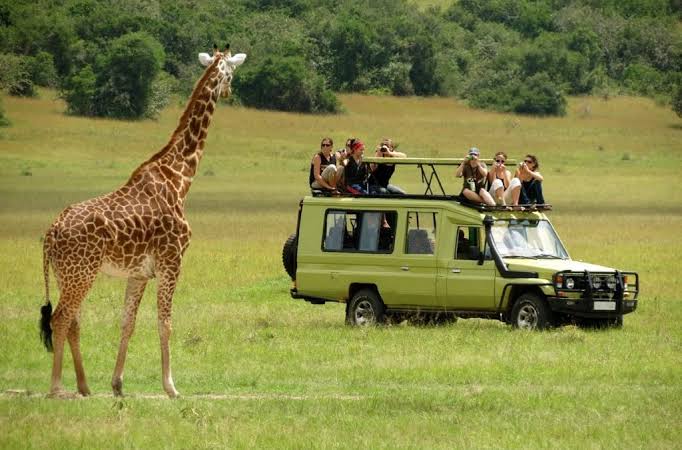
Beyond the marquee species, Manyara hosts giraffe, buffalo, impala, and occasionally leopard, though leopard sightings are less common than in some of Tanzania’s larger parks. The birdlife extends well beyond flamingos, with the forest and lake edge together supporting kingfishers, hornbills, herons, and raptors including fish eagles.
| Habitat Zone | Typical Wildlife | Best Time to Look |
|---|---|---|
| Groundwater forest | Elephants, baboons, blue monkeys, bushbuck | Early morning |
| Open grassland | Giraffe, buffalo, impala, tree-climbing lions | Mid-morning to midday |
| Lake shoreline | Flamingos, pelicans, hippos, storks | Late morning to afternoon |
| Escarpment viewpoint | Panoramic views, occasional raptors | Any time, weather permitting |
For travelers who want to compare Manyara’s wildlife density against nearby parks, Tarangire’s elephant populations are worth reading about, since Tarangire is often paired with Manyara specifically because the two parks showcase different strengths.
Is a Half-Day Safari Enough Time at Lake Manyara?
A half-day safari at Lake Manyara typically covers the groundwater forest, lake shoreline, and core wildlife-viewing zones within three to four hours of game drives. Because the park’s road network is compact, guides can move efficiently between habitats without the long transit times required in larger parks like the Serengeti.
A typical half-day itinerary looks something like this:
- Entry and forest drive (30–45 minutes). Vehicles enter through the main gate and move slowly through the groundwater forest, where early elephant and baboon sightings are common.
- Grassland and acacia woodland (45–60 minutes). This stretch is where guides focus their search for tree-climbing lions, scanning low horizontal branches along the tree line.
- Lake shoreline (45–60 minutes). The drive opens onto the lake edge, where flamingos, pelicans, and hippos are the main draw, along with sweeping views back toward the escarpment.
- Escarpment viewpoint stop (15–20 minutes). Many itineraries end with a stop at an overlook near the gate for photos before exiting the park.
This pacing works because Manyara rewards a focused visit rather than an exhaustive one. Travelers who try to stretch a full day here without a specific interest, such as serious birdwatching or photography, sometimes feel the pace slow down in the afternoon heat, when animal activity naturally drops. For most itineraries, a well-timed half-day delivers the park’s key sights without competing for time against Ngorongoro or the Serengeti.
If your schedule allows a full day instead, it’s worth spending the extra hours on slower birdwatching along the lake or a picnic stop within the forest, both of which are difficult to fit into a tighter half-day loop.
How Does Lake Manyara Compare to Ngorongoro or Serengeti?
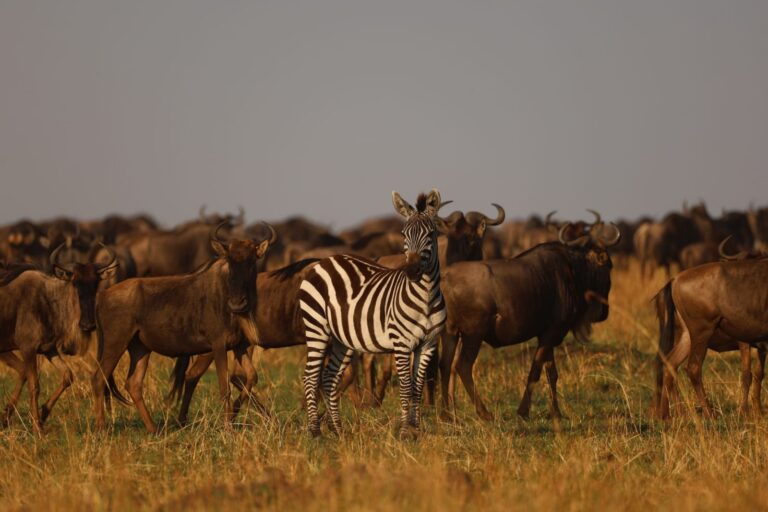
Lake Manyara compares favorably to Ngorongoro and Serengeti as a complementary stop rather than a competing one, since each park emphasizes a different kind of safari experience. Ngorongoro Crater is prized for its extraordinary predator density within a contained caldera, while the Serengeti is built around vast open plains and the great wildebeest migration. Manyara, by contrast, offers habitat variety and birdlife within a much smaller, quicker-to-explore area.
Where Manyara distinguishes itself is efficiency and its wetland ecosystem. You won’t find the sheer volume of big cats that Ngorongoro is known for, and you won’t get the horizon-to-horizon plains of the Serengeti, but you will get flamingo flocks, forest elephants, and a shot at tree-climbing lions in a fraction of the driving time. Many operators, including Serengeti Trails Safaris, position Manyara as a warm-up stop early in a Northern Circuit itinerary, letting travelers ease into safari pacing before the longer game drives at Ngorongoro and Serengeti.
For a side-by-side sense of what to prioritize, read our dedicated guide to Ngorongoro Crater’s safari highlights, which pairs well with the itinerary planning covered here.
How Do You Get to Lake Manyara National Park?
Most visitors reach Lake Manyara National Park by road from Arusha, a drive of roughly two hours along a well-maintained route through Mto wa Mbu. The park’s main gate sits directly off this route, which is why it fits so naturally into a Northern Circuit itinerary heading toward Ngorongoro and the Serengeti.
Because the park requires no charter flight or additional logistics beyond a standard safari vehicle, it’s one of the easiest stops to schedule. Most tour operators, including Serengeti Trails Safaris, route Manyara as a drive-through or half-day stop on the way to Karatu, the gateway town for Ngorongoro Crater. Travelers arriving independently should note that a licensed guide and 4×4 vehicle are required inside the park, as with all Tanzanian national parks.
When Is the Best Time to Visit Lake Manyara for Wildlife?
Dry season months, roughly June through October, typically offer better wildlife concentration near Lake Manyara’s remaining water sources, while the wet season, from November through May, favors birdwatching, including flamingo sightings. This split makes Manyara somewhat unusual among Tanzania’s parks, since it rewards visits across a wider stretch of the calendar than parks that peak sharply around the migration.
During the dry months, receding water forces elephants, buffalo, and other grazers to concentrate near the remaining pools and the lakeshore, which improves general wildlife visibility along the forest and grassland routes. The trade-off is that flamingo numbers can thin out during the driest stretches if the lake shrinks too far for the birds’ preferred feeding depth.
The wet season, particularly the shorter rains around November and the longer rains from March through May, brings the opposite pattern. Vegetation grows lush, some wildlife disperses into the surrounding hills, but the lake itself often swells with fresh water, drawing in migratory birds and supporting larger flamingo flocks. Roads can be muddier during this period, so travelers prioritizing comfort over birdlife may still prefer the dry months.
For a broader look at how Tanzania’s seasons affect safari planning across parks, see our guide on timing a Tanzania safari around the great migration, which covers how Manyara’s calendar lines up with Serengeti and Ngorongoro visits.
What Should You Pack for a Half-Day Safari at Lake Manyara?
Pack light layers, since mornings near the escarpment can be cool while midday temperatures in the grassland rise quickly. Binoculars are especially useful at Manyara given the birdlife, and a telephoto lens helps for both tree-climbing lions and distant flamingo flocks. Neutral-colored clothing, sun protection, and insect repellent round out a practical packing list, particularly given the forest sections closer to the lake.
Planning Your Northern Circuit: What’s Next After Lake Manyara
Once you’ve mapped out your time at Manyara, the natural next step is deciding how it fits into the rest of your Northern Circuit route. Most itineraries move from Manyara toward Karatu and then into Ngorongoro Crater for a full day of concentrated wildlife viewing, before continuing on to the Serengeti for multiple nights. Some travelers instead prioritize Tarangire National Park alongside Manyara, since the two parks together offer a strong contrast between wetland birdlife and Tarangire’s dense elephant herds and baobab-studded landscape.
If you’re still deciding on trip length or budget, our comparisons of budget, mid-range, and luxury Tanzania safari options can help you figure out where Manyara fits alongside accommodation choices for the rest of the circuit. Families traveling with children may also want to look at our family safari planning guide, since Manyara’s shorter drive times and lower heat exposure make it an easier park for younger travelers than some of the longer full-day routes elsewhere. Couples building a honeymoon safari itinerary often use Manyara as a scenic, low-intensity first stop before the more demanding days ahead.
If your trip timing centers on the wildebeest migration, our great migration safari guide explains how to sequence Manyara with Serengeti dates so neither stop feels rushed. And if you’re only just starting to map out the whole trip, our complete guide for first-time Tanzania travelers walks through how many days to allocate across the full Northern Circuit, Manyara included.
For a broader look at everything the region offers beyond the Northern Circuit, our destinations overview lists every major Tanzanian park we cover, from Nyerere National Park in the south to Arusha National Park closer to home.
Conclusion
Lake Manyara National Park proves that a small footprint doesn’t mean a small experience. Between tree-climbing lions resting in the acacia canopy, flocks of flamingos coloring the shoreline pink, and a habitat mix that shifts from dense forest to open lake within a single drive, Manyara earns its place on the Northern Circuit far beyond its size on the map. A half-day here is genuinely enough to see what makes it special, which means it costs you little in exchange for a memorable, distinctly different stop on your Tanzania itinerary.
If you’re mapping out where Manyara fits into your own trip, our team at Serengeti Trails Safaris can help you sequence it alongside Ngorongoro, Tarangire, and the Serengeti so every day of your safari earns its place.


3 Comments