
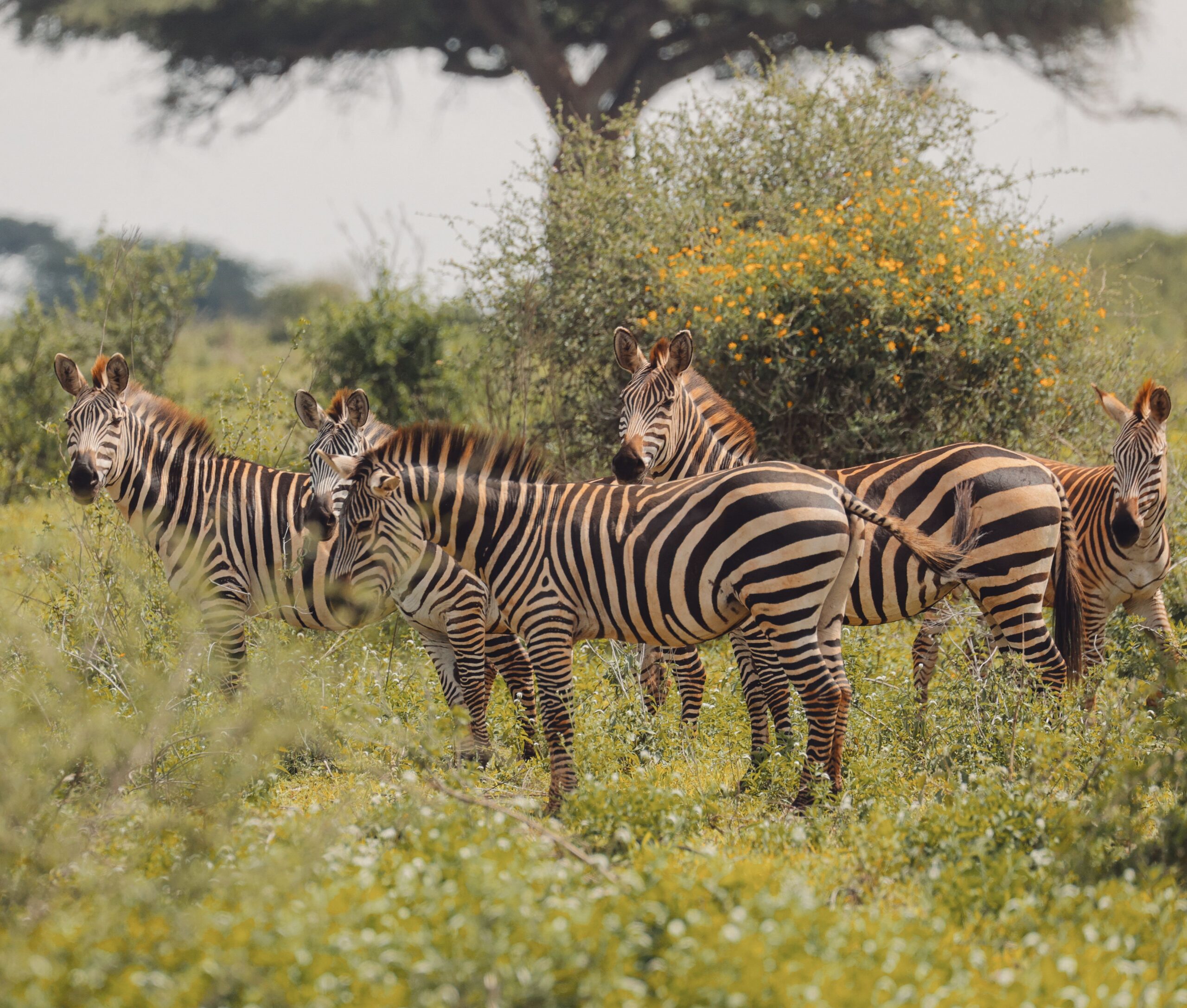
Nyerere National Park: The Complete Guide to Tanzania’s Wildest, Least-Crowded Safari
You’ve probably pictured a Tanzania safari as a line of jeeps circling a single lion in the Serengeti. What most travelers never discover is a park nearly the size of Belgium where you can drift down a river past hippos without another vehicle in sight. This guide breaks down exactly what makes Nyerere National Park Tanzania’s wildest, least-crowded safari — and how to plan your visit.
Key Takeaways
- Nyerere National Park is Africa’s largest stand-alone national park, covering roughly 30,893 square kilometers of southern Tanzania.
- The park was formerly known as the Selous Game Reserve and was renamed in 2019 to honor Tanzania’s first president, Julius Nyerere.
- Nyerere holds one of the world’s largest populations of the endangered African wild dog, alongside strong numbers of lion, elephant, and hippo.
- The Rufiji River is the park’s lifeline, enabling a rare mix of boat safaris, game drives, and walking safaris not available in most northern Tanzania parks.
- Peak wildlife viewing runs from late June through October, when the dry season concentrates animals around permanent water sources.
- Nyerere receives far fewer visitors than the Serengeti or Ngorongoro Crater, making it a strong choice for travelers seeking solitude and an unspoiled wilderness feel.
- Most visitors access the park via a short flight from Dar es Salaam or a road transfer of roughly 230 kilometers to Mtemere Gate.
What Is Nyerere National Park?
Nyerere National Park is Africa’s largest stand-alone national park, covering approximately 30,893 square kilometers in southeastern Tanzania. It sits roughly 230 kilometers by road from Dar es Salaam and stretches west into a mosaic of miombo woodland, open floodplain, and riverine forest that few visitors to Tanzania ever see.
The park carries deep historical weight. It was carved out of the former Selous Game Reserve, once the largest protected wilderness area in Africa, and was officially renamed in 2019 in honor of Julius Kambarage Nyerere, Tanzania’s first president and a vocal advocate for wildlife conservation. A smaller section of the original reserve still exists as the Selous Game Reserve, but that portion is managed separately and set aside for regulated hunting, while Nyerere National Park is dedicated entirely to conservation and photographic tourism.
At the center of it all runs the Rufiji River, which winds for roughly 600 kilometers before emptying into the Indian Ocean. The river feeds a network of lakes, channels, and doum-palm floodplains that support one of the densest concentrations of large mammals anywhere on the continent. This UNESCO World Heritage Site combines size, water, and remoteness in a way that Tanzania’s more famous northern parks simply cannot replicate.
If you’re weighing this destination against Tanzania’s other iconic reserves, it helps to start with the broader picture on our Tanzania destinations overview, which maps out how each park fits into a wider itinerary.
Why Was Selous Game Reserve Renamed Nyerere National Park?
The Tanzanian government split the northern, non-hunting section of the Selous Game Reserve into a new national park in 2019 to strengthen conservation protections and boost photographic tourism. The name change honors Julius Nyerere, who championed environmental protection during his presidency and is remembered as the architect of Tanzania’s post-independence conservation policy. This shift moved the park’s entire northern section out of trophy-hunting concessions and placed it under TANAPA’s stricter national park management, which caps vehicle density and limits development far more tightly than a game reserve designation ever did.
How Big Is Nyerere National Park Compared to Other Tanzania Parks?
Nyerere National Park covers roughly 30,893 square kilometers — an area larger than Belgium and more than double the size of the Serengeti. That scale alone explains much of its appeal: even during peak season, the park absorbs visitors across a footprint most parks could never match. For context, our Serengeti National Park guide and Ruaha National Park guide break down how those two reserves compare in size, wildlife density, and visitor numbers.
Why Nyerere National Park Matters for a Wild, Uncrowded Safari
Nyerere National Park matters because it delivers the wildlife density of Tanzania’s famous parks without the vehicle congestion that defines peak season in the north. At the Serengeti or Ngorongoro Crater, a single leopard sighting can draw a dozen vehicles within minutes. In Nyerere, that same sighting often belongs to you alone.
This isn’t an accident of geography. TANAPA caps the number of camps and vehicles permitted inside Nyerere, and the sheer size of the park spreads out whatever visitor traffic does exist. Fewer roads and fewer permitted concessions mean lower overall visitor density, even during the July-to-October high season when the northern circuit fills up completely.
For travelers who have already experienced Tanzania’s classic parks, this matters enormously. A second or third safari often isn’t about seeing more of the same — it’s about feeling something different. Nyerere offers that shift: longer, quieter game drives, boat safaris where the loudest sound is a hippo surfacing, and a genuine sense that the wilderness hasn’t been curated for tourism. If your first trip focused on the great migration safaris of the north, Nyerere is the natural next chapter.
Is Nyerere National Park Good for First-Time Safari Travelers?
Yes, Nyerere National Park works well for first-time travelers, though it suits a specific kind of first-timer best. Visitors who prioritize solitude, water-based activities, and a slower pace over ticking off the Big Five in record time tend to leave more satisfied than those chasing checklist wildlife. First-timers who want the highest possible odds of seeing lion, elephant, leopard, and buffalo in a short window may still prefer starting in the north and treating Nyerere as an add-on, which our Tanzania safaris guide for first-time travelers explains in more detail.
What Wildlife Can You See in Nyerere National Park?
Nyerere National Park supports one of the highest large-mammal densities in Africa, anchored by the Rufiji River ecosystem and its surrounding floodplains and woodlands. Nyerere holds one of the largest remaining populations of the endangered African wild dog in Africa, making it a key stronghold for the species’ conservation — Source: African wildlife conservation reporting, 2026. The wider Selous-Nyerere ecosystem is thought to shelter roughly a third of the global wild dog population, giving visitors some of the best odds anywhere on the continent of spotting this endangered predator.
Predators and Big Game
Lion prides move freely across the park’s grasslands and woodland edges, taking advantage of prey drawn to the river. Leopard and cheetah sightings occur regularly but require patience, since dense vegetation in parts of the park makes tracking harder than on the open Serengeti plains. For example, guides often find leopard along the riverine tree lines near dawn, when cats descend from cover to hunt before the heat sets in.
Elephants, Buffalo, and Plains Game
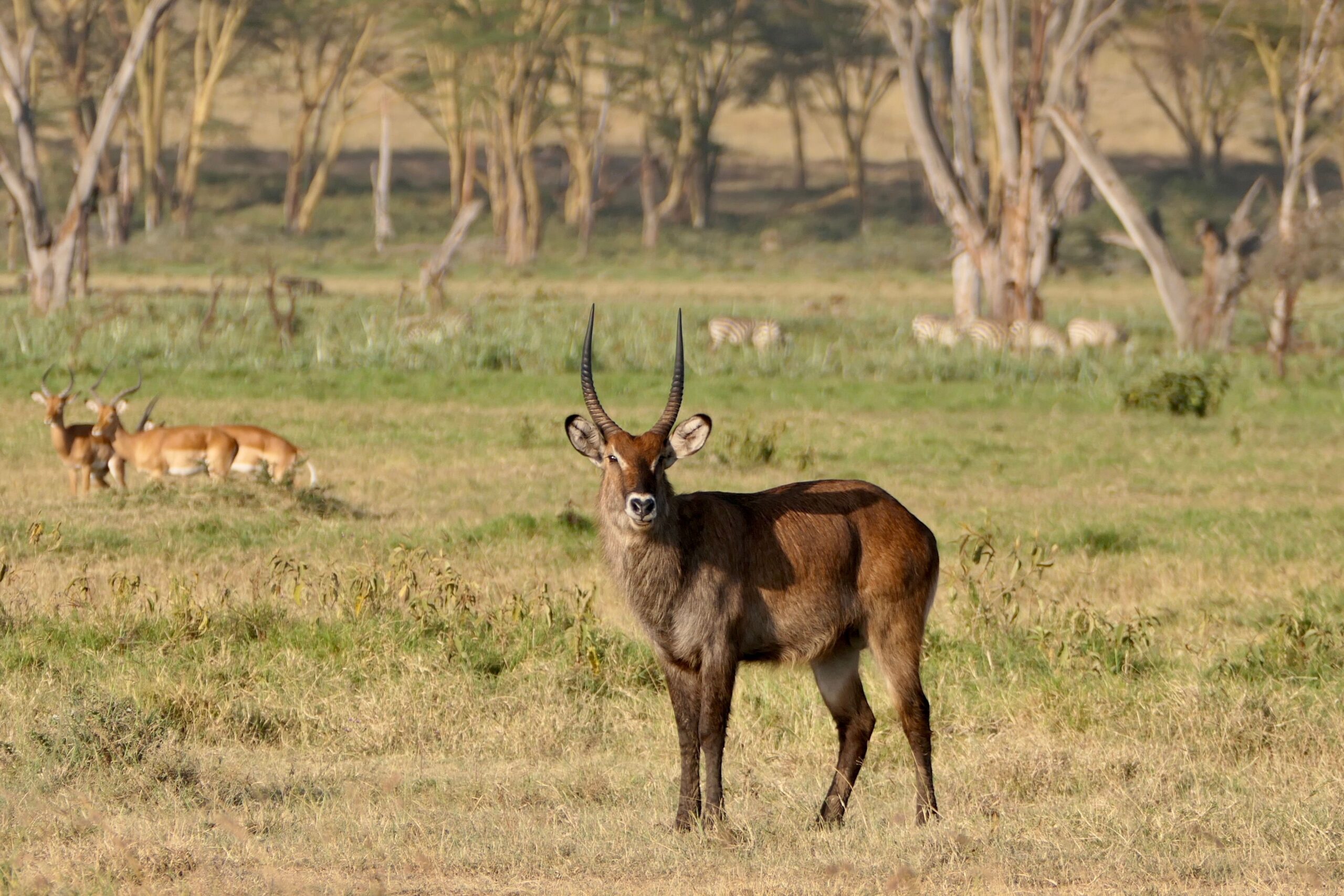
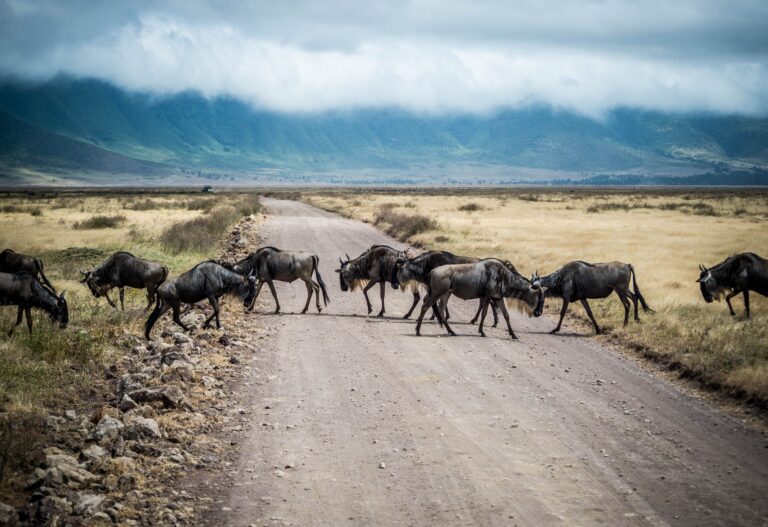
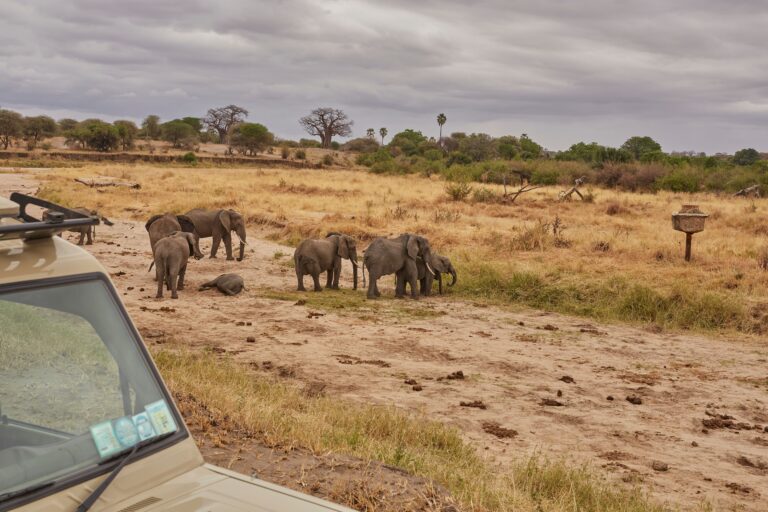
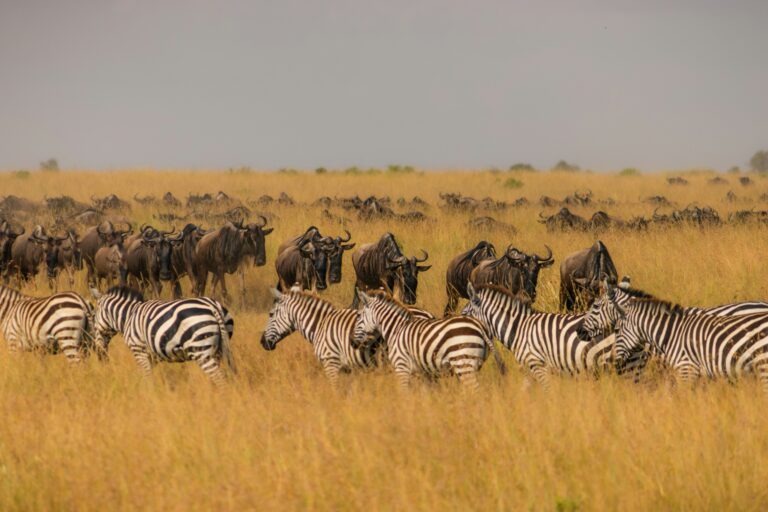
Large elephant herds gather near the Rufiji’s waterholes throughout the dry season, alongside buffalo, giraffe, zebra, wildebeest, eland, and both greater and lesser kudu — a combination rarely found together in one park. Moreover, the mix of miombo woodland and open floodplain supports a wider range of antelope species than the grass-dominated Serengeti ecosystem.
Hippos, Crocodiles, and the Rufiji River
The Rufiji River teems with hippo pods and basking crocodiles, particularly visible from the water during a boat safari. As such, this river system creates a completely different wildlife-viewing experience from a standard vehicle-based game drive, putting visitors at eye level with animals most parks only let you view from a distance.
Birdlife
More than 400 recorded bird species inhabit Nyerere National Park, including African fish eagles, pink-backed pelicans, Goliath herons, and African spoonbills — Source: Tanzania National Parks Authority (TANAPA). For birdwatchers, the wetlands and lake systems around the Rufiji rank among the richest birding environments in East Africa.
What Makes a Rufiji River Boat Safari Different From a Game Drive?
A Rufiji River boat safari involves navigating the park’s waterways by boat to view hippos, crocodiles, and riverine birdlife up close, an experience largely unavailable in Tanzania’s northern parks. Unlike a game drive, where wildlife often keeps its distance from vehicles, animals along the Rufiji tend to be far less disturbed by a slow-moving boat, which lets guests drift within meters of grazing elephants or a bloat of submerged hippos.
Boat Safaris
Boat safaris typically run in the early morning or late afternoon, when temperatures are cooler and animals are most active near the water. Guides navigate channels lined with borassus palms and reed marshes, pointing out species that a vehicle simply cannot reach. This activity alone is often the single most memorable part of a Nyerere itinerary.
Game Drives
Game drives in Nyerere run at similar times to those in the Serengeti, typically beginning around 6:00 a.m. to catch predators before the day heats up. However, because vehicle density is so much lower here, a single sighting rarely turns into a multi-vehicle gathering, which preserves the sense of discovery that draws experienced travelers south in the first place.
Walking Safaris
Guided walking safaris let visitors track animal signs on foot alongside an armed ranger, offering a completely different perspective on scale and scent that a vehicle can’t replicate. For travelers new to this format, our guide on choosing a Tanzania safari operator covers what to look for in a properly licensed walking safari provider.
Fly Camping
Fly camping involves spending a night or two in a lightweight, temporary bush camp deep inside the park, away from permanent lodges. This option suits travelers who want the most immersive possible wilderness experience and are comfortable with basic amenities in exchange for total remoteness.
When Is the Best Time to Visit Nyerere National Park?
The best time to visit Nyerere National Park runs from late June through October, when the dry season concentrates wildlife around the Rufiji River and its remaining water sources. During these months, sparse vegetation also makes animals easier to spot, and both boat and game-drive sightings become significantly more reliable.
Dry Season (June–October)
This period delivers the most consistent wildlife viewing of the year. Short grass and low water levels push animals toward permanent rivers and lakes, concentrating predators and prey in predictable locations. If your priority is maximizing sightings in a limited number of days, this window is worth building your entire trip around.
Wet Season (November–May)
Short rains arrive in November and December, followed by a partial dry spell in January and February, before longer rains run from March into early May. Wildlife disperses more widely during this period, and some camps close entirely during the heaviest rains. That said, birdlife peaks during the wet season, and lush green landscapes appeal to photographers chasing a different kind of image than the classic dry-season shot.
If you’re coordinating this trip around Tanzania’s northern migration season, our best time to see the great migration guide helps you sequence both parks without conflicting seasonal windows.
How Do You Get to Nyerere National Park From Dar es Salaam?
Most visitors reach Nyerere National Park via a short scheduled or chartered flight from Dar es Salaam, landing at one of several airstrips inside the park in under an hour. Alternatively, a road transfer covers roughly 230 kilometers from Dar es Salaam to Mtemere Gate, though this route takes considerably longer and is less common among international visitors on a tight itinerary.
Flying is the preferred option for most itineraries because it preserves time for game viewing rather than road travel. Additionally, several operators offer combined routings that connect Nyerere directly with Zanzibar, letting travelers pair a wilderness safari with a beach extension in a single trip — see our Zanzibar destination guide for how that connection typically works.
How Does Nyerere Compare to the Serengeti or Ruaha National Park?
Nyerere, the Serengeti, and Ruaha each offer a distinct safari experience shaped by size, wildlife density, and visitor volume. The table below compares the three across the dimensions travelers care about most.
| Feature | Nyerere National Park | Serengeti National Park | Ruaha National Park |
|---|---|---|---|
| Size | ~30,893 sq km (Africa’s largest stand-alone park) | ~14,750 sq km | ~20,226 sq km (Tanzania’s 2nd largest) |
| Signature wildlife | African wild dog, hippo, crocodile, elephant | Wildebeest migration, lion, cheetah | Lion prides, elephant, kudu |
| Signature activity | Boat safaris on the Rufiji River | Vehicle-based game drives | Game drives, walking safaris |
| Visitor density | Low | High, especially June–October | Low to moderate |
| Best known for | Remote, water-based wilderness | The Great Migration | Space and solitude |
As the table shows, Ruaha shares Nyerere’s appeal for solitude-seeking travelers, while the Serengeti remains unmatched for migration-specific viewing. For a deeper side-by-side breakdown of Nyerere and Ruaha specifically, read our comparison of Tanzania’s southern circuit parks, and for northern-circuit context, our Ngorongoro Crater guide and Tarangire National Park guide explain how those parks fit into a combined itinerary.
Planning Your Nyerere Safari: Lodges, Budgets, and Itineraries
Planning a Nyerere safari starts with matching your budget and travel style to the right camp category, since accommodation options here range from simple tented camps to high-end riverside lodges. Nyerere sits in TANAPA’s top park-fee band alongside the Serengeti, which surprises travelers who assume the southern circuit costs less across the board.
Choosing the Right Budget Tier
Budget-conscious travelers can find simpler tented camps outside the park’s core zones, while mid-range and luxury travelers have access to riverside lodges with private boat safaris included. Our budget Tanzania safaris guide, mid-range Tanzania safaris guide, and luxury Tanzania safaris guide each outline what to expect at each price point, including how Nyerere’s fee structure affects total trip cost.
Sample Itinerary Length
Most operators recommend a minimum of three nights in Nyerere to properly experience both boat safaris and game drives, since a single night rarely allows time for both activities plus arrival logistics. For travelers building a longer multi-park trip, our Serengeti itinerary length guide offers a useful framework for allocating days across parks.
Who This Trip Suits
Nyerere works particularly well for honeymooners seeking privacy and for families wanting a slower-paced, less crowded alternative to the northern circuit. Our honeymoon safaris guide and family safaris in Tanzania guide go into more detail on camp selection for each group type.
What Should You Pack for a Nyerere Safari?
Pack breathable long sleeves rather than heavy fleece, since Nyerere is hotter and more humid than the northern circuit, though early boat trips carry a real morning chill. Bring closed walking shoes, a sun hat, high-factor sunscreen, binoculars, and insect repellent as standard essentials. If you’re flying between airstrips, use a soft duffel bag instead of a hard-shell suitcase, since light-aircraft luggage limits are strict and typically sit around 15 kilograms.
What’s Next: Planning Your Nyerere Safari
By this point, you understand what sets Nyerere apart — its scale, its wildlife, and its river-based activities that no northern park can replicate. The next step is turning that understanding into a booked itinerary.
First, decide how Nyerere fits into your broader Tanzania trip. Some travelers combine it with a short northern-circuit extension, while others treat it as a dedicated southern-circuit trip alongside Ruaha or the Udzungwa Mountains National Park and Mikumi National Park. Second, lock in your travel window — the June-to-October dry season books up months in advance among the limited camps operating inside the park. Third, work with an operator who can secure both boat safari slots and airstrip transfers, since these logistics are more complex here than in the more developed northern parks.
For travelers ready to move from research to booking, our team can help you build a custom Nyerere itinerary that matches your budget, travel dates, and appetite for remoteness.
Conclusion
Nyerere National Park proves that Tanzania’s best safari isn’t always its most famous one. Africa’s largest stand-alone park delivers world-class wildlife, a genuinely rare wild dog population, and a river-based safari experience that the crowded northern circuit simply can’t offer. Whether you’re drawn by the promise of solitude, the chance to drift past hippos on the Rufiji, or the appeal of tracking predators without another vehicle in sight, Nyerere rewards travelers willing to go further off the beaten path. Now is the time to plan that trip, before this quietly extraordinary wilderness becomes as well-known as the parks it so effortlessly outshines.


2 Comments