The Ultimate First-Timer’s Guide to Tanzania Safaris
You’ve seen the photos — lions lounging in golden grass, a wildebeest herd stretching to the horizon — and you know a Tanzania safaris belongs on your list. But between choosing the right season, picking parks that actually fit your budget and interests, and figuring out what a “safari” even involves day to day, most first-timers get stuck before they book anything. This guide walks you through everything you need to know, from timing and cost to packing and choosing an operator, so you can plan your first safari with confidence.
Key Takeaways
- A Tanzania safari typically combines guided game drives across national parks with stays at lodges or tented camps, most commonly in the Serengeti, Ngorongoro Crater, Tarangire, and Lake Manyara.
- The best time for a first-time safari depends on your priorities. The dry season (June–October) offers easier wildlife viewing, while the Great Migration’s calving season (January–March) and river crossings (July–September) each call for different park timing.
- First-time safari budgets in Tanzania generally range from $200–$400 per person per day for mid-range trips to $700 or more per day for luxury lodges, with park fees, guide costs, and accommodation as the main cost drivers.
- The Serengeti and Ngorongoro Crater are considered essential parks for first-timers due to their wildlife density and the Crater’s compact, easy-to-navigate ecosystem.
- Proper preparation includes neutral-colored clothing, layered outfits for early morning cold, a valid yellow fever certificate if arriving from an endemic country, and travel insurance covering medical evacuation.
- Choosing a reputable, licensed tour operator with transparent pricing and verifiable reviews is the single most important decision for a safe and well-organized first safari.
- Booking 6–12 months in advance is recommended for popular parks and peak migration season to secure availability and better rates.
What Is a Tanzania Safari?
A Tanzania safari is a guided wildlife-viewing trip through national parks and conservation areas, typically involving game drives in a 4×4 vehicle led by a licensed guide. The word “safari” itself simply means “journey” in Swahili, but in modern travel it refers specifically to this style of guided wildlife trip. For a first-timer, understanding the basic shape of the experience makes every other planning decision — timing, cost, packing — much easier to think through.
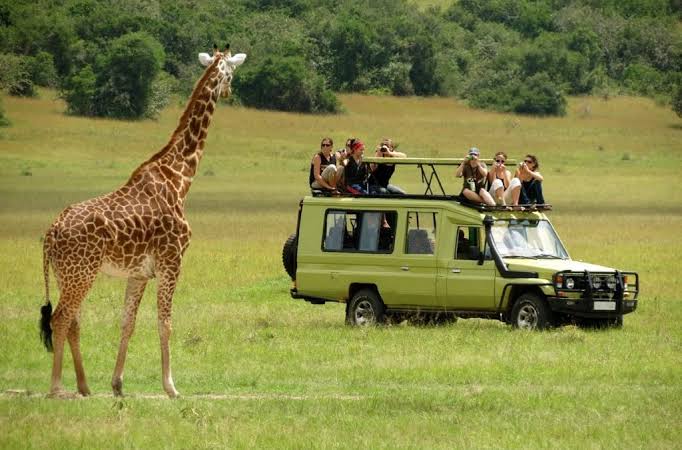
At its core, a typical safari day follows a simple rhythm. You wake before sunrise for an early game drive (a scheduled outing in an open-sided or pop-top 4×4 vehicle to search for and observe wildlife), return to your lodge or camp for breakfast and a midday rest, then head out again for a late-afternoon drive that ends around sunset. Guides communicate with each other by radio, so if another vehicle spots a resting leopard or a lion pride on a hunt, your driver can reroute to get you there. Read more about what to expect on your first game drive.
Accommodation ranges from simple tented camps to elaborate luxury lodges, but almost every safari package includes lodging, meals, a guide, transport, and park entry fees bundled together. For example, a standard 5-day itinerary might include two nights near the Serengeti, one night at Ngorongoro Crater, and two nights in Tarangire or Lake Manyara, with all transfers handled by your operator. Most first-time itineraries run between 5 and 8 days, long enough to visit two or three parks without feeling rushed.
Safaris also introduce a bit of new vocabulary worth learning upfront. The Big Five — lion, leopard, elephant, buffalo, and rhino — refers to the five animals historically considered the most difficult and dangerous to hunt on foot, and the term has stuck as a benchmark for safari sightings. Knowing this term before you go means you won’t feel lost when your guide mentions it on day one.
How Many Days Do You Need for a First Tanzania Safari?
Most first-time travelers need a minimum of five days to see Tanzania’s core parks without rushing between them. A shorter 3-day trip is possible but usually limits you to just one or two parks, which cuts into both wildlife variety and the sense of scale that makes a safari memorable. As such, travel advisors commonly recommend a 6- to 9-day trip that combines the Serengeti, Ngorongoro Crater, and at least one smaller park like Tarangire or Lake Manyara.
Longer trips also reduce daily transit time, since some parks are several hours apart by road. For example, a 7-day itinerary allows two full days in the Serengeti — enough time to catch varied wildlife activity across different times of day, rather than a single rushed pass-through.
Why Tanzania Is a Top Choice for First-Time Safari-Goers
Tanzania stands out among African safari destinations because it pairs an unusually high concentration of wildlife with well-developed, first-timer-friendly tourism infrastructure. Few countries combine so many strong ecosystems within a single, relatively compact travel circuit. That combination is exactly what makes it forgiving for travelers who have never planned an international wildlife trip before.
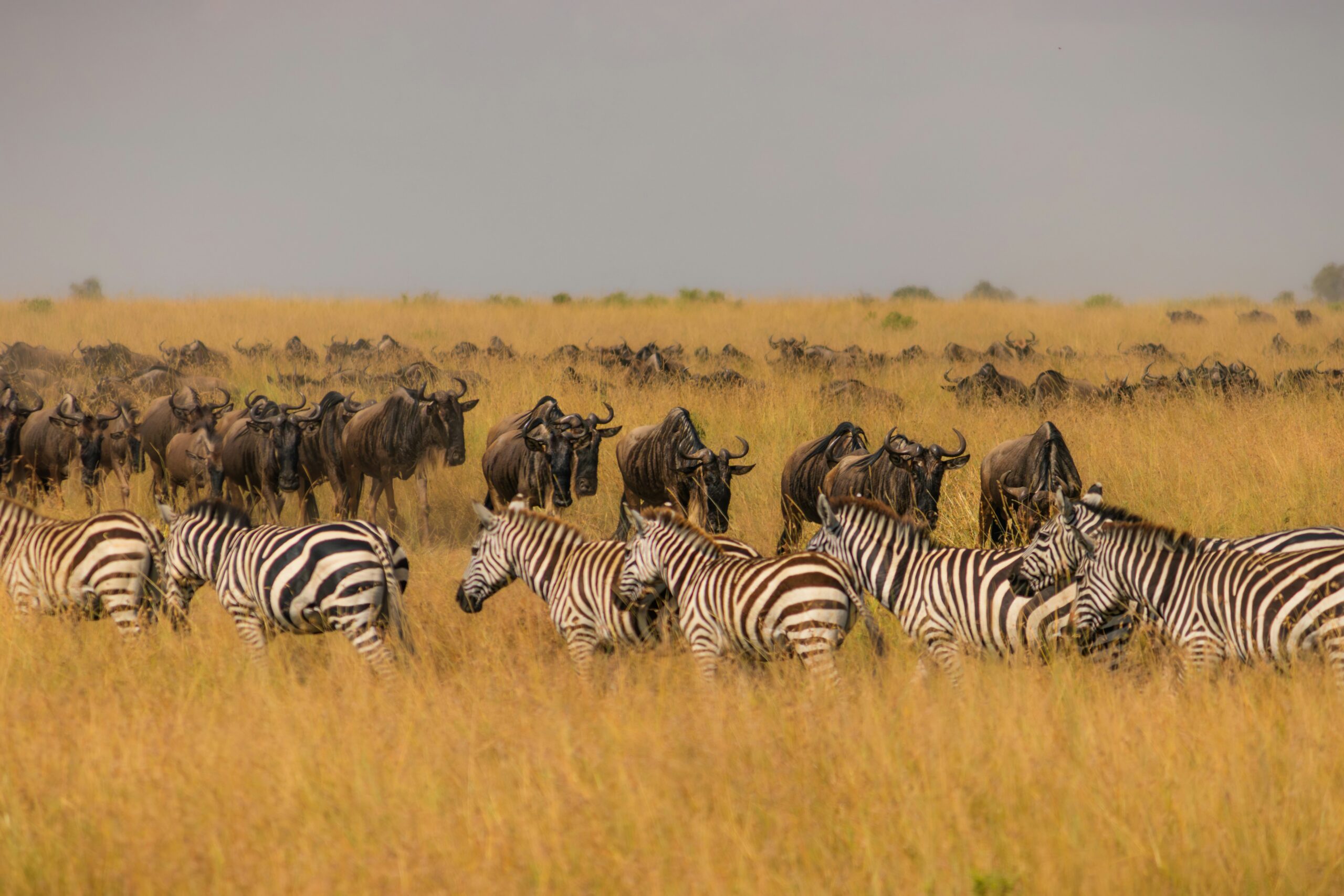
First, Tanzania is home to the Great Migration, one of the largest wildlife movements on Earth. “The Great Migration involves roughly two million wildebeest and zebra moving in a continuous loop between the Serengeti in Tanzania and the Masai Mara in Kenya in search of grazing land.” This event alone draws hundreds of thousands of visitors every year, and unlike many wildlife spectacles, it happens on a predictable seasonal cycle, which makes it something you can actually plan a trip around.
Second, Tanzania offers extraordinary Big Five density concentrated in a handful of accessible parks. Roughly 38% of mainland Tanzania is set aside as protected parks, reserves, and conservation areas — Source: Tanzania National Parks Authority, 2024. That level of protected land is part of why sightings feel so reliable compared to destinations with more fragmented or heavily developed wildlife areas.
Third, the country’s tourism infrastructure has matured considerably. Well-established road networks connect major parks, licensed guides undergo standardized training, and a wide range of accommodation — from budget camps to five-star lodges — caters to nearly any comfort level or price point. This matters more than it might seem: for a first-timer, infrastructure reliability often determines whether a trip feels adventurous or simply stressful.
Finally, Tanzania’s parks offer genuine ecological variety within a short travel radius. The Serengeti’s open plains, the Ngorongoro Crater’s contained caldera, Tarangire’s baobab-dotted woodlands, and Lake Manyara’s lush groundwater forest each feel distinct, so even a first trip covers meaningfully different landscapes rather than one repetitive environment. You can browse the full range of parks and conservation areas on our Tanzania destinations page if you want to see how they compare before narrowing down your itinerary.
When Is the Best Time to Go on a Tanzania Safari?
The best time to visit Tanzania for a safari is the dry season, from June to October, because animals gather predictably near limited water sources. “The dry season, from June to October, is the best time for first-time visitors to see wildlife in Tanzania because animals gather near limited water sources, making sightings easier.” That said, the “best” time really depends on what you most want to see, since Tanzania’s wildlife calendar shifts meaningfully across the year.
At the same time, the Great Migration follows its own separate rhythm that doesn’t always align neatly with the dry season. Calving season, when hundreds of thousands of wildebeest give birth within a few weeks, peaks from late January through March in the southern Serengeti and Ndutu area. Meanwhile, the dramatic river crossings — where herds cross the crocodile-infested Mara and Grumeti Rivers — typically happen from July through September, as animals push north toward Kenya. Our Great Migration safaris guide breaks this cycle down further if you want to time your trip around a specific event.
Below is a quick reference for how Tanzania’s seasons trade off against each other.
| Season | Months | Wildlife Viewing | Weather | Crowds & Price |
|---|---|---|---|---|
| Dry season (peak) | June–October | Excellent; animals cluster at water sources | Sunny, cool mornings, little rain | High crowds, highest prices |
| Calving season | Late Jan–March | Strong in southern Serengeti/Ndutu; predator activity high | Warm, some short rains | Moderate crowds, moderate-high prices |
| Long rains | April–May | Weaker; vegetation is dense and animals disperse | Heaviest rainfall of the year | Low crowds, lowest prices |
| Short rains | November–December | Good; green season with newborn animals | Brief afternoon showers | Moderate crowds, moderate prices |
For example, a traveler prioritizing dramatic river crossings should target late July through early September and book the northern Serengeti specifically, while someone chasing predator action during calving season should look at Ndutu in February instead. Plus, if your main goal is simply comfortable weather and reliable sightings without much regard for the migration’s exact location, June through October remains the safest bet for a first trip.
Shoulder-season travel (November or April–May) can also work well for budget-conscious first-timers who don’t mind occasional rain, since prices drop and parks feel far less crowded. This is a reasonable trade-off if flexibility matters more to you than guaranteed dry skies.
Peak Season vs. Shoulder Season: What Actually Changes
It helps to understand exactly what shifts between peak and shoulder season, since the differences go beyond just weather. During peak dry season, popular camps in the Serengeti and Ngorongoro can book out 6–12 months ahead, and daily rates for the same lodge can run 20–40% higher than the same room in the low season. At the same time, wildlife doesn’t disappear during the rains — it simply disperses more widely across the landscape, which can mean longer drives between sightings.
For first-timers with flexible schedules, this trade-off is worth thinking through deliberately rather than defaulting to “dry season” without considering why. For example, a couple traveling in early May might pay 25–30% less for the same lodge a peak-season traveler booked in August, in exchange for slightly less predictable — but still very real — wildlife viewing. That’s a reasonable trade if budget flexibility matters more than guaranteed conditions.
Which Tanzania National Parks Are Best for First-Timers?
The parks best suited for first-time Tanzania safari-goers are the Serengeti, Ngorongoro Crater, Tarangire, and Lake Manyara, because together they offer the country’s highest wildlife density with manageable travel logistics. Tanzania has more than 20 national parks, but a first trip almost never needs to attempt more than three or four of them. Understanding what each park does well helps you build an itinerary instead of guessing.
Serengeti National Park
The Serengeti is Tanzania’s largest and most famous park, known for its endless open plains and central role in the Great Migration. Covering nearly 15,000 square kilometers, it hosts large predator populations year-round in addition to migratory herds. For example, even outside migration season, the Serengeti’s resident lion prides and consistently strong leopard sightings make it worth two or more nights on almost any itinerary. Visit our Serengeti National Park guide to compare accommodation options and camp locations within the park.
Ngorongoro Crater
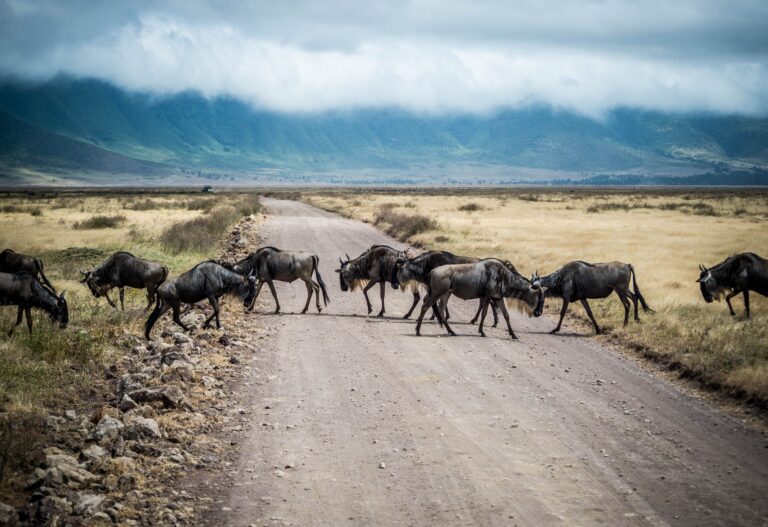
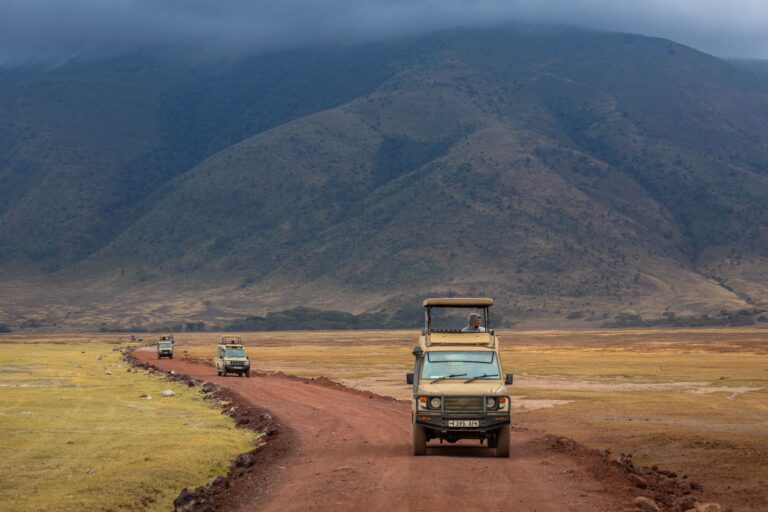
“The Ngorongoro Crater is a collapsed volcanic caldera in northern Tanzania that hosts one of the highest concentrations of wildlife per square mile in Africa, making it especially suited to first-time safari travelers.” Because the crater floor is enclosed and roughly 260 square kilometers, wildlife can’t migrate out the way it does elsewhere, which means sightings feel dense and reliable even on a single day trip. This compactness is exactly why it’s often paired with the Serengeti on a 6- to 7-day itinerary. Our Ngorongoro Crater guide walks through what makes it different from the Serengeti if you’re deciding how to split your time between the two.
Tarangire National Park
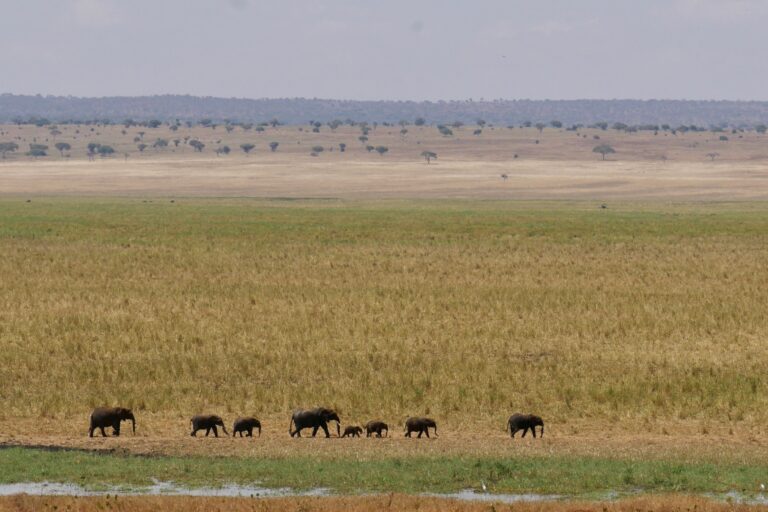
Tarangire is best known for its enormous elephant herds and iconic baobab-tree landscape, particularly during the dry season when animals concentrate along the Tarangire River. Herds of 300 or more elephants aren’t unusual here between June and October, a scale rarely matched elsewhere in northern Tanzania. This makes Tarangire a strong add-on park, especially for travelers flying into Kilimanjaro International Airport, since it’s a short drive from Arusha.
Lake Manyara National Park
Lake Manyara offers a compact, lush contrast to the open plains found elsewhere, with groundwater forest, a soda lake, and notable birdlife. It’s often used as an easy first- or last-day stop because of its proximity to Arusha, giving travelers a gentle introduction or wind-down before or after the more intense Serengeti and Ngorongoro legs of a trip. For families or travelers with limited mobility, Lake Manyara’s shorter drive times and flatter terrain also make it more comfortable than some of the country’s more remote parks. Our family-friendly Tanzania safari options page covers more on planning around different traveler needs, and if this trip is doubling as a honeymoon or anniversary, our honeymoon safaris page is worth a look too.
For a sense of how these four parks typically combine, our Tanzania safari experiences page lays out sample day-by-day itineraries built around this exact park combination.
How Much Does a First-Time Tanzania Safari Cost?
A first-time Tanzania safari typically costs between $200 and $700 or more per person per day, depending on the level of accommodation and service you choose. “A mid-range Tanzania safari typically costs between $200 and $400 per person per day, including accommodation, meals, park fees, and a guide, while luxury safaris can exceed $700 per day.” Understanding what drives that range helps you set a realistic budget before you start comparing operators.
How Do You Choose Between a Budget, Mid-Range, and Luxury Safari?
The right tier depends on how much you value comfort and exclusivity versus keeping costs down, since all three tiers can deliver strong wildlife viewing. Budget safaris generally run $150–$250 per person per day and use shared or basic tented camps with simpler meals and group vehicles. Mid-range safaris, the most common choice for first-timers, run $200–$400 per day and typically include private vehicles, more comfortable tented camps or lodges, and better-trained guides. Luxury safaris exceed $700 per day and add features like private plunge pools, gourmet dining, light-aircraft transfers between parks, and highly personalized guiding.
The table below breaks down what’s typically included and excluded at each tier.
| Tier | Price per person/day | Typically Included | Typically Excluded |
|---|---|---|---|
| Budget | $150–$250 | Shared vehicle, basic tented camp, meals, park fees | Alcohol, tips, international flights, some park-specific fees |
| Mid-range | $200–$400 | Private vehicle, guide, comfortable lodge/camp, meals, park fees | Alcohol, tips, visa, international flights |
| Luxury | $700+ | Private guide/vehicle, premium lodge, most meals and drinks, sometimes internal flights | International flights, some premium excursions, gratuities |
Park fees are one of the biggest hidden cost drivers first-timers underestimate. Serengeti park fees alone run approximately $70 per person per day for non-residents — Source: Tanzania National Parks Authority, 2024. Multiply that across a 5- to 7-day itinerary covering two or three parks, and fees alone can add several hundred dollars to your total, which is why reputable operators list them as a separate, itemized line rather than folding them silently into a single “package price.”
For a deeper look at what pushes costs toward the top end, our luxury Tanzania safaris page breaks down premium lodge pricing in more detail. Plus, most operators quote in US dollars and expect payment in dollars on the ground, so factor currency exchange and card fees into your planning as well.
What’s Usually Excluded From a Safari Quote?
Even well-itemized quotes tend to leave out a predictable set of costs, and first-timers who don’t budget for them are often surprised by the final total. International flights to Kilimanjaro or Arusha are almost never included, and neither is the visa fee, which typically runs $50–$100 depending on nationality. Tips for guides and camp staff are also customary but excluded — a common industry benchmark is $15–$25 per day for your guide and $10–$15 per day split among camp staff, though this varies by operator and service level.
Alcohol, spa treatments, and optional add-ons like hot-air balloon safaris over the Serengeti (which typically cost $500–$600 per person) are also billed separately in most packages. As such, a smart approach is to ask your operator for a “true total” estimate that folds in flights, visa, tips, and any optional extras you’re likely to want, rather than budgeting only against the advertised daily rate.
Sample Budget Breakdown: 7-Day Mid-Range Safari for Two
To make the cost structure more concrete, here’s roughly how a 7-day mid-range trip for two travelers might break down:
| Cost Category | Estimated Total (2 travelers) |
|---|---|
| Accommodation, meals, guide, vehicle (7 days) | $4,200–$5,600 |
| Park and conservation fees | $900–$1,100 |
| Domestic transfers | $200–$400 |
| Visas (2 travelers) | $100–$200 |
| Tips and gratuities | $350–$450 |
| Estimated total (excluding international flights) | $5,750–$7,750 |
This range gives you a realistic anchor point when comparing quotes, and it also explains why two operators quoting “$5,500 for a 7-day mid-range safari” and “$8,000 for the same trip” aren’t necessarily comparing the same level of service — it’s worth asking exactly what’s driving the gap before assuming either number is wrong.
What Should You Pack for a Tanzania Safari?
The most important items to pack for a Tanzania safari are neutral-colored, layered clothing, sun protection, and a small set of safari-specific gear like binoculars. Packing for a safari differs from typical vacation packing in a few important ways, mostly driven by early-morning cold, dust, and the practical limits of small bush-plane luggage allowances.
Clothing and Gear
Neutral colors — khaki, olive, tan, and muted greens — work best because bright colors and pure white can startle wildlife, while dark blue and black can attract tsetse flies in certain regions. Layering matters just as much as color, since early morning game drives can start near 50°F (10°C) even though afternoons often climb into the 80s (upper 20s Celsius). For example, a packable fleece or light jacket over a long-sleeve shirt lets you shed layers as the day warms up without needing a full outfit change.
A short, practical packing list for first-timers includes:
- Lightweight, neutral-colored layers (long sleeves recommended for sun and insect protection)
- A warm layer for early morning and evening game drives
- Comfortable, closed-toe walking shoes
- A wide-brimmed hat and polarized sunglasses
- Binoculars (ideally one pair per person, not shared)
- A dry bag or dust-proof case for cameras and electronics
- A reusable water bottle
- High-SPF sunscreen and insect repellent with DEET
If you’re flying between parks on smaller bush planes, luggage is usually limited to around 15 kilograms (33 lbs) in a soft-sided bag, so pack accordingly and check this limit with your operator well before your trip.
Do You Need Vaccinations or a Visa to Go on Safari in Tanzania?
Most travelers need a visa and should carry proof of yellow fever vaccination if arriving from or transiting through a country where yellow fever is endemic. Tanzania offers e-visas and visa-on-arrival for many nationalities, but requirements change periodically, so it’s worth confirming your specific country’s rules a few months before departure. If you’re unsure what applies to your nationality, contact our team and we can point you to the current process.
On the health side, the CDC and most travel clinics recommend consulting a doctor at least 4–6 weeks before departure to discuss vaccinations for hepatitis A, typhoid, and routine boosters, along with malaria prevention medication — Source: CDC Travel Health Notices, 2024. Malaria risk exists across most Tanzanian safari regions, so prophylactic medication is strongly recommended rather than optional. Travel insurance that specifically covers medical evacuation is also considered essential, since remote parks can be hours from the nearest advanced medical facility.
Is Tanzania Safe for First-Time Safari Travelers?
Tanzania is generally considered safe for first-time safari travelers when they book through licensed, reputable operators and follow standard guide instructions. Serious incidents involving tourists on organized safaris are rare, largely because reputable operators use trained guides, well-maintained vehicles, and established park protocols. That said, safety on safari mostly comes down to following simple rules: stay inside the vehicle unless your guide explicitly says otherwise, keep noise to a minimum near wildlife, and never attempt to feed or approach animals directly.
Beyond wildlife safety, general travel precautions apply just as they would in any destination — securing valuables, using reputable transport between the airport and your accommodation, and keeping copies of important documents. As such, most safety concerns for first-timers are more about trip logistics and operator reliability than about the wildlife itself.
How Do You Choose a Trustworthy Safari Tour Operator?
The most important factor in choosing a Tanzania safari operator is verifying that they are licensed, transparent about pricing, and backed by genuine, checkable reviews. Because so much of a safari’s quality depends on the guide, vehicle, and camp your operator selects, this single decision affects nearly every other part of your trip.
Start by confirming licensing. Tanzania requires tour operators to hold a valid license through the Tanzania Tourist Board, and reputable companies display this information openly on their website or provide it on request. For example, an operator that hesitates or gives a vague answer when asked for licensing details is a clear warning sign worth taking seriously.
Next, look closely at pricing structure. A trustworthy quote itemizes park fees, accommodation, guide costs, and transport separately rather than bundling everything into one opaque number. This matters because park fees are set by the government and don’t vary between operators, so if two quotes show wildly different “all-in” prices for a similar itinerary, the gap is usually coming from cheaper accommodation, shared vehicles, or less experienced guides rather than genuine savings.
Reviews matter, but not all reviews are equally useful. Prioritize recent reviews (within the past 12–18 months) on independent platforms over testimonials posted only on the operator’s own site, since independent platforms are harder to curate selectively. Plus, look specifically for mentions of guide knowledge and vehicle condition, since these two factors affect day-to-day trip quality more than almost anything else.
Before booking, it’s worth asking a short set of direct questions:
- Are your guides licensed, and how many years of experience do they typically have?
- Is the vehicle private to my group, or shared with other travelers?
- What exactly is included and excluded in the quoted price?
- What is your cancellation and refund policy?
- Do you carry appropriate liability insurance?
If you’d rather skip the guesswork, you can ask us directly — we’re happy to walk through our licensing, pricing breakdown, and vehicle setup so you can compare it against any other quote you’re considering.
Sample First-Timer Itinerary
To make this concrete, here’s a common 7-day structure many mid-range operators build first-time trips around:
- Days 1–2: Arrive at Kilimanjaro International Airport, transfer to Tarangire National Park for two game drives
- Day 3: Travel to Lake Manyara for an afternoon game drive
- Day 4: Transfer to the Ngorongoro Crater area, descend into the crater for a full-day game drive
- Days 5–6: Travel to the Serengeti for two full days of game drives across different regions of the park
- Day 7: Morning game drive, then transfer back to Arusha or Kilimanjaro for departure
This structure balances travel time against wildlife-viewing time reasonably well, which is exactly why so many operators default to some version of it for first-time clients.
What Wildlife Will You See on a Tanzania Safari?
You can expect to see a wide range of wildlife on a Tanzania safari, including the Big Five, large herbivore herds, and, depending on season, the wildebeest migration itself. Lion, leopard, elephant, buffalo, and rhino sightings are realistic across a well-planned itinerary, though rhino sightings remain the rarest of the five due to Tanzania’s smaller remaining rhino population, concentrated mainly in the Ngorongoro Crater.
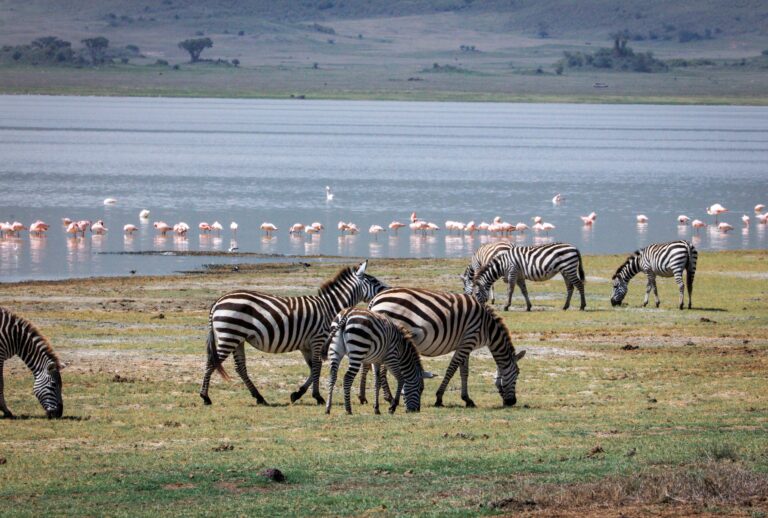
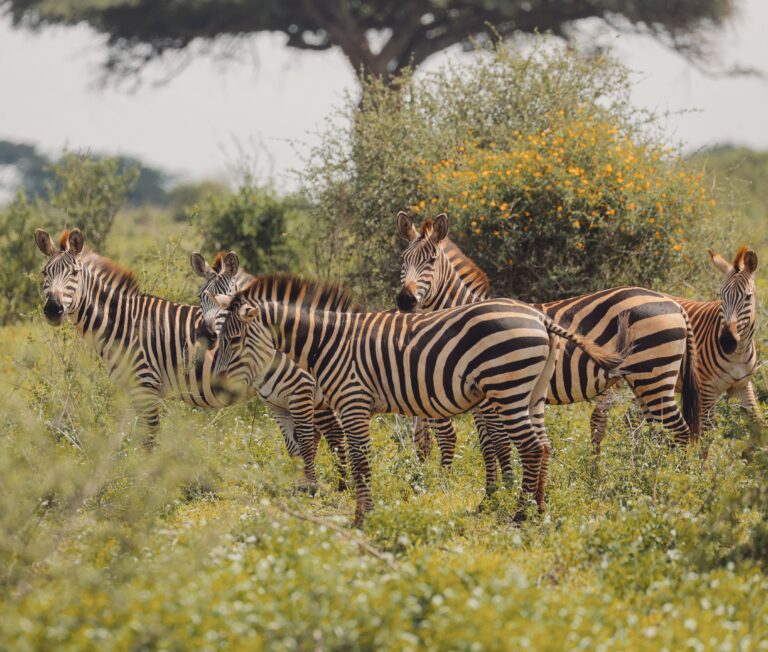
Beyond the Big Five, expect regular sightings of giraffe, zebra, hippo, and multiple antelope species such as impala, wildebeest, and eland. Birdlife is also exceptional, with Tanzania hosting over 1,100 recorded bird species — Source: Tanzania Birding Atlas, 2023 — making even non-birders likely to spot flamingos at Lake Manyara or ostriches on the Serengeti plains. For example, a single game drive through the Serengeti during peak season can realistically produce sightings of lion, giraffe, elephant, and dozens of bird species within just a few hours.
It’s worth setting realistic expectations, too. Wildlife sightings are never guaranteed on any single drive, and even experienced guides can’t promise a leopard sighting or a river crossing on demand. That said, a well-timed, multi-day itinerary across two or three parks dramatically improves your odds, since more time and more terrain simply mean more chances. First-timers who build in at least four to five full game-drive days, rather than two or three, consistently report a fuller, less rushed sense of having “seen” Tanzania’s wildlife rather than sampling it.
What Does a Typical Game Drive Actually Look Like?
A typical game drive lasts three to four hours and follows a loose route your guide adjusts in real time based on radio updates from other vehicles and fresh tracks. Mornings tend to be more active, since many predators hunt at dawn before the heat sets in, while afternoon drives often reveal more relaxed behavior — animals resting in shade, elephants at waterholes, or herds grazing in the cooler evening light.
Your guide will typically pause the vehicle near sightings, cut the engine when appropriate, and give you time to photograph and observe before moving on. Talking above a whisper, standing up in the vehicle, or asking to get closer than your guide recommends are all discouraged, both for your safety and to avoid disturbing the animals. Understanding this rhythm in advance — quiet observation punctuated by genuine excitement, rather than a nonstop parade of sightings — helps first-timers calibrate their expectations before the first drive even begins.
How to Choose a Safari Operator or Itinerary: Tools and Practical Applications
Beyond simply picking an operator, first-timers benefit from a few practical tools and habits that make comparison shopping easier. Treat this stage of planning the way you’d treat comparing flight itineraries — line up the same variables across each option so you’re comparing apples to apples.
Build a simple comparison spreadsheet with columns for park combination, number of nights, accommodation tier, vehicle type (private vs. shared), and total itemized price. This can catch inconsistencies quickly. For example, if one operator’s mid-range quote is 30% cheaper than two others for an identical park combination and trip length, that gap usually signals a shared vehicle, a lower-tier camp, or fewer included meals rather than a genuine bargain.
Cross-reference operator claims against independent review platforms and, where possible, forums where past travelers share candid feedback. Free tools like Google Maps reviews and general travel forums work well alongside more curated safari-specific review sites, giving you a fuller, more balanced picture than relying on any single source. Also request a detailed day-by-day itinerary in writing before paying any deposit, since a vague itinerary is often an early sign of a disorganized operator.
Finally, confirm cancellation flexibility and payment terms in writing. Reputable operators typically require a deposit of 20–30% to secure your dates, with the balance due 60–90 days before departure — a structure that protects both sides and gives you time to catch any errors in your booking well before your trip.
What’s Next: How to Plan and Book Your First Tanzania Safari
Now that you understand the core building blocks — timing, parks, cost, and operator selection — the next step is turning that knowledge into an actual booking. This stage is where planning becomes concrete, so treat it as a short sequence rather than a single overwhelming decision.
- Set your priorities first. Decide whether migration timing, budget, or specific parks matter most to you, since this single decision shapes almost everything else.
- Set a realistic budget range. Use the mid-range figure of $200–$400 per person per day as a starting benchmark, then adjust up or down based on your chosen tier.
- Shortlist 3–5 licensed operators, and feel free to request a quote from our team as one of them — ask for itemized pricing for the same itinerary length and park combination from each operator you compare.
- Compare quotes side-by-side. Use a simple spreadsheet to line up accommodation tier, vehicle type, and inclusions across every quote.
- Book 6–12 months ahead, especially for peak dry season or migration-timed trips, since popular camps sell out well in advance.
- Handle health and visa requirements at least 4–6 weeks before departure, including any recommended vaccinations and travel insurance.
- Finalize your packing list roughly two to three weeks before your trip, once you know your exact itinerary and any bush-plane luggage limits.
Following this sequence in order — rather than jumping straight to comparing prices — tends to produce a smoother booking process, since your priorities end up shaping the comparison instead of the other way around.
Conclusion
Planning a first Tanzania safari can feel overwhelming at the start, but it really comes down to a handful of connected decisions: when to go, which parks to prioritize, how much to budget, and who to book with. Once you’ve worked through those four pieces, the rest of the trip tends to fall into place. The payoff for that planning effort is significant — few travel experiences match the feeling of watching a lion pride wake up at dawn on the Serengeti plains, or looking out over the Ngorongoro Crater’s sweeping wildlife-filled floor for the first time.
Start with your priorities, build a realistic budget, and give yourself enough lead time to book with a reputable operator. Your first Tanzania safari is closer than it might feel right now — reach out to our team whenever you’re ready to turn this guide into an actual itinerary.

4 Comments