
Tarangire National Park: The Ultimate Guide to Elephants, Baobabs and When to Go
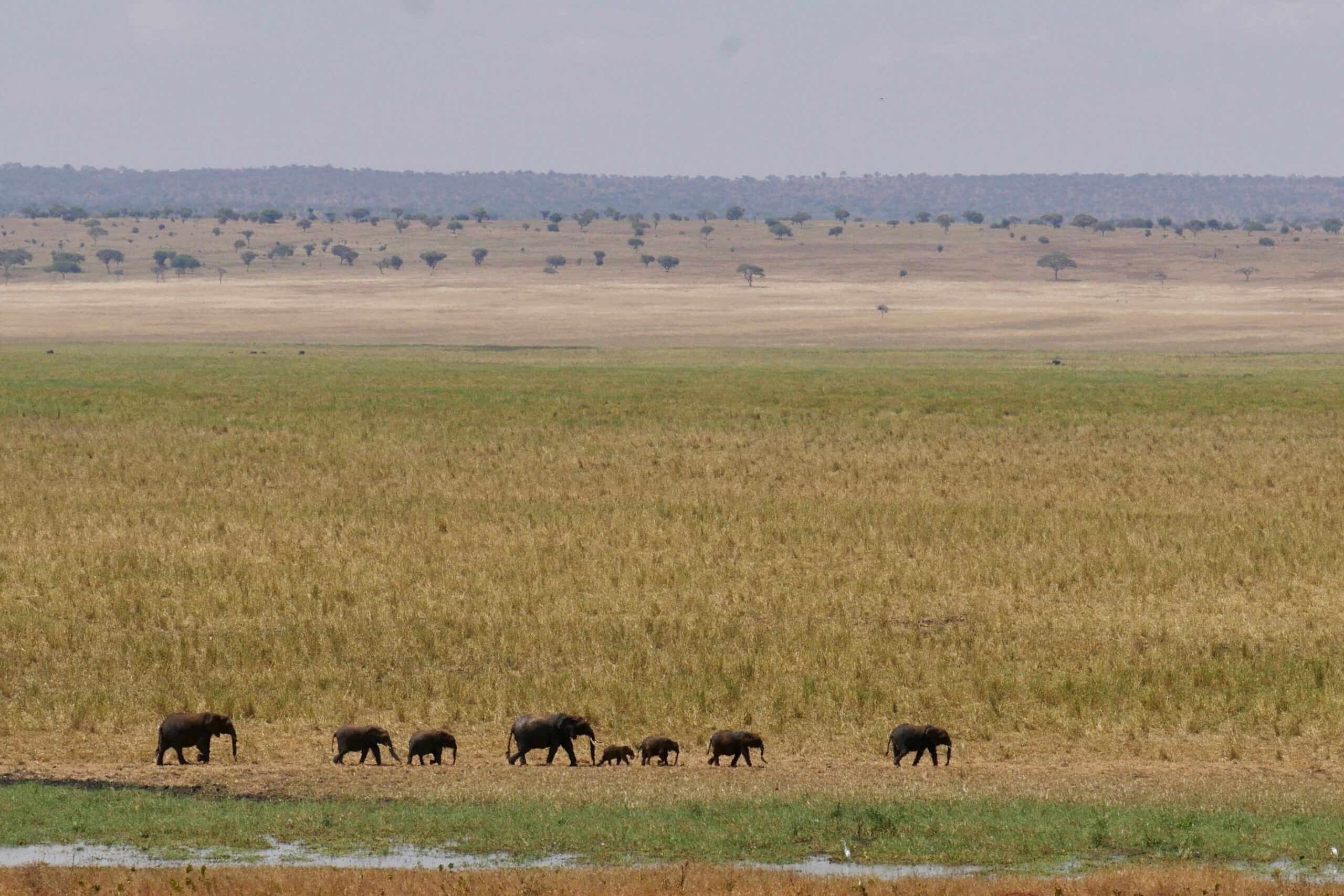
You’ve probably already pictured a Tanzania safari full of lions on the Serengeti plains or flamingos ringing Ngorongoro Crater. But one park quietly holds some of the continent’s largest elephant herds and a skyline of ancient baobab trees, and most first-time visitors don’t know when to go to see it at its best. In this guide, we’ll explain exactly what makes Tarangire National Park worth the detour, and the season that will make or break your visit.
Key Takeaways
- Tarangire National Park covers roughly 2,850 square kilometers in northern Tanzania and forms part of the country’s popular northern safari circuit.
- Tarangire hosts one of Africa’s largest elephant concentrations, with herds gathering along the Tarangire River especially during the dry season.
- The park’s baobab trees, some centuries old, define its skyline and distinguish it visually from the open grasslands of the Serengeti.
- The dry season, roughly June through October, offers the best wildlife viewing because animals concentrate near the permanent river.
- The wet season, roughly November through May, brings lush scenery, migratory birds, and newborn animals, but wildlife is more dispersed.
- Tarangire sees fewer visitors than the Serengeti or Ngorongoro Crater, making it a strong choice for travelers who want a quieter safari experience.
- Combining Tarangire with nearby parks like Lake Manyara creates a well-rounded northern circuit itinerary.
What Is Tarangire National Park?
Tarangire National Park is a 2,850-square-kilometer wildlife reserve in northern Tanzania, named after the Tarangire River that runs through it and sustains the region’s wildlife during the dry season. It sits in the Manyara Region, roughly two to two-and-a-half hours by road from Arusha, and forms a key stop on Tanzania’s northern safari circuit alongside the Serengeti, Ngorongoro Crater, and Lake Manyara.
First, the park’s landscape is what sets it apart. Tarangire combines rolling hills, seasonal swamps, granite ridges, and acacia woodland with open savannah, creating a more varied terrain than the flat grass plains most people picture when they think “Tanzania safari.” Moreover, this mix of habitats supports an unusually wide range of species within a relatively compact area.
At the same time, Tarangire is best known for two things that give this guide its name: elephants and baobab trees. The park holds one of the highest elephant densities in East Africa, and its skyline is punctuated by baobabs that can live for well over a thousand years. Established in 1970 and managed by the Tanzania National Parks Authority (TANAPA), Tarangire is the sixth-largest national park in the country, yet it remains far less crowded than its more famous neighbors — a fact that shapes almost everything else in this guide.
For a full destination overview, including maps, activities, and access details, see our Tarangire National Park destination guide.
Tarangire at a Glance
For a quick reference before diving into the details, here’s how Tarangire’s core facts break down:
| Detail | Figure |
|---|---|
| Size | ~2,850 square kilometers |
| Established | 1970 |
| Governing body | Tanzania National Parks Authority (TANAPA) |
| Distance from Arusha | ~118 km (2-2.5 hour drive) |
| Peak elephant population | Estimated 2,500-3,000+ individuals |
| Recorded bird species | 400+ |
| Best season | June-October (dry season) |
These figures give you a working framework, but the details behind them, particularly the elephant behavior and the baobab landscape, are what actually shape the on-the-ground experience. Let’s dig into both.
Why Tarangire National Park Matters
Tarangire matters because it delivers big-name safari wildlife with a fraction of the crowds you’ll find in the Serengeti or Ngorongoro Crater. That combination is rare in northern Tanzania, where the most famous parks can feel busy during peak season.
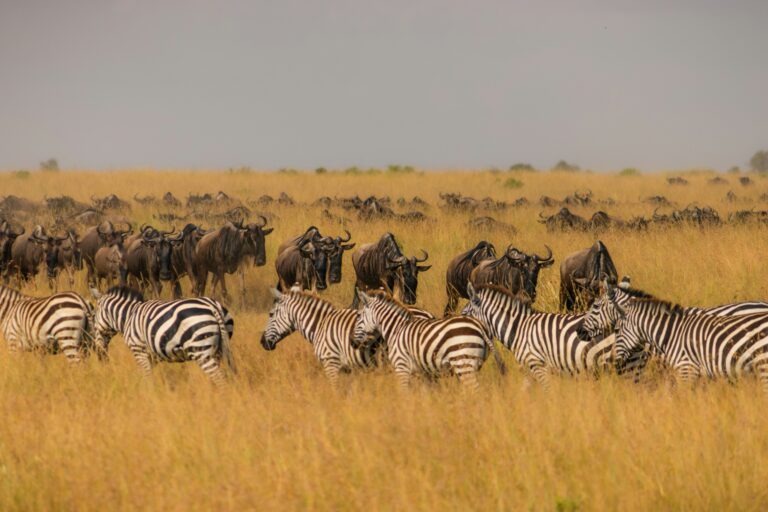
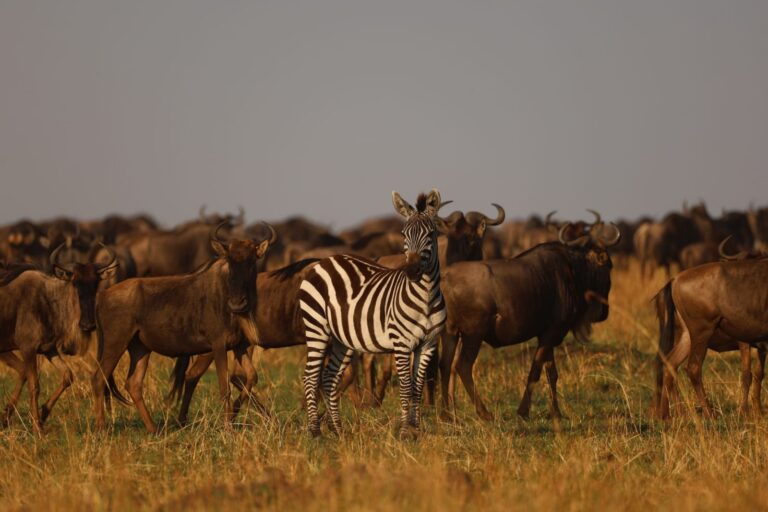
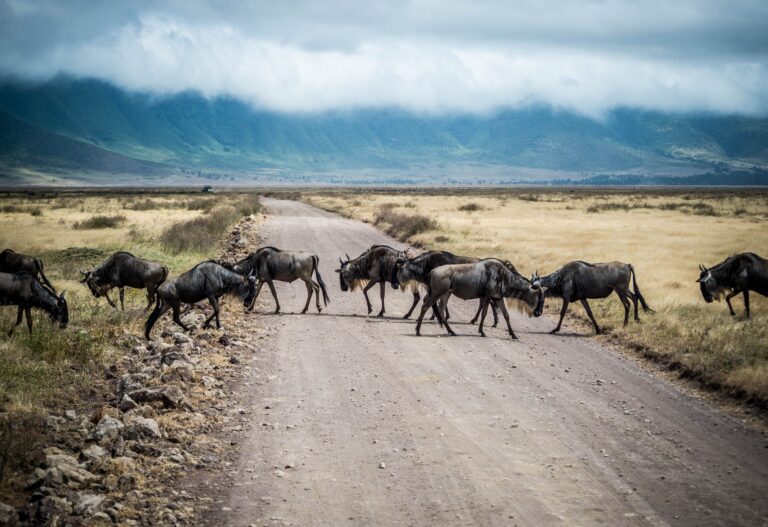
For example, while the Serengeti draws visitors chasing the Great Migration, Tarangire draws its own dry-season migration of elephants, zebra, wildebeest, and buffalo converging on the Tarangire River. As such, travelers who want dramatic wildlife encounters without the vehicle congestion often rate Tarangire as a highlight of their trip, even when it wasn’t originally the headline destination.
In addition, Tarangire plays an important ecological role. It anchors the wider Tarangire Ecosystem, a roughly 20,500-square-kilometer network that includes community-run Wildlife Management Areas such as Burunge and Randilen. This larger ecosystem allows wildlife, particularly elephants, to move freely between the park and surrounding conservation areas during the wet season, then funnel back toward the river when the rains stop.
That being said, Tarangire’s real draw for most visitors comes down to two icons: its elephants and its baobabs. Let’s explore each in turn.
Why Is Tarangire Famous for Its Elephant Herds?
Tarangire is famous for its elephant herds because it holds one of the highest concentrations of African elephants in Tanzania, with estimates ranging from roughly 2,500 to over 3,000 individuals depending on the season and survey. During the dry season, herds gathering along the Tarangire River can number in the hundreds — Elephant herds in Tarangire can include up to 300 individuals during peak dry-season gatherings — Source: Tarangire National Park research surveys, 2024.
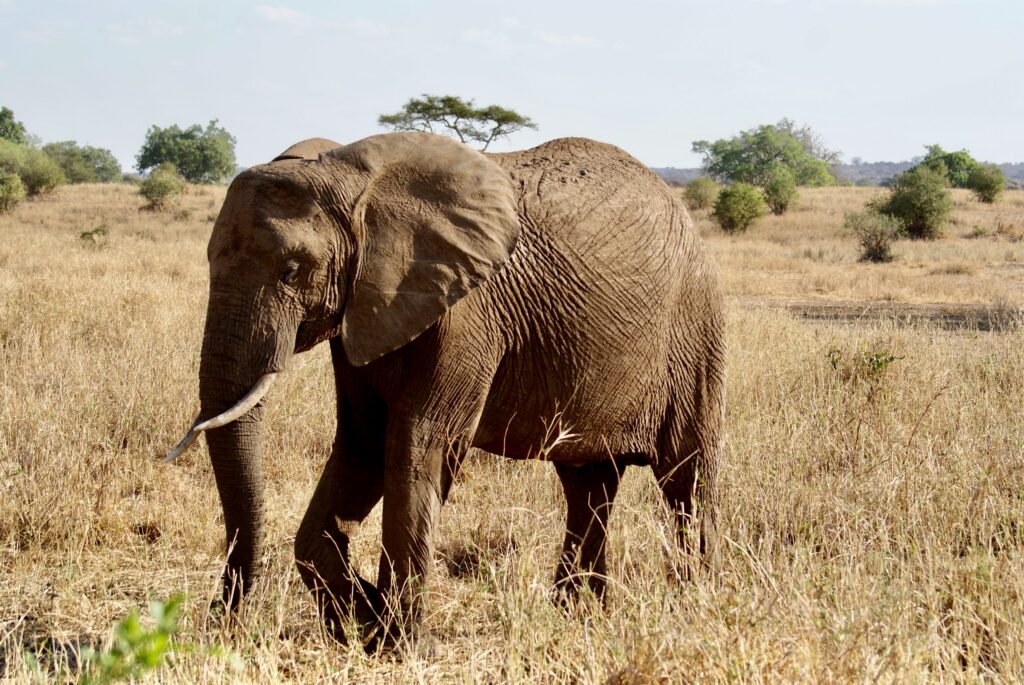
First, it helps to understand why the elephants concentrate here at all. The Tarangire River is the only permanent water source across a huge stretch of the surrounding landscape, which spans roughly 20,500 square kilometers once you include the wet-season dispersal areas. When the rains stop, elephants travel from as far as Lake Manyara and the Maasai Steppe to reach the river, sometimes covering distances of 25 kilometers or more.
Where to See the Largest Elephant Herds
The riverine areas along the Tarangire River, particularly between the Matete and Kitibong regions, consistently produce the biggest sightings. For example, guides frequently report herds of 100 or more elephants moving together to drink and bathe in the late afternoon, when the heat of the day starts to break.
- Silale Swamp — a reliable dry-season gathering point for elephants, buffalo, and waterbirds
- Tarangire River corridor — the single best stretch for large, moving herds
- Kitibong Hill area — quieter game drives with strong elephant density outside peak hours
How Elephants Behave in Tarangire
Elephants in Tarangire are matriarchal, meaning the oldest and most experienced female typically leads each family group. Plus, they communicate using low-frequency rumbles that can travel several kilometers, which allows separated family members to stay in contact even when herds spread out to feed. By observing a herd for even 20-30 minutes at a waterhole, you can often watch this social structure play out — younger elephants shadowing their mothers, teenagers mock-sparring, and the matriarch periodically raising her trunk to test the wind.
Elephants are also voracious eaters, consuming up to roughly 300 pounds of vegetation a day, and in Tarangire they show a strong preference for the bark of baobab trees — which brings us to the park’s second icon.
Elephant Conservation in Tarangire
Conservation matters here because Tarangire’s elephant population recovered from a difficult history. First, poaching hit the wider ecosystem hard in the 1970s and 1980s, with carcass ratios spiking before anti-poaching efforts brought numbers back under control. Today, TANAPA rangers, the Tarangire Elephant Project, and community-run Wildlife Management Areas such as Burunge and Randilen work together to monitor herds and reduce human-elephant conflict on the park’s edges.
For example, the Tarangire Elephant Project has tracked individual elephant families for decades, building one of the longest-running elephant behavior datasets in East Africa. Plus, park fees paid by visitors go directly toward funding these anti-poaching patrols and community partnerships, which means a Tarangire safari has a tangible conservation impact beyond the experience itself. That being said, challenges remain: expanding farmland around the park’s borders continues to squeeze traditional elephant migration routes, and prolonged droughts linked to shifting rainfall patterns put additional pressure on both elephants and the baobabs they depend on.
What Makes Tarangire’s Baobab Trees So Iconic?
Tarangire’s baobab trees are iconic because they are among the oldest and largest living organisms in the park, with some individual trees believed to be well over a thousand years old. Their swollen, water-storing trunks and sparse, root-like branches give the Tarangire landscape a silhouette unlike anywhere else on the northern safari circuit.
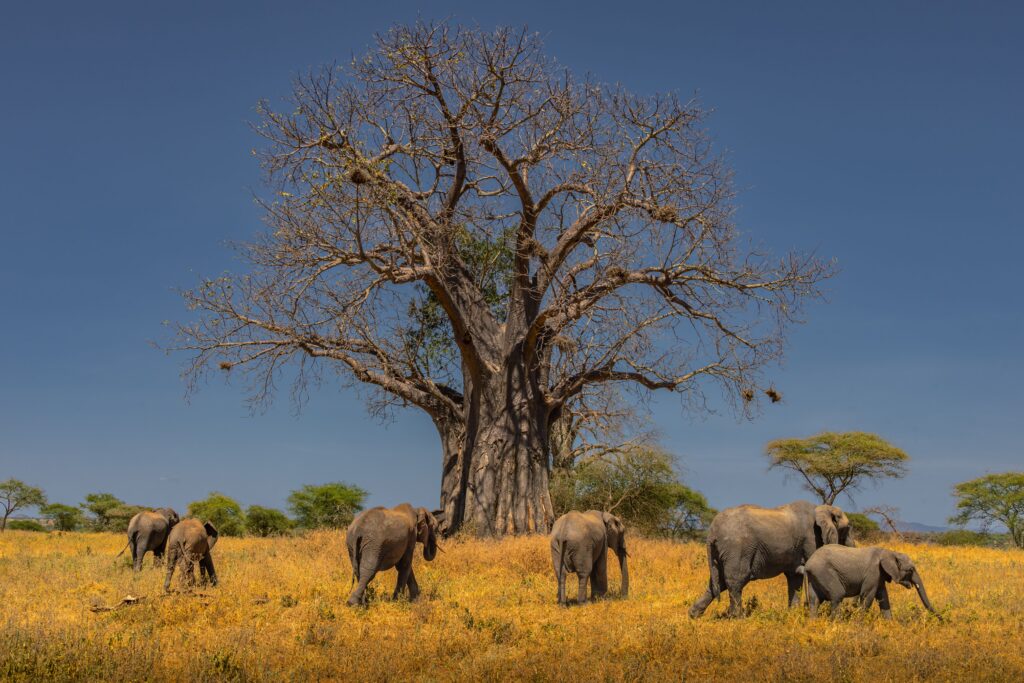
For example, a single mature baobab can store thousands of liters of water inside its spongy trunk tissue, which allows it to survive months without rain. This is the same trait that draws elephants to strip and chew on baobab bark during the dry season, both for moisture and for the minerals contained within it.
Why Baobabs and Elephants Are Connected
At the same time, this relationship is not entirely gentle. Elephants can strip enough bark from a baobab to eventually kill it, and ecologists studying the Tarangire Ecosystem have tracked long-term damage to baobab populations linked to elephant browsing pressure, especially in areas where elephant density is highest. As such, baobabs and elephants exist in a kind of slow-motion balancing act that has shaped Tarangire’s landscape for centuries.
Best Spots for Baobab Photography
- Tarangire River viewpoints — baobabs silhouetted against the water at sunrise and sunset
- Silale Swamp fringe — clusters of baobabs against open grassland
- Central park ridgelines — elevated views showing the scale of the baobab-dotted plains
If landscape photography is a priority for your trip, pairing a Tarangire baobab sunset with a Serengeti plains sunrise makes for a genuinely varied portfolio — something worth planning into your route through Tanzania’s national parks and destinations.
The Baobab as an Ecosystem, Not Just a Tree
A single baobab functions as a small ecosystem of its own, and that’s part of what makes Tarangire’s landscape feel so alive even outside peak wildlife hours. First, hollow trunks and cavities often shelter owls, bats, and bushbabies, while the tree’s large white flowers open at night and are pollinated primarily by fruit bats. Moreover, the fruit itself, sometimes called “monkey bread,” is eaten by baboons, elephants, and local communities alike, and it’s increasingly harvested commercially for its high vitamin C content.
At the same time, baobabs are remarkably slow to show their age. Because they don’t form traditional growth rings the way most trees do, scientists rely on radiocarbon dating to estimate their true age, and some baobabs across Africa have been dated to well over 2,000 years old. In Tarangire, this means the baobabs towering over your game drive vehicle may have been standing centuries before the park itself was established in 1970.
When Is the Best Time to Visit Tarangire National Park?
The best time to visit Tarangire National Park is during the dry season, from roughly June through October, when wildlife concentrates near the Tarangire River and visibility is at its clearest. That said, the wet season has genuine advantages of its own, and the right choice depends on what you want from your trip.
First, let’s break down what each season actually looks like on the ground.
What Is Wildlife Viewing Like During Tarangire’s Dry Season?
Wildlife viewing during Tarangire’s dry season is the most reliable in the park, because the Tarangire River becomes the only dependable water source for miles, pulling animals into predictable, concentrated areas. The dry season in Tarangire, running roughly from June to October, concentrates wildlife near the Tarangire River, making it the most reliable period for elephant sightings.
For example, during July and August you can expect to see large mixed herds of elephant, zebra, wildebeest, and Cape buffalo gathering along the riverbanks within the same afternoon game drive. In addition, dry-season grass is short and vegetation is sparse, which makes spotting predators like lion and leopard considerably easier than during the lush wet months. This is also the busiest period for the park, though Tarangire’s crowds remain noticeably lighter than the Serengeti’s during the same months.
What Can You See in Tarangire During the Wet Season?
The wet season in Tarangire, from November to May, disperses wildlife across a wider area but brings migratory birds and newborn animals to the park. Rather than concentrating near the river, animals spread out across the full 20,500-square-kilometer ecosystem to take advantage of fresh grazing.
For example, this is calving season for many herbivores, so wet-season visitors have a strong chance of seeing young zebra, wildebeest, and impala within days or weeks of birth. Moreover, Tarangire is considered one of East Africa’s best birding destinations, with more than 400 recorded species, and the wet season brings an influx of migratory birds that boosts that number further. The trade-off is straightforward: wildlife sightings take more searching, but the landscape turns a vivid green and the light for photography is often softer and more dramatic.
Month-by-Month Guide to Visiting Tarangire
| Months | Season | Wildlife Viewing | Best For |
|---|---|---|---|
| June – October | Dry season | Excellent, animals concentrate at the river | First-time visitors, elephant herds, predator sightings |
| November – December | Short rains | Good, transitional greening begins | Fewer crowds, lush early scenery |
| January – February | Short dry spell | Very good, calving season | Newborn animals, good light for photography |
| March – May | Long rains | Fair, wildlife disperses widely | Birdwatching, lowest rates, quietest parks |
As such, if your priority is guaranteed, high-density elephant sightings, aim for July through October. But if you’re flexible and want lower prices, fewer vehicles, and strong birding, the shoulder months of November-December or January-February offer an excellent middle ground.
What Is the Weather Like in Tarangire?
Tarangire’s weather follows a fairly predictable bimodal rainfall pattern, with a long rainy season from March to May and a shorter rainy period in November and December. Daytime temperatures stay warm year-round, typically ranging from the low 20s to low 30s Celsius (roughly 70-90°F), while nights can turn cool, especially during the dry season when clear skies let heat escape quickly.
For example, June and July mornings often start cool enough for a fleece jacket during an early game drive, then warm up considerably by midday. In addition, humidity is generally low outside the rainy months, which makes the dry-season heat feel more manageable than similar temperatures might in a more humid climate.
Should You Visit Tarangire in the Green Season?
Visiting Tarangire in the green season, roughly January through May, is worth considering if your priority is value and scenery over guaranteed high wildlife density. For example, camp rates during the long rains (March-May) often drop by 30% or more compared to peak dry-season pricing, and vehicle traffic in the park thins out considerably. That said, some roads can become difficult to navigate after heavy rainfall, so it’s worth confirming access conditions with your operator before booking a green-season trip.
How Does Tarangire Compare to the Serengeti and Ngorongoro?
Tarangire compares favorably to the Serengeti and Ngorongoro Crater as a quieter, more affordable park with exceptional elephant density, though it doesn’t offer the same predator numbers or Big Five completeness as its more famous neighbors. Each park plays a different role in a well-built Tanzania itinerary.
For example, Ngorongoro Crater concentrates an extraordinary density of wildlife, including rhino, within a self-contained caldera, but its compact size means vehicle traffic can be heavy at peak times. The Serengeti, by contrast, offers vast open plains and the Great Migration, but requires more driving time to reach and cover properly. Tarangire sits between the two: smaller than the Serengeti, less crowded than Ngorongoro, and unmatched for close-up elephant encounters.
| Feature | Tarangire | Serengeti | Ngorongoro Crater |
|---|---|---|---|
| Size | ~2,850 sq km | ~14,750 sq km | ~260 sq km (crater floor) |
| Signature wildlife | Elephant herds, baobabs | Great Migration, big cats | Rhino, dense predator population |
| Crowd levels | Low to moderate | Moderate to high in peak season | High, especially on the crater floor |
| Best season | June – October | Varies by migration stage | Year-round, dry season best |
| Typical stay | 1–2 days | 3–4 days | 1 day |
That being said, this isn’t really a “which is better” question. To see the full picture of how the Serengeti fits into a longer trip, read our guide on how many days to spend in the Serengeti, and pair it with insight on the best time to see the Great Migration if migration viewing is a priority. Most well-planned northern circuit itineraries include all three parks precisely because each one contributes something the others don’t.
How Many Days Should You Spend in Tarangire?
Most travelers should spend one to two full days in Tarangire National Park, which is enough time for two or three game drives covering the riverine areas, Silale Swamp, and the central baobab landscapes.
For example, a single overnight stay with an afternoon and morning game drive is often sufficient to see large elephant herds during the dry season, since sightings near the river are fairly consistent day to day. In addition, travelers with more flexible schedules sometimes extend to two nights, particularly if they want to combine sunrise and sunset game drives for photography, or if Tarangire is their first stop after landing in Arusha and they want a gentler introduction to safari pacing before tackling the Serengeti.
A Sample Two-Day Tarangire Schedule
To make this concrete, here’s what a well-paced two-day stay typically looks like:
- Day 1, afternoon: Arrive from Arusha, check into camp, and head straight into an afternoon game drive along the river corridor, timed to catch elephant herds coming to drink before sunset.
- Day 1, evening: Return to camp for dinner; concessions bordering the park often add an optional night drive here, which isn’t permitted inside Tarangire itself.
- Day 2, early morning: Depart camp before sunrise for a game drive through Silale Swamp, when temperatures are cooler and predator activity tends to be higher.
- Day 2, midday: Return to camp for brunch and rest during the hottest hours, when wildlife activity naturally slows.
- Day 2, late afternoon: A final game drive toward Kitibong Hill or the central baobab plains before departing for your next destination or overnight stay.
This structure maximizes the two periods of peak animal activity, dawn and dusk, while avoiding the least productive midday hours.
Which Parks Pair Well with Tarangire on a Safari Itinerary?
Tarangire pairs well with Lake Manyara, Ngorongoro Crater, and the Serengeti, since all four parks sit along Tanzania’s northern safari circuit and can be visited in a single, efficiently routed trip.
For example, a common seven- to ten-day itinerary starts in Tarangire for one to two nights, continues to Lake Manyara for a shorter stop focused on birdlife and tree-climbing lions, proceeds to Ngorongoro Crater for a full-day crater floor game drive, and finishes with three to four nights in the Serengeti. This order works well logistically, since each park is roughly two to four hours from the next by road.
Read our full guide to Lake Manyara National Park for details on what to expect from that leg of the trip, and see our Ngorongoro Crater wildlife guide for advice on timing your crater floor descent. Together, these four parks give first-time visitors a genuinely complete cross-section of what northern Tanzania offers, from elephant-dense woodland to open migration plains.
Sample Eight-Day Northern Circuit Itinerary
For travelers who want a concrete reference point, here’s how a well-paced eight-day trip through the northern circuit typically breaks down:
| Day | Location | Focus |
|---|---|---|
| 1 | Arrive Arusha / Tarangire | Afternoon game drive along the river corridor |
| 2 | Tarangire | Sunrise game drive at Silale Swamp, transfer toward Lake Manyara |
| 3 | Lake Manyara | Tree-climbing lions, birdlife, groundwater forest walk |
| 4 | Ngorongoro Highlands | Scenic transfer, Maasai cultural visit, crater rim viewpoints |
| 5 | Ngorongoro Crater | Full-day crater floor game drive |
| 6-7 | Central Serengeti | Big cat viewing, open plains game drives |
| 8 | Depart / extension | Fly out, or connect onward to Zanzibar |
Naturally, this schedule can compress into six days or expand toward two weeks depending on your pace and whether you add a beach extension. If the Great Migration is a priority, timing the Serengeti portion of this route matters more than any other single decision, which is why we recommend cross-checking dates against our best time to see the Great Migration guide before finalizing your booking.
Planning Your Tarangire Safari: Practical Tools and Trip Types
Planning a Tarangire safari comes down to three practical decisions: what type of trip you want, when to go, and how to get there. Getting these right early makes the rest of the planning process much easier.
First, consider trip type. Tarangire and the wider northern circuit accommodate a wide range of budgets and travel styles, and it’s worth matching your camp and vehicle choices to the kind of trip you’re planning rather than defaulting to whatever comes up first in a search. For example, honeymooners often prioritize smaller, more private camps with fewer vehicles nearby, while families traveling with children may prioritize camps with flexible meal times and shorter drive distances between activities.
- If cost is your main constraint, our budget Tanzania safaris guide outlines how to keep quality high while managing expenses.
- If you want a balance of comfort and value, see our mid-range Tanzania safaris options.
- If you’re planning a once-in-a-lifetime trip, explore our luxury Tanzania safaris picks, many of which include private Tarangire concessions with lower vehicle density than the main park.
- Traveling with kids? Our family safaris in Tanzania guide covers age-appropriate camps and activity pacing.
- Planning a trip for two? See our honeymoon safaris recommendations, several of which pair a Tarangire stay with more secluded Serengeti or Ngorongoro lodges.
Moreover, access to Tarangire is straightforward. By road, the park is approximately 118 kilometers from Arusha, a two- to two-and-a-half-hour drive via the Arusha-Dodoma highway. By air, daily charter flights connect Arusha, Kilimanjaro, the Serengeti, and Zanzibar to Tarangire’s airstrip, which is useful if you’re combining a beach extension with your safari.
Where Should You Stay Near Tarangire National Park?
Where you stay near Tarangire National Park depends largely on whether you want to be inside the park boundary or in a private concession bordering it. Both options put you within easy reach of the main wildlife areas, but they offer different trade-offs.
- Inside the park — Lodges and tented camps within Tarangire’s official boundary offer the shortest possible drive time to the river and swamp areas, which matters if you want to maximize time watching elephants rather than driving to reach them.
- Private concessions and WMAs — Camps in areas like Burunge or Randilen Wildlife Management Areas sit just outside the park but offer activities not permitted inside it, such as night drives, walking safaris, and off-road driving, along with noticeably fewer vehicles per sighting.
- Arusha day-trip base — Some travelers on tight schedules visit Tarangire as a long day trip from Arusha, though this sacrifices early morning and late afternoon game drives, which are typically when elephant activity peaks.
For most travelers, an overnight stay either inside the park or in a bordering concession delivers a noticeably better experience than a rushed day trip, simply because it allows for both a sunset and a sunrise game drive.
What Should You Pack for a Tarangire Safari?
Packing for Tarangire follows the same general logic as packing for any northern Tanzania safari, with a few adjustments for the park’s dust and heat. Neutral-colored clothing (khaki, olive, tan) works best for game drives, since bright colors and dark blue or black shades can attract tsetse flies in wooded areas. Layering matters too: mornings can be cool enough for a light jacket, while afternoons often call for breathable, lightweight fabrics.
- Wide-brimmed hat and high-SPF sunscreen for exposed midday game drives
- Binoculars, ideally one pair per person, for spotting distant elephant herds and birdlife
- A dust-proof bag or cover for cameras, given Tarangire’s dry-season dust
- Reusable water bottle, since staying hydrated matters even in the cooler months
- Comfortable, closed-toe shoes for any walking safari or bush breakfast stop
Health and Safety Tips for a Tarangire Safari
Health preparation for Tarangire follows standard East Africa safari guidance, with a few park-specific notes worth flagging. First, malaria risk exists year-round in this region, so most travel health providers recommend antimalarial medication regardless of season, along with insect repellent for dawn and dusk game drives when mosquitoes are most active.
For example, tsetse flies are a genuine nuisance in Tarangire’s wooded areas, and their bites, while not typically dangerous to visitors, can be painful. Wearing neutral colors and avoiding dark blue or black clothing measurably reduces how often they land on you. In addition, always follow your guide’s instructions around wildlife, particularly elephants: staying inside the vehicle, keeping noise levels down near herds, and never attempting to approach animals on foot outside a designated walking safari are all standard, non-negotiable safety practices across every park on the northern circuit.
Sun exposure is another practical concern. Because Tarangire sits close to the equator, UV levels remain high even on overcast days, so sunscreen, a hat, and staying hydrated matter more than most first-time visitors expect, especially during multi-hour dry-season game drives.
Photography Tips for Tarangire’s Elephants and Baobabs
Photographing Tarangire well comes down to timing and patience more than equipment. First, the golden hours around sunrise and sunset produce both the best light and the highest wildlife activity, which makes early starts worthwhile even when they cut into sleep. A telephoto lens in the 200-400mm range works well for elephant portraits at a respectful distance, while a wider lens captures the scale of baobab-dotted landscapes.
For example, positioning a single baobab against a low sun creates dramatic silhouettes, particularly along the Tarangire River where the water adds reflected light. Moreover, elephant herds photograph best when you wait rather than chase; parking near a known crossing point or waterhole and letting the herd approach naturally produces calmer, more natural-looking images than following a moving group. Dust from the dry season can also work in your favor, since backlit dust kicked up by a moving herd often adds atmosphere to wildlife shots that a clear, dust-free frame wouldn’t capture.
What’s Next: Steps to Plan Your Visit
Now that you understand what Tarangire offers and when to go, the next step is turning that knowledge into an actual itinerary. Here’s how to move from research to booking.
- Decide on your season. Choose dry season (June-October) for concentrated wildlife and elephant herds, or wet season (November-May) for lower costs, calving season, and stronger birding.
- Set your trip length. Plan one to two days in Tarangire itself, then decide how many additional parks you’ll combine it with based on your total trip length.
- Choose your travel style. Match your camp and vehicle choice to your budget and priorities using the trip-type guides linked above.
- Check permits and logistics. Park entry fees, vehicle permits, and guide arrangements are typically handled by your safari operator, but it’s worth confirming these are included in any quote you receive. Tarangire charges separate conservation and entry fees per person, per 24-hour period, and these are billed in addition to camp or lodge rates, so always ask whether a quoted safari price is fully inclusive.
- Confirm travel documents early. Most international visitors need a valid Tanzania visa, available on arrival for many nationalities or in advance online, along with proof of yellow fever vaccination if arriving from a country with risk of transmission. Sorting this out weeks before departure avoids last-minute stress at the airport.
- Book your circuit as a whole, not park by park. Since Tarangire, Lake Manyara, Ngorongoro, and the Serengeti sit along the same route, booking them together typically reduces backtracking and total drive time.
For a broader orientation before you commit to specific parks or dates, our Tanzania safari guide for first-time travelers walks through the full planning process, from visas to vaccination guidance to choosing an operator. And if you’d rather skip the research and talk through your options directly, you can contact our safari specialists to build a Tarangire-inclusive itinerary suited to your dates and budget.
Frequently Asked Questions About Tarangire National Park
Is Tarangire a Big Five Park?
Tarangire is not a complete Big Five park, since rhino sightings are extremely rare, but it reliably offers elephant, buffalo, leopard, and, less predictably, lion. For example, lion prides are present but spread across a wider territory than in Ngorongoro Crater, so sightings require more patience and local guide knowledge.
Is Tarangire Worth Visiting If I’m Short on Time?
Tarangire is worth visiting even on a short itinerary, because a single well-timed game drive during the dry season can deliver elephant sightings that rival anywhere else in East Africa. That said, travelers with very limited time should prioritize an overnight stay over a rushed day trip whenever the schedule allows, since dawn and dusk consistently produce the best wildlife activity.
How Does Tarangire’s Bird Life Compare to Other Parks?
Tarangire’s bird life ranks among the strongest in East Africa, with more than 400 recorded species, a number that rivals or exceeds many larger parks on the northern circuit. For example, the wet season brings an influx of migratory species alongside resident raptors, hornbills, and the striking yellow-collared lovebird, which is found almost nowhere else outside this region.
Can You Combine Tarangire with a Zanzibar Beach Extension?
You can combine Tarangire with a Zanzibar beach extension fairly easily, since charter flights connect Tarangire’s airstrip to Zanzibar in a single hop without routing back through Arusha. This makes a “safari plus beach” itinerary, safari first, beach second, a popular and logistically simple way to close out a Tanzania trip.
Do You Need a 4×4 Vehicle to Visit Tarangire?
You do need a 4×4 vehicle to visit Tarangire properly, since park roads range from graded gravel to rougher tracks that become difficult for standard vehicles after rain. For example, most safari operators, including ours, use custom safari Land Cruisers with pop-up roofs specifically because they handle Tarangire’s terrain safely while giving passengers standing room for photography and viewing.
Is Tarangire Safe for Children?
Tarangire is generally considered safe for children, and many camps welcome families with kids as young as five or six, though policies vary by property. For example, some luxury camps set minimum age requirements for walking safaris or night drives specifically, while standard game drives typically have no age restriction as long as children can sit calmly in the vehicle for extended periods.
Conclusion
Tarangire National Park earns its place on a Tanzania itinerary through two things that are hard to find together anywhere else: some of the largest elephant herds in East Africa, and a landscape of ancient baobabs found almost nowhere else on the northern circuit. Whichever season you choose, whether it’s the concentrated dry-season herds of July through October or the green, birdlife-rich wet season, Tarangire rewards travelers who take the time to understand it rather than treating it as a quick stopover on the way to the Serengeti.
If you’ve read this far, you already have what you need to decide when to go and how long to stay. The next step is simple: pick your season, choose a trip style that fits your budget, and start building the rest of your northern circuit around it. Browse our full Tanzania safari blog for more destination-specific planning guides, or reach out directly and let a specialist put the itinerary together for you.


One Comment