
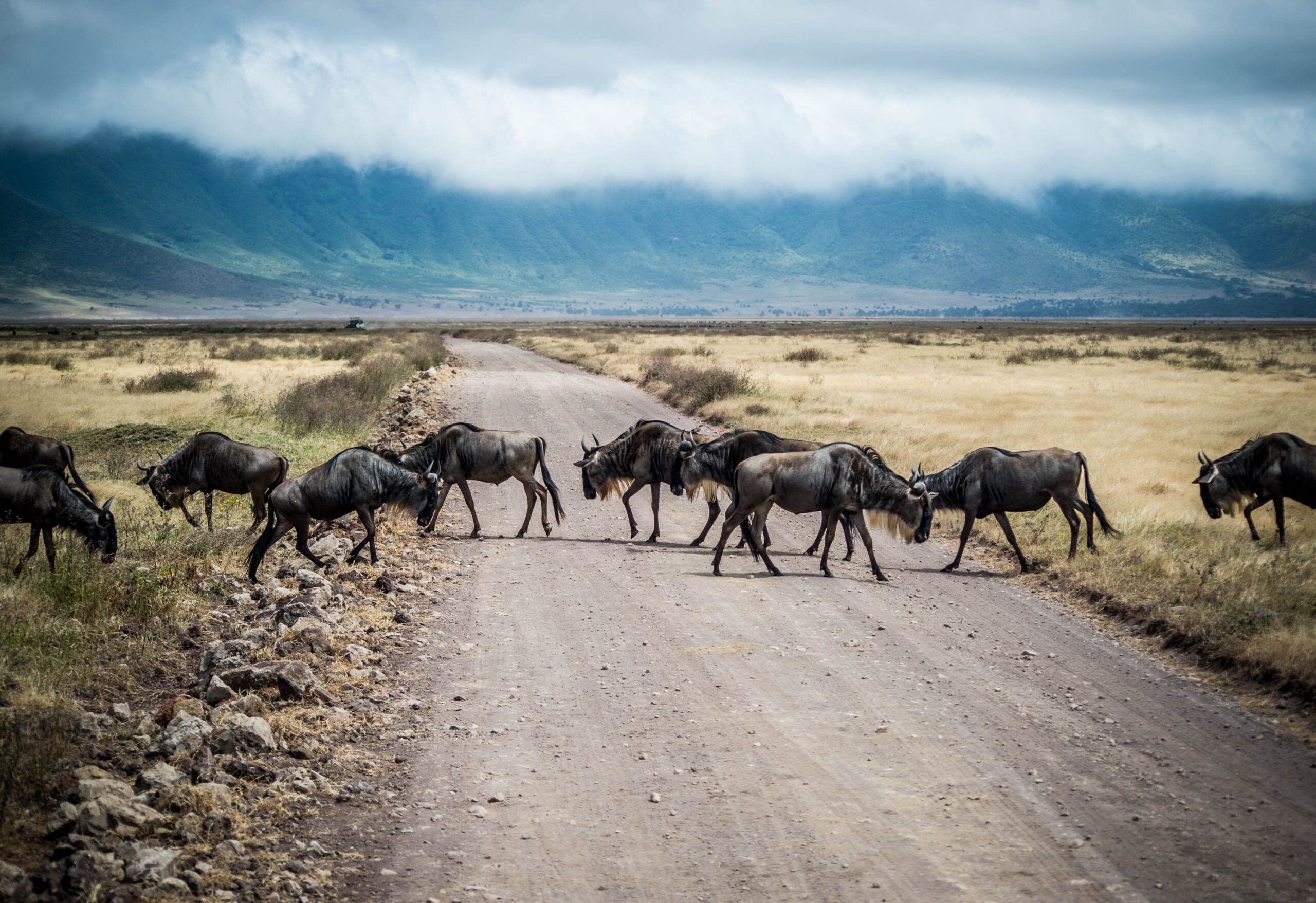
Best Time to See the Great Migration in Tanzania: The Definitive Month-by-Month Guide
Most travelers researching a Tanzania safari already know the Great Migration is one of the most spectacular wildlife events on Earth. What they don’t realize is that “the best time to see it” changes completely depending on whether they want to witness river crossings, calving season, or simply avoid the crowds. This guide breaks down exactly where the herds are each month, so you can time your trip to see the specific migration event you’re dreaming of.
Key Takeaways
- The Great Migration is a continuous, circular movement of over 1.5 million wildebeest and hundreds of thousands of zebra and gazelle across the Serengeti-Mara ecosystem, with no true start or end point.
- Calving season occurs from late January through March in the southern Serengeti and Ndutu area, drawing predators and offering dense wildlife concentrations.
- River crossings at the Grumeti River (May-June) and Mara River (July-October) are the migration’s most dramatic and photographed events, though timing varies year to year based on rainfall.
- There is no single “best month” for everyone; the ideal time depends on whether a traveler prioritizes crossings, calving, fewer crowds, or lower costs.
- The dry season (June-October) offers the most predictable wildlife viewing since animals cluster near remaining water sources, but it also coincides with peak tourist crowds and higher prices.
- Green season travel (November-May) offers lower rates, lush scenery, and newborn wildlife, but river crossings are not guaranteed during these months.
- Booking accommodations 9-12 months in advance is recommended for peak crossing months, since camps near the Mara River fill quickly.
What Is the Great Migration and How Does It Work?
The Great Migration is the continuous, circular movement of over 1.5 million wildebeest, along with hundreds of thousands of zebra and gazelle, across the Serengeti-Mara ecosystem in search of grazing and water. This movement never stops. It has no official starting line and no finish, which is exactly why so many first-time safari planners get confused about “the best time” to see it.
At its core, the migration is driven by rain. Wildebeest follow the rain because rain grows the grass they need to survive, and the herds instinctively track weather patterns across roughly 1,200 miles of the Serengeti-Mara ecosystem each year. As such, the migration’s location shifts predictably with the seasons, even though the exact week-to-week movement can vary.
For example, the herds spend the early months of the year concentrated in the southern Serengeti and Ndutu plains, where short grass and mineral-rich soil support calving. Then, as the dry season approaches, they push north through the central Serengeti, cross the Grumeti and Mara Rivers, and spend several months grazing in Kenya’s Maasai Mara before turning south again. This entire loop covers roughly 800-1,000 kilometers depending on rainfall patterns each year — Source: African Wildlife Foundation, 2025.
Understanding this circular pattern is the single most important thing a first-time visitor can learn before booking. If you want to see a river crossing but book a January safari, you will miss it entirely, no matter how good your guide is. That’s why matching your travel dates to the herd’s location matters more than almost any other trip-planning decision. For a broader look at the park where most of this action unfolds, our Serengeti National Park safari guide covers the terrain, wildlife, and access points in detail.
How Many Animals Are Actually Involved?
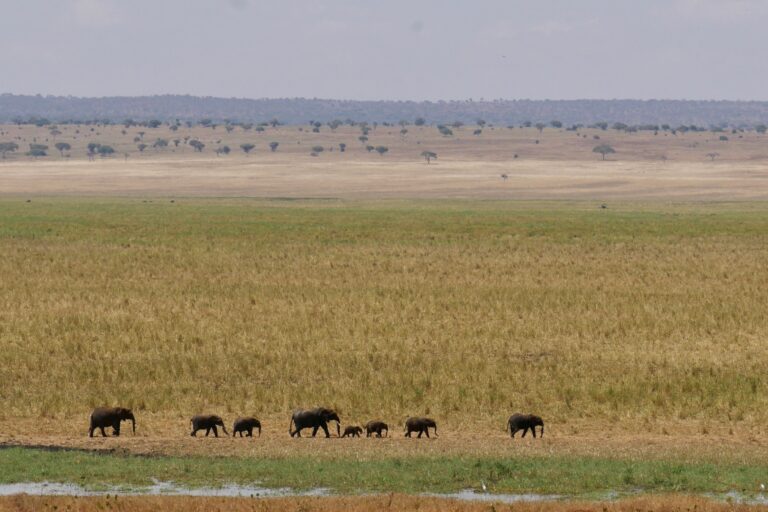
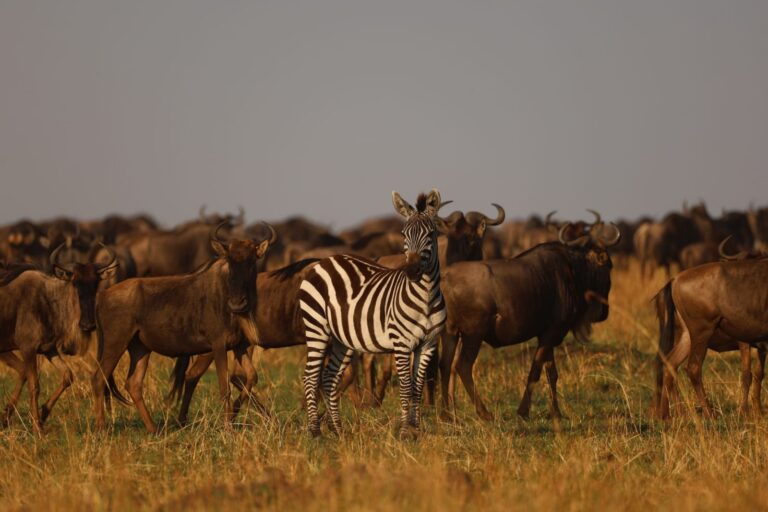
The scale of the Great Migration is difficult to grasp until you see it in person. More than 1.5 million wildebeest move together as the migration’s core population, joined by roughly 200,000-300,000 zebra and several hundred thousand Thomson’s and Grant’s gazelle — Source: Tanzania National Parks Authority, 2025. Zebra typically lead the herds because they eat the taller, tougher grass first, clearing the way for wildebeest to graze on the shorter grass beneath.
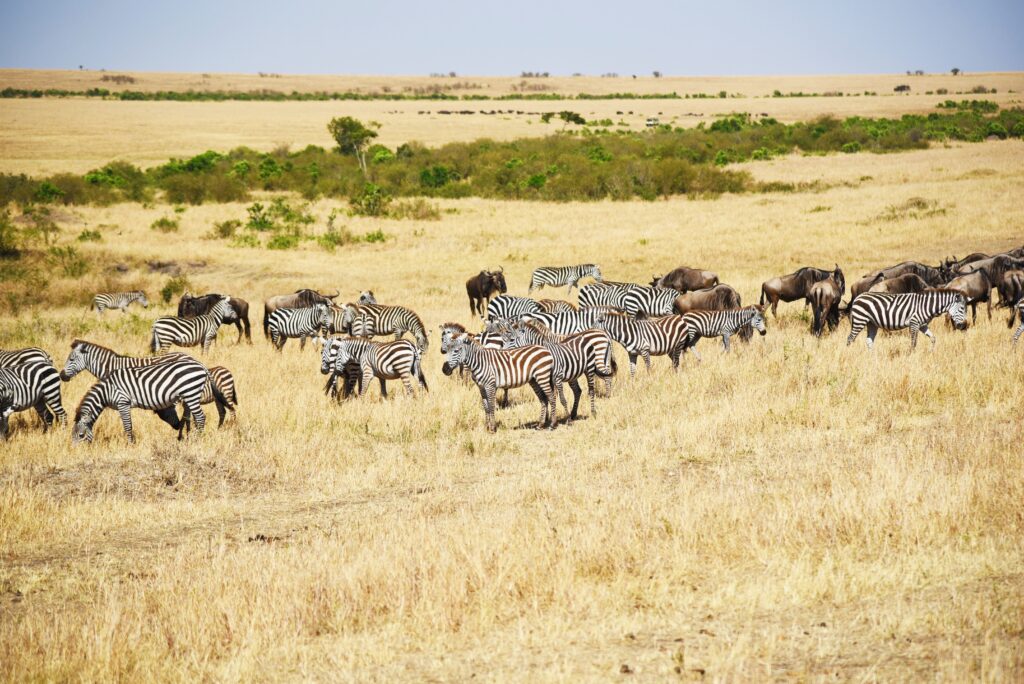
This mixed-species travel pattern isn’t random. Zebra have sharper memories of migration routes from previous years, while wildebeest have a stronger sense of smell for detecting distant rainfall. Together, the two species form a highly efficient survival system that has repeated itself for hundreds of thousands of years across the plains.
Why the Serengeti-Mara Ecosystem Specifically?
The Serengeti-Mara ecosystem supports the Great Migration because its geography combines the two things wildebeest need most: seasonal rainfall gradients and vast, largely unfenced open plains. Unlike many of Africa’s other protected wildlife areas, this ecosystem spans two countries — Tanzania and Kenya — without major physical barriers blocking the herds’ path.
At the same time, the region’s volcanic soil in the southern plains produces mineral-rich short grass that’s ideal for nursing wildebeest mothers, which is part of why calving season concentrates so heavily in that specific area rather than spreading evenly across the ecosystem. This particular combination of soil chemistry, rainfall timing, and open terrain doesn’t exist in quite the same way anywhere else on the continent, which is a large part of why this migration remains unmatched in scale.
Why Timing Matters for Seeing the Great Migration
Timing matters for the Great Migration because the event is entirely location- and season-dependent, meaning a mistimed trip can result in missing the specific spectacle you traveled to see. Unlike a lion sighting or an elephant herd, which can appear almost anywhere in the ecosystem year-round, the migration’s most dramatic moments — calving, river crossings, and mass movement — happen in fairly narrow geographic and calendar windows.
First, consider that the Serengeti-Mara ecosystem spans roughly 12,000 square miles. That’s larger than several U.S. states combined, and the migration only occupies a fraction of that area at any given time. As such, a traveler who books a lodge in the northern Serengeti during calving season (January-March) will likely see very few wildebeest, since the herds are concentrated 200+ miles south in Ndutu at that time.
Second, migration timing shifts slightly every year based on rainfall, which means even seasoned safari planners can’t guarantee an exact date for events like river crossings. For example, in years with delayed rains, crossings at the Mara River have started as late as August instead of the typical July window. This is precisely why working with an operator who tracks real-time herd movement, rather than relying purely on “typical” calendar months, makes a measurable difference in what you’ll actually see.
That being said, timing doesn’t have to be stressful. Once you understand the migration’s general seasonal pattern, you can plan around it with confidence — and that pattern is remarkably consistent from a big-picture view, even if exact dates shift by a few weeks. The month-by-month breakdown below gives you that big-picture roadmap.
A Common Timing Mistake to Avoid
One of the most common mistakes first-time travelers make is booking a trip based on a single blog post’s “best month” recommendation without checking where that recommendation assumes the herds will be. For example, a traveler who reads that “September is the best month” and books a lodge in the southern Serengeti will likely be disappointed, since the herds are typically in the far north during that month, not the south.
As such, the smarter approach is to reverse the planning order: choose the specific experience you want first — crossings, calving, or general game viewing — and then let that choice determine both your travel dates and your camp location together. Skipping this step is the single biggest reason travelers come home having seen impressive wildlife but not the specific migration event they’d traveled thousands of miles to witness.
Month-by-Month Breakdown of the Great Migration
The Great Migration follows a predictable seasonal loop through the Serengeti-Mara ecosystem, moving from the southern calving grounds in early year to the northern river-crossing zones by mid-year, before returning south again by December. Below is a month-by-month look at where the herds typically are and what you can expect to see.
| Months | Migration Phase | Primary Location | Signature Event |
|---|---|---|---|
| January-March | Calving season | Southern Serengeti, Ndutu | Mass wildebeest births, predator action |
| April-May | Long rains movement | Central Serengeti, Moru/Seronera | Herds massing and moving north |
| May-June | Grumeti River crossings | Western Corridor | First river crossings, crocodile activity |
| July-October | Mara River crossings | Northern Serengeti, Maasai Mara | Peak, most dramatic crossings |
| November-December | Southern return | Eastern/Central Serengeti to Ndutu | Herds return south with short rains |
When Does the Great Migration Calving Season Happen?
Calving season in the southern Serengeti typically runs from late January through March, when up to 500,000 wildebeest calves are born within a few weeks. This concentrated birthing window is one of nature’s most efficient survival strategies. Nearly 8,000 calves are born every single day at the peak of the season — Source: Serengeti Research Institute, 2025.
At the same time, this concentration of vulnerable newborns draws in Serengeti’s full predator lineup. Lions, cheetahs, hyenas, and leopards all shadow the herds during calving season, making it one of the most action-packed times to visit for wildlife photography and predator-prey drama. For example, it’s common to witness multiple cheetah hunts in a single morning game drive in the Ndutu area during peak calving weeks.
Moreover, the southern plains during calving season offer some of the flattest, most open terrain in the entire ecosystem, which means unobstructed sightlines for miles. This makes calving season particularly appealing for photographers who want clean shots without vegetation blocking the action. Camps and mobile tented operations in this area book up quickly, so planning ahead is essential — you can browse Great Migration safari itineraries built specifically around this window.
Where Are the Herds Between Calving Season and the Crossings?
Between calving season and the river crossings, the herds move north through the central Serengeti from roughly April through June, following the long rains as fresh grass emerges ahead of them. This transitional period is often overlooked by first-time planners, but it offers genuinely excellent game viewing for travelers who want to avoid both the calving-season crowds and the peak crossing-season prices.
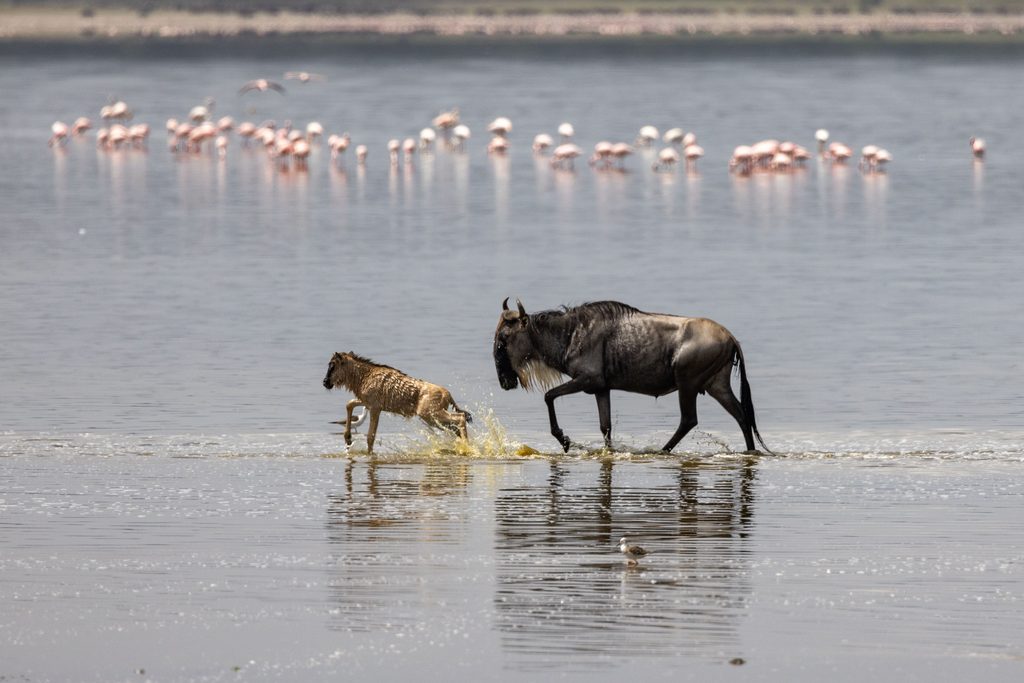
During April and May, expect to find large herds moving in loose, spread-out columns through the Seronera and Moru Kopjes areas of the central Serengeti. This movement isn’t a single dramatic event like a river crossing — it’s a slower, more gradual repositioning that still produces striking visuals, particularly aerial views of thousands of animals stretched across the plains in long lines.
By late May and into June, the front of the herd typically reaches the Grumeti River in the Western Corridor, producing the migration’s first river-crossing events of the year. These Grumeti crossings tend to be smaller in scale than the Mara crossings later in the season, but they come with a notable advantage: significantly fewer tourist vehicles competing for viewing space. For travelers who want crossing-style drama without peak-season crowds, this window deserves more attention than it typically gets.
When Do the Herds Return South?
The herds begin their return south from roughly November through December, moving out of the Maasai Mara and northern Serengeti back toward the central and eastern Serengeti as the short rains arrive. This southern return sets the herds up to reach the Ndutu calving grounds again by January, completing the annual cycle.
This period is sometimes underrated by travelers, since it lacks the singular drama of a river crossing. However, November and December offer a genuinely appealing combination: the landscape turns green again after the short rains, newborn wildlife from other species begins appearing, and crowds thin out significantly compared to the peak crossing months. As such, this window works well for travelers who want strong general game viewing alongside lower costs and fewer vehicles at each sighting.
When Do the Mara River Crossings Occur in Tanzania?
Mara River crossings generally occur between July and October, as the herds move north from the Serengeti into Kenya’s Maasai Mara in search of fresh grazing. This is widely considered the single most dramatic wildlife spectacle on the African continent, and for good reason.
During peak crossing weeks, thousands of wildebeest gather at the riverbank, hesitate, and then plunge into the water en masse — often while crocodiles wait below and predators stalk the banks. As such, crossings can happen multiple times a day during peak weeks, or sometimes not at all for several days if the herds decide the crossing point isn’t safe. That unpredictability is part of what makes witnessing one so memorable.
It’s worth noting that an earlier, smaller-scale crossing event also happens at the Grumeti River, generally in May and June, before the herds reach the Mara. This crossing tends to be less crowded with tourists and slightly less dramatic in scale, but it still offers genuine river-crossing action for travelers visiting the Western Corridor. Photography-focused travelers planning around either crossing should build in flexibility, since exact crossing dates shift with rainfall each year.
What Is the Best Month to See the Great Migration in the Serengeti?
There is no single fixed “best month” to see the Great Migration, because herd movement is driven by rainfall patterns that shift somewhat from year to year. That said, if forced to choose one general window, most safari experts point to late July through September, when the northern Serengeti offers both active river crossings and the tail end of the dry season’s predictable wildlife viewing.
For example, September often delivers the rare combination of dramatic Mara River crossings alongside excellent visibility, since vegetation has thinned out considerably by that point in the dry season. This is also typically before the very last of the crossing action fades and before short rains begin returning the herds south.
However, “best” really depends on what you personally want to witness. A traveler chasing calving season drama should aim for February. A traveler who wants river crossings should target August or September. And a traveler prioritizing lower costs and fewer people should look at the shoulder months covered later in this guide.
Is the Great Migration Different Every Year?
Yes, the Great Migration is different every year because rainfall — not the calendar — ultimately determines when and where the herds move. While the general seasonal pattern described above holds true most years, the exact timing of calving, crossings, and directional shifts can vary by two to six weeks depending on regional rain patterns.
For example, a year with early or heavy long rains (typically April-May) can push the herds north and toward the Grumeti River earlier than usual, while a delayed rainy season can keep them lingering in the central Serengeti longer than expected. This is why experienced ground operators track real-time herd location reports rather than relying solely on historical averages when advising clients on exact travel dates.
At the same time, this year-to-year variability is rarely dramatic enough to derail a well-planned trip. Building in a few extra travel days, or choosing a mobile camp that repositions with the herds, significantly reduces the risk of missing key events even in an atypical year.
Best Time by Type of Experience
The best time to see the Great Migration depends heavily on what specific experience you’re prioritizing — river crossings, calving season, fewer crowds, better photography light, or lower costs. Below is a breakdown by traveler priority.
Best Time for River Crossings
Travelers who want to witness a Mara River crossing should target late July through September, when crossing frequency and predictability peak in the northern Serengeti and southern Maasai Mara. This is also, unsurprisingly, the most popular and most expensive travel window of the year.
For example, camps positioned directly along common crossing points in the northern Serengeti can see multiple crossing attempts in a single week during this period, though patience is still required since crossings don’t run on a fixed schedule. Our Great Migration safari itineraries are built specifically to position travelers near active crossing zones during this window.
Best Time for Calving Season
Travelers focused on newborn wildlife and predator activity should target late January through early March, when the southern Serengeti and Ndutu plains host the migration’s calving grounds. This period suits photographers and wildlife enthusiasts who want dense concentrations of animals in open terrain.
Moreover, calving season overlaps nicely with a honeymoon or milestone trip, since the open plains offer dramatic golden-hour lighting and fewer logistical complications than the crowded crossing season. Couples planning a trip around this window often pair it with our Tanzania honeymoon safaris, which are timed to coincide with peak wildlife concentration.
Best Time for Fewer Crowds
Travelers who prioritize solitude over guaranteed river crossings should consider April through early June, often called the “green season.” Vehicle traffic at popular sightseeing points drops significantly, and many camps offer noticeably lower rates.
For example, some lodges reduce nightly rates by 30-40% during this shoulder period compared to peak crossing season — Source: Tanzania Tourism Board, 2025. That said, this period includes the long rains, so travelers should expect some wet-weather driving days and pack accordingly.
Best Time for Photography and Weather
Photographers generally get the best combination of dramatic action and pleasant weather during June through September, when skies are mostly clear, dust levels are manageable, and both predator activity and river crossings are possible. Early morning and late afternoon light during this window produces the warm, low-angle lighting that safari photographers prize most.
Best Time by Traveler Type
Different types of travelers tend to prioritize different migration experiences, which means the “best time” question often has a different answer depending on who’s asking. Below is a quick reference for how traveler type typically maps to travel timing.
- Honeymooners and milestone travelers often prioritize calving season (January-March) or the quieter shoulder months, since these windows combine strong wildlife viewing with more intimate, less crowded camps. Our Tanzania honeymoon safaris are built around exactly this kind of pacing.
- Families with children generally do best with calving season or the September-October crossing window, when daylight hours are longer and shorter game drives are easier to schedule around kids’ energy levels. See our family safaris in Tanzania for age-appropriate itinerary options.
- Repeat safari-goers chasing a specific bucket-list moment — namely, a Mara River crossing — should target late July through September and build extra flexible days into the itinerary, since crossings can’t be scheduled to the day.
- Budget-conscious travelers should look at the green season windows (April-June or November-December), when rates drop and crowds thin without sacrificing overall wildlife viewing quality.
Should You Visit Tanzania or Kenya to See the Migration?
Tanzania is generally the better choice for travelers who want to experience the migration’s full annual cycle, since the Serengeti hosts the herds for roughly nine to ten months of the year, while Kenya’s Maasai Mara typically only sees them from July through October. Tanzania also offers significantly more park space, which tends to mean fewer vehicles crowding around any single sighting.
That said, Kenya can be a strong choice specifically for travelers whose only available travel window falls within the July-October crossing season, since the Maasai Mara offers excellent access to crossing points during that period. Many experienced safari-goers eventually visit both countries across separate trips to experience the migration’s different phases in each ecosystem.
What Is the Cheapest Time to See the Great Migration?
The cheapest time to see the Great Migration is typically during the green season, from November through May (excluding the busier calving-season weeks in February), when camp rates drop and crowds thin out considerably. This period includes both the short rains (November-December) and the long rains (April-May).
First, accommodation rates during green season months can be 20-40% lower than peak crossing season, since demand drops significantly. Second, park fees and flight costs to Tanzania also tend to be more flexible and negotiable during these off-peak windows, since operators are working to fill camps rather than manage overbooking.
For example, a family planning a trip around cost might consider late November or early December, when short rains bring the landscape back to life, newborn animals begin appearing, and rates remain well below peak season. Travelers weighing overall trip costs across different service tiers can compare options through our budget Tanzania safari packages, mid-range Tanzania safaris, and luxury Tanzania safari camps, depending on comfort level and budget.
That being said, “cheapest” doesn’t mean “worst wildlife viewing.” Green season travel still offers excellent general game viewing, lush scenery, and newborn wildlife across many species — it simply doesn’t guarantee the specific spectacle of a river crossing.
How Far in Advance Should You Book a Great Migration Safari?
Travelers should book accommodations 9-12 months in advance for peak crossing months, since camps positioned near the Mara River and other high-demand crossing zones fill quickly, especially for July through September travel. This lead time is particularly important for smaller camps with limited tent or room inventory.
For example, popular mobile tented camps that reposition with the herds each season often release availability a full year ahead, and the best-located sites can sell out within a few months of opening. As such, waiting until three or four months before a planned trip significantly limits your options for peak-season travel.
Calving season and green season trips generally allow more flexibility, since demand is lower and camps have more available inventory closer to the travel date. Even so, booking six months ahead is a reasonable buffer for most trip dates, giving your operator time to lock in the camps best positioned for your specific priorities. Reviewing our first-time safari planning checklist early in the process can help you sequence these decisions correctly.
What’s the Weather Like During Different Migration Phases?
Weather across the Serengeti-Mara ecosystem varies by season, with a dry period from roughly June through October and two distinct rainy periods — the short rains (November-December) and the long rains (March-May). Understanding this pattern helps travelers pack correctly and set realistic expectations for game drives.
During the dry season, daytime temperatures typically range from 75-85°F (24-29°C), with cool mornings that can dip into the 50s°F (low teens°C), especially at higher-elevation camps. Rain is rare, dust is common, and wildlife clusters predictably near remaining water sources — which is exactly why this period offers the most consistent game viewing of the year.
By contrast, the long rains period (March-May) brings heavier, more sustained rainfall, occasionally muddy roads, and lusher, greener landscapes. Some remote camps close entirely during the peak of this period. The short rains (November-December) are generally lighter and shorter, often arriving as brief afternoon downpours that clear quickly, making this a more manageable rainy-season option for travelers who want lower rates without heavy weather disruption.
| Season | Months | Rainfall | Typical Daytime Temp | Best For |
|---|---|---|---|---|
| Dry season | June-October | Minimal | 75-85°F (24-29°C) | Predictable viewing, river crossings |
| Long rains | March-May | Heavy, sustained | 70-80°F (21-27°C) | Lower rates, lush scenery |
| Short rains | November-December | Light, brief | 75-82°F (24-28°C) | Newborn wildlife, moderate crowds |
| Calving window | Late Jan-March | Light, scattered | 78-88°F (26-31°C) | Predator action, open plains |
Regardless of season, mornings and evenings on open game drive vehicles run noticeably cooler than daytime highs, so layering is essential even during the hottest months. Packing a lightweight rain layer for green-season trips and a warm fleece for early-morning dry-season drives covers most weather scenarios you’ll encounter. For a full packing breakdown by season, our first-time safari planning checklist walks through exactly what to bring for each travel window.
Where Should You Stay to See the Great Migration Up Close?
Where you stay to see the Great Migration up close should be determined by the season you’re visiting, since the herds’ location shifts throughout the year and your camp’s proximity to the current migration phase matters more than almost any other accommodation factor. Booking the wrong region for the wrong month is one of the most common and avoidable mistakes first-time safari planners make.
For calving season (January-March), the Ndutu area and southern Serengeti offer the closest access to newborn wildlife and predator activity. For the Grumeti crossings (May-June), Western Corridor camps put you within reach of the first river-crossing action. For Mara River crossings (July-October), northern Serengeti camps near Kogatende and the border region offer the best access to peak crossing activity.
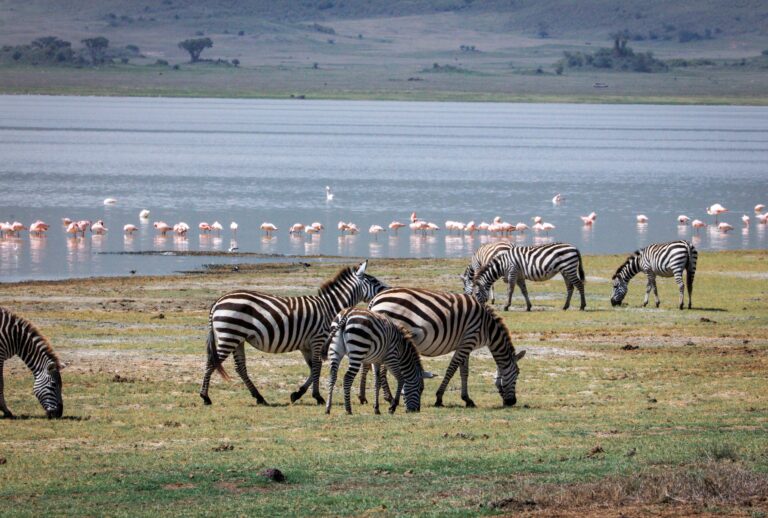
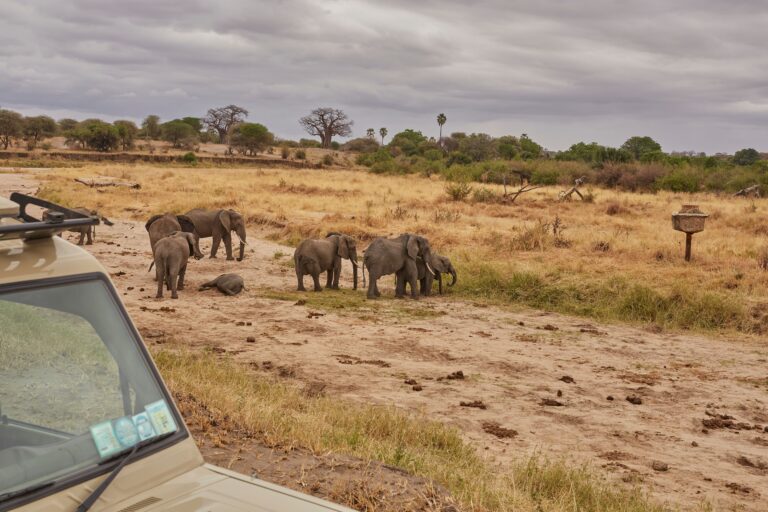
Many travelers also choose to extend their trip beyond the Serengeti to build a fuller Tanzania itinerary. Popular combinations include the Ngorongoro Crater, known for its dense, concentrated wildlife within a single volcanic caldera, and Tarangire National Park, famous for its enormous elephant herds and baobab-studded landscape. Some itineraries also incorporate Lake Manyara National Park for its tree-climbing lions and flamingo-lined shores.
Mobile Camps vs. Permanent Lodges
Mobile tented camps physically relocate several times a year to stay close to the migration’s current position, while permanent lodges remain fixed in one location year-round. Mobile camps generally offer the most reliable proximity to active migration events, since their entire business model is built around following the herds.
Permanent lodges, on the other hand, tend to offer more infrastructure — swimming pools, larger rooms, more elaborate dining — but require more careful season-matching on the traveler’s part, since the lodge itself won’t move if the herds shift unexpectedly. Many experienced safari-goers combine both: a permanent lodge for comfort during part of the trip, and a mobile camp during the peak migration window they most want to witness.
How Camps Decide Where to Position Guests
Camp managers and ground operators rely on a combination of ranger radio networks, guide-to-guide reporting, and historical movement data to decide where guests should be positioned on any given day. This is a constantly updated process rather than a fixed schedule, since the herds themselves don’t follow a printed itinerary.
For example, a camp near the northern Serengeti might reposition its game-drive routes daily during crossing season based on morning reports from rangers stationed at known crossing points. This is also why choosing an operator with strong local relationships and daily communication with camps matters as much as choosing the “right” month — a well-connected guide can pivot a game drive toward active herd movement within hours, while a less-connected operator may be working from outdated information.
Tools and Resources for Tracking the Great Migration
Tracking the Great Migration in real time relies on a combination of ranger reports, migration-tracking apps, and experienced ground operators who communicate directly with camps across the Serengeti-Mara ecosystem. While no tool can predict the migration’s exact position months in advance, several resources help travelers and operators narrow down likely locations as a trip approaches.
Migration tracking apps and services — such as those maintained by conservation organizations and safari operator networks — aggregate recent sightings from rangers, guides, and researchers to produce rough location maps updated weekly during peak season. These are useful for building general expectations, though they should never replace a conversation with your specific ground operator, since app-based reports can lag several days behind actual herd movement.
Ranger and guide radio networks remain the single most reliable real-time source, since guides in the field communicate directly with one another throughout the day. For example, if a crossing begins at a specific point on the Mara River, that information can reach nearby camps within minutes, allowing guests to reach the scene while the crossing is still active.
Historical movement data, compiled from years of park records, gives operators a reasonable baseline for planning trip dates many months in advance, even though it can’t account for a specific year’s rainfall anomalies. This is the data source most commonly used when building the month-by-month framework outlined earlier in this guide.
For travelers who want the most current picture before finalizing dates, working directly with Serengeti Trails Safaris gives you access to on-the-ground reporting from camps across every migration zone, rather than relying solely on generalized seasonal averages.
Planning Your Trip Around the Migration
Planning a Great Migration safari starts with identifying which specific migration event matters most to you, then working backward from that priority to select your travel dates, region, and accommodation style. This sequencing — event first, dates second — prevents the common mistake of locking in travel dates before confirming the herds will actually be nearby.
First, decide what you most want to witness: calving season drama, river crossings, lower costs, or fewer crowds. Second, use the month-by-month breakdown above to identify your target travel window. Third, work with an experienced ground operator who can track real-time herd positioning as your trip approaches, since exact dates shift year to year.
By working through your priorities in this order, you can build a Great Migration itinerary with realistic expectations rather than hoping a generic “best time” recommendation happens to match what you actually want to see. Our team at Serengeti Trails Safaris works directly with camps across every migration zone, which allows us to reposition clients’ itineraries as herd movement data updates closer to departure.
A Practical Planning Checklist
Use the following sequence as a practical starting point once you’re ready to move from research to booking:
- Identify your priority experience — calving season, river crossings, lower costs, or fewer crowds — using the month-by-month breakdown above.
- Set a target travel window, allowing at least a two-week range rather than fixed dates, since this gives your operator flexibility to match real herd movement.
- Choose your accommodation style — mobile camp, permanent lodge, or a mix — based on how important proximity to active migration events is to you.
- Confirm lead time, booking 9-12 months out for peak crossing season or 6+ months out for calving season and green-season travel.
- Build in trip extensions, such as Zanzibar, Ngorongoro, or Tarangire, to round out the itinerary beyond the migration itself.
- Reconfirm dates 60-90 days before departure, since experienced operators can fine-tune your exact camp placement as more current herd-location data becomes available.
Following this sequence removes most of the guesswork from Great Migration planning, since each step narrows your options based on data rather than a generic calendar recommendation.
How to Choose a Ground Operator
Choosing the right ground operator matters as much as choosing the right month, since an operator’s local relationships and real-time information access directly affect whether your itinerary can adapt to actual herd movement. Look for operators who communicate directly with camps across multiple migration zones, rather than those working from a single fixed regional base.
For example, an operator with relationships across the southern plains, Western Corridor, and northern Serengeti can reroute a client’s game drives or even adjust camp bookings if the herds move earlier or later than the historical average suggests. This kind of flexibility is difficult to replicate with a generic online booking platform, which is why most experienced safari travelers work with a specialized operator rather than booking camps independently.
Combining the Migration With Other Experiences
Many travelers extend their Great Migration safari into a broader Tanzania itinerary rather than treating it as a standalone trip. Popular add-ons include a few relaxing days on Zanzibar’s beaches after the safari, or a stop in Arusha National Park near the northern safari circuit’s main gateway city.
Families traveling with children often ask whether the migration is a family-friendly experience — it generally is, especially during calving season when game drives can be shorter and less physically demanding. Our family safaris in Tanzania are designed with flexible pacing and kid-friendly camps in mind. Travelers looking for a broader menu of activities beyond classic game drives, including walking safaris, hot air balloon rides, and cultural visits, can browse our full range of Tanzania safari experiences.
For more general planning resources — including seasonal tips, packing guidance, and destination breakdowns — our planning tips section and destination guides are updated regularly as conditions on the ground change.
Conclusion
The Great Migration doesn’t follow a single calendar date, and that’s exactly what makes it such a rewarding trip to plan carefully. Once you understand that calving season peaks from late January through March, river crossings run from roughly May through October, and the herds circle back south by December, you can match your travel dates to the exact spectacle you’re hoping to witness.
Whether you’re chasing the drama of a Mara River crossing, the tender chaos of calving season, or simply a quieter, more affordable safari with fewer vehicles at every sighting, there’s a right window for your priorities. The herds will be moving somewhere across the Serengeti-Mara ecosystem no matter when you visit — the only question is whether your itinerary is built to meet them there. If you’re ready to start mapping your trip to the exact migration phase you want to see, reach out to our team to begin planning.

2 Comments