
Arusha National Park, Tanzania
A compact but remarkably diverse protected area dominated by Mount Meru — montane forest, open grassland, volcanic landscapes, crater wetlands and the scenic Momella Lakes, all within easy reach of Arusha City.
Quick Facts About Arusha National Park
| Location | Arusha Region, northern Tanzania |
|---|---|
| Park size | Approximately 552 km² |
| Established | 1960 |
| Highest point | Mount Meru – 4,566 m |
| Main landscapes | Montane forest, savanna, crater, wetlands and alpine zones |
| Major landmarks | Mount Meru, Ngurdoto Crater and Momella Lakes |
| Wildlife highlights | Giraffe, buffalo, zebra, warthog, waterbuck, hippo and primates |
| Birdlife | More than 450 species recorded |
| Main activities | Game drives, walking, canoeing, birdwatching and Mount Meru climbing |
| Nearest city | Arusha |
| Commonly combined with | Tarangire, Lake Manyara and Kilimanjaro |
| Best general wildlife season | June to October |
TANAPA describes Arusha National Park as a diverse landscape of mountains, valleys, lakes and plains, with Mount Meru as its dominant feature. Its records also highlight more than 450 bird species and wildlife including giraffe, buffalo, elephant, hippo, leopard, monkeys and waterbuck.
Where Is Arusha National Park?
Arusha National Park is in northern Tanzania, northeast of Arusha City. Its location makes it one of the most accessible national parks on Tanzania's Northern Safari Circuit.
The park is close enough to Arusha to visit on a day trip, while its position also makes it practical to combine with destinations such as Tarangire National Park, Lake Manyara National Park, Ngorongoro Crater and Serengeti National Park.
For travelers arriving through the region, Arusha is the main safari hub, while Kilimanjaro International Airport (JRO) is the principal international gateway for many Northern Circuit itineraries. Travelers considering a climb alongside their safari can read our Kilimanjaro National Park guide.
The exact driving time depends on your starting point and the gate being used, so itineraries should be planned around the specific park entrance rather than assuming a single park-wide distance.
What Is Arusha National Park Famous For?
Arusha National Park is famous for having an unusually wide range of landscapes and experiences within a relatively compact protected area. Its defining attractions are:
- Mount Meru, rising to 4,566 metres
- Ngurdoto Crater, a volcanic crater surrounded by forest
- Momella Lakes, known for flamingos and other waterbirds
- Black-and-white colobus monkeys
- Large giraffe populations
- Montane and highland forests
- Guided walking experiences
- Canoeing on the Momella Lakes
- Excellent birdwatching
- Its proximity to Arusha City
This combination is what separates the park from the larger savanna destinations of northern Tanzania.
Mount Meru in Arusha National Park
Mount Meru is the defining geographical feature of Arusha National Park. At 4,566 metres, it is Tanzania's second-highest mountain and one of East Africa's significant volcanic peaks.
The mountain rises through several ecological zones, creating a dramatic change in vegetation and climate as altitude increases. Lower slopes include forest and wildlife habitat, while higher elevations transition through montane forest, heath and alpine environments.
Mount Meru can be climbed as a multi-day trekking expedition rather than as a conventional game-drive attraction. The mountain is also valuable to visitors who are not climbing because its slopes shape much of the park's scenery.
For experienced trekkers, Mount Meru is often considered alongside Kilimanjaro when planning a northern Tanzania mountain itinerary.
Ngurdoto Crater
Ngurdoto Crater is one of the most recognizable geological features within Arusha National Park.
The volcanic crater is surrounded by steep forested walls, with a wetland and grassland environment on the crater floor. Buffalo and other herbivores can often be seen from viewpoints around the crater, while the surrounding forest supports monkeys and numerous bird species.
Because visitors generally view the crater from designated viewpoints rather than driving across the crater floor, Ngurdoto is as much a landscape and photography stop as it is a conventional wildlife-viewing area.
The crater also demonstrates one of the park's major strengths: volcanic scenery and wildlife exist together within a very small geographical area — a smaller-scale echo of what makes Ngorongoro Crater so distinctive further along the Northern Circuit.
Momella Lakes
The Momella Lakes are a group of shallow lakes in the northeastern part of the park. Their alkaline and freshwater environments support a variety of waterbirds and provide an important setting for wildlife viewing.
Flamingos are among the most recognizable birds associated with the lakes, similar to the seasonal flamingo populations found at Lake Manyara elsewhere on the Northern Circuit. Depending on season and water conditions, visitors may also see pelicans, herons, Egyptian geese and other waterbirds.
The lakes are particularly interesting because they can be explored from different perspectives. Visitors can drive around the lakes, photograph birds and wildlife from the shore, or take part in a guided canoeing experience where permitted.
Mount Meru provides a distinctive backdrop to the lake landscape, making this one of the most photogenic parts of the park.
Wildlife in Arusha National Park
Arusha National Park is not Tanzania's strongest destination for large predator sightings, and it should not be marketed as an alternative to the Serengeti for Big Five viewing. Its strength is habitat diversity and the variety of species that can be observed across forest, grassland, crater and wetland environments.
| Category | Species Commonly Seen |
|---|---|
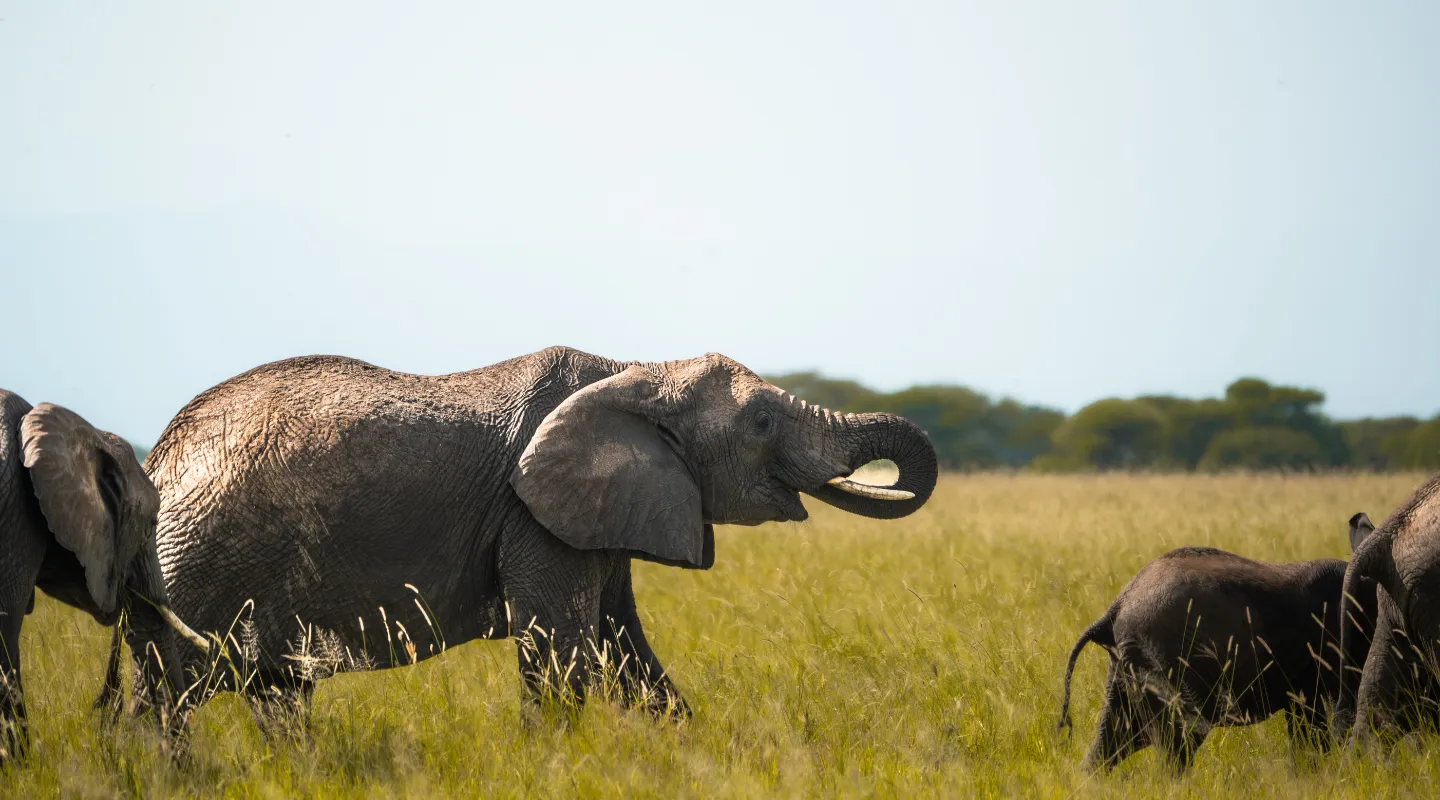
| Large herbivores | Giraffes, African buffalo, zebra, hippos, elephants |
| Primates | Baboons, blue monkeys, black-and-white colobus monkeys |
| Other wildlife | Warthogs, waterbuck, bushbuck, dik-dik, various antelope species |
| Predators | Leopards occur in the ecosystem but sightings are rare — TANAPA specifically notes this |
Giraffes
Giraffes are among the park's signature animals and are frequently associated with the open grasslands and woodland areas around the Momella region. Their presence, combined with Mount Meru in the background, creates some of the park's most recognizable wildlife scenes.
Black-and-White Colobus Monkeys
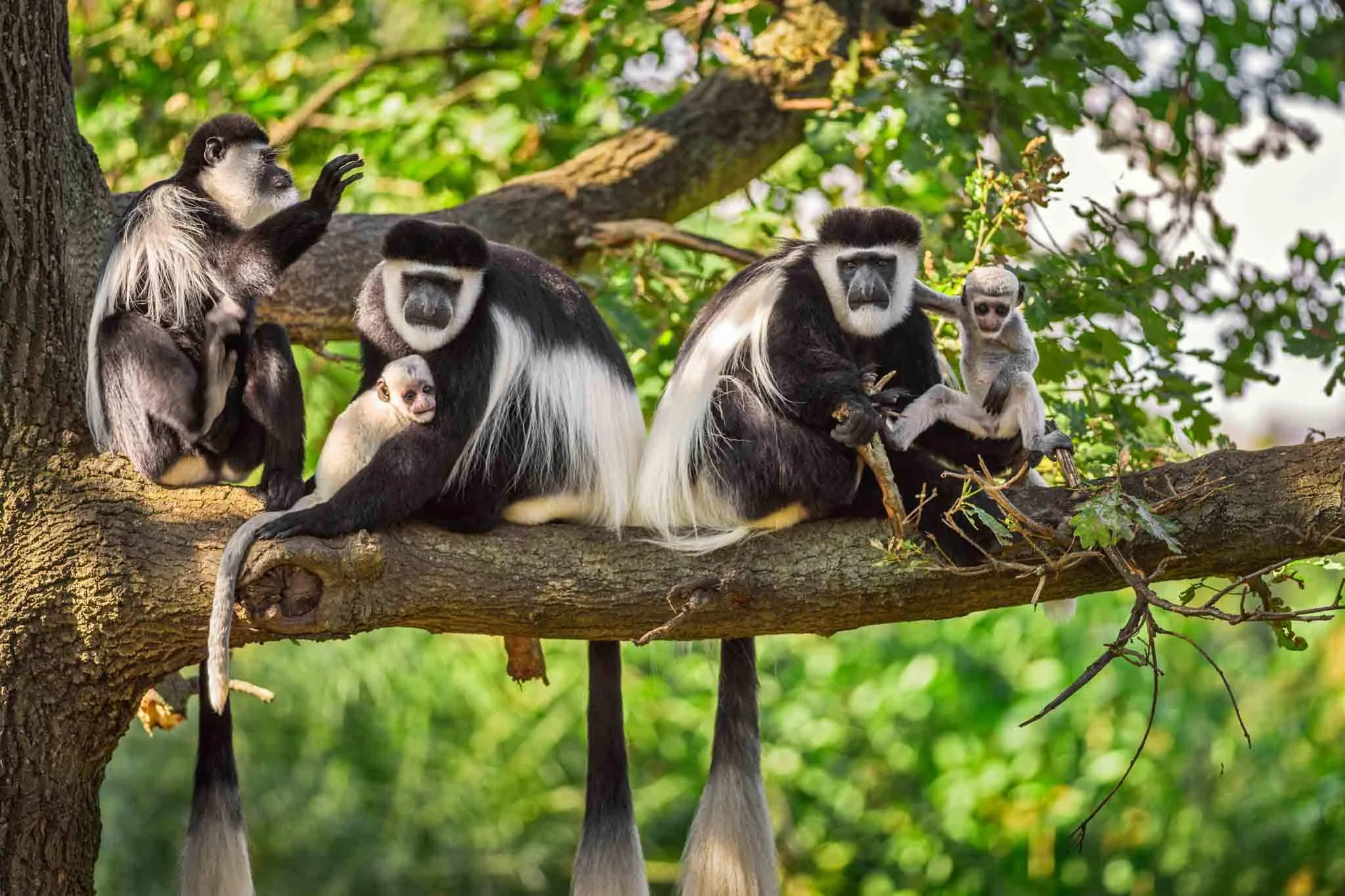
The park's montane forests provide habitat for black-and-white colobus monkeys, making primate viewing one of the experiences that distinguishes Arusha from many of Tanzania's predominantly open-savanna destinations. Forest walks can provide a better opportunity to appreciate these habitats than a conventional game drive alone.
Buffalo and Other Herbivores
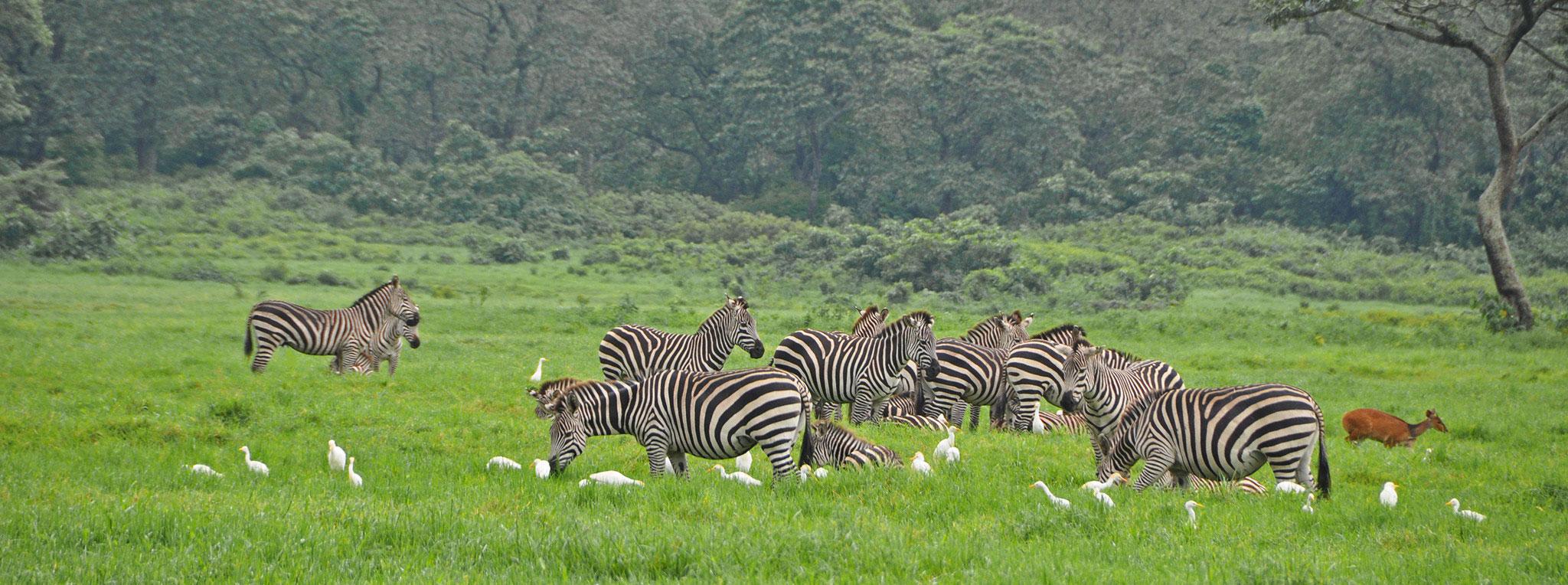
Buffalo, zebra, warthog and waterbuck are among the herbivores visitors may encounter around grasslands, wetlands and the Ngurdoto area. The variety is more important here than sheer animal density: Arusha National Park offers several ecological settings within a short driving distance.
Birds of Arusha National Park
Birdwatching is one of the park's strongest attractions. TANAPA records more than 450 bird species, including waterbirds around the Momella Lakes and forest species associated with the park's montane habitats.
Potential sightings include:
- Greater and lesser flamingos
- African fish eagle
- Turacos
- Trogons
- Hornbills
- Herons
- Egrets
- Raptors
- Migratory waterbirds
For dedicated birdwatchers, the wetter months can be especially rewarding because migratory species add to the resident bird population.
Things to Do in Arusha National Park
| Activity | What to Expect |
|---|---|
| Game Drives | The easiest way to cover the park's main wildlife areas, including grasslands, Ngurdoto Crater viewpoints and Momella Lakes. Less about chasing large predators and more about combining wildlife with scenery, birdlife, forests, crater landscapes and Mount Meru views. |
| Guided Walking | One of the park's defining experiences. A different perspective from a vehicle, particularly around forest, woodland and selected trails — focus on tracks, plants, birds, insects and smaller wildlife. Must follow park regulations and the requirements of the designated guide or ranger. |
| Canoeing on Momella Lakes | A water-level perspective of the lakes and surrounding wildlife, with views toward Mount Meru. One of the experiences that makes Arusha different from the classic vehicle-based safari found elsewhere on the Northern Circuit. |
| Birdwatching | With more than 450 recorded species, an excellent addition to a Tanzania itinerary focused on birds and photography. Spending time in more than one habitat improves the range of sightings. |
| Mount Meru Trekking | The park's major trekking attraction. A summit expedition takes several days and requires proper preparation, permits, guides and park arrangements — treat as a dedicated mountain trek rather than an add-on to a one-day visit. |
Best Time to Visit Arusha National Park
Arusha National Park can be visited throughout the year, but the best period depends on what you want to do.
| Season | What to Expect |
|---|---|
| June – October | Dry conditions, easier wildlife viewing and generally clear weather |
| November – February | Green landscapes, good birding and generally good safari conditions; Mount Meru and Kilimanjaro views can be particularly rewarding when skies are clear |
| March – May | Long rains, lush scenery, fewer visitors and potentially wetter roads; April is generally among the wetter months |
How Long Do You Need in Arusha National Park?
For a general visit, one full day can cover the main park highlights, particularly if the itinerary is planned around the major wildlife and landscape areas.
A longer stay makes more sense if you want to combine several activities such as:
- Game viewing
- Walking
- Canoeing
- Birdwatching
- Photography
- A Mount Meru climb
A one-day visit is therefore practical, but it does not provide enough time for a full Mount Meru trekking experience.
How to Get to Arusha National Park
The park is most conveniently accessed from Arusha City by road. Many visitors travel from Arusha to the appropriate park gate before beginning their game drive, walking experience or other activity. Kilimanjaro International Airport is also commonly used by international travelers arriving for Northern Circuit safaris.
Because Arusha National Park has different access points and activities are concentrated in different parts of the park, your route should be selected according to what you want to see rather than simply choosing the nearest gate.
Where to Stay Near Arusha National Park
Visitors can stay in Arusha City, around the Usa River area, or closer to the park depending on their itinerary.
Options range from city hotels and lodges to properties positioned close to the Mount Meru and Momella areas. Hatari Lodge, for example, describes itself as being inside the national park boundary along the Mount Meru elephant corridor. Compare our budget, mid-range and luxury safari options to see what accommodation level fits your Northern Circuit itinerary.
The right location depends on whether your priority is:
- Easy access to Arusha City
- Early park access
- Mount Meru trekking
- A longer stay in the park environment
- Combining Arusha National Park with another Northern Circuit destination
Is Arusha National Park Worth Visiting?
Yes, particularly if you want more than a conventional game drive.
Arusha National Park is worth adding to a Tanzania itinerary for its Mount Meru scenery, diverse habitats, giraffes, colobus monkeys, birdlife, Ngurdoto Crater, Momella Lakes, walking and canoeing opportunities.
Arusha National Park offers something different: a compact, highly varied destination where wildlife, volcanic landscapes, forest, lakes and mountain experiences can be combined in one visit.
Arusha National Park on a Tanzania Northern Circuit
Arusha National Park works especially well at the beginning or end of a Northern Tanzania itinerary. A broader route might combine the park with:
Arusha → Tarangire → Lake Manyara → Ngorongoro → Serengeti
or use Arusha National Park as a shorter nature experience before a Mount Meru climb or another safari destination. It also pairs naturally with our family safaris, which often value a gentler introduction to Tanzania before the longer game-drive days further along the circuit.
Its proximity to Arusha also makes it useful for travelers with limited time who want to experience a Tanzanian national park without committing several days to a remote destination.
Explore nearby destinations:
Frequently Asked Questions About Arusha National Park
Is Arusha National Park in Tanzania?
How big is Arusha National Park?
What is Arusha National Park famous for?
Can you see the Big Five in Arusha National Park?
Can you visit Arusha National Park in one day?
Can you hike in Arusha National Park?
Can you go canoeing in Arusha National Park?
What is the best month to visit Arusha National Park?
How far is Arusha National Park from Arusha City?
Plan Your Visit to Arusha National Park
Rather than competing with the Serengeti's predator-rich plains or Tarangire's elephant concentrations, Arusha National Park complements them with Mount Meru, crater scenery, montane forest, Momella Lakes and activities that take you beyond the safari vehicle.
Get a Free Quote