
Ngorongoro Crater, Tanzania
Tanzania's most concentrated wildlife destination — a vast volcanic caldera within the Ngorongoro Conservation Area, known for its wildlife-rich floor and dramatic geology.
Quick Facts About Ngorongoro Crater
| Location | Northern Tanzania, within the Ngorongoro Conservation Area |
|---|---|
| Nearest major safari city | Arusha |
| Crater floor | About 260 km² |
| Crater walls | Up to about 600 m high |
| Conservation area | About 8,292 km² |
| Best known for | High wildlife density and Big Five viewing |
| Wildlife highlight | Black rhinoceros |
| Main safari activity | Crater-floor game drive |
| UNESCO status | Ngorongoro Conservation Area World Heritage Site |
| Commonly combined with | Tarangire and Serengeti |
The wider Ngorongoro Conservation Area covers approximately 809,440 hectares and extends far beyond the crater itself. It includes highland plains, forests, savanna, archaeological sites and the route toward the Serengeti.
Where Is Ngorongoro Crater?
Ngorongoro Crater is in northern Tanzania, approximately 180 km by road from Arusha. It sits within the Ngorongoro Conservation Area between the Great Rift Valley and the Serengeti ecosystem.
For most travelers, the crater is visited as part of a Northern Tanzania safari. A typical route can connect Arusha with Tarangire National Park, Ngorongoro and Serengeti National Park.
The drive from Arusha to the Ngorongoro area takes roughly three hours under normal conditions, although actual journey times vary with road conditions, stops and wildlife viewing. From the Seronera area of the Serengeti, the crater is approximately 140 km away by road.
Kilimanjaro International Airport (JRO) is the main international gateway commonly used for Northern Tanzania safaris. Travellers considering a mountain add-on can read our Kilimanjaro National Park guide.
What Makes Ngorongoro Crater Special?
Ngorongoro is different from Tanzania's large open-plain national parks because its wildlife-rich environment is enclosed by the walls of an ancient volcanic caldera.
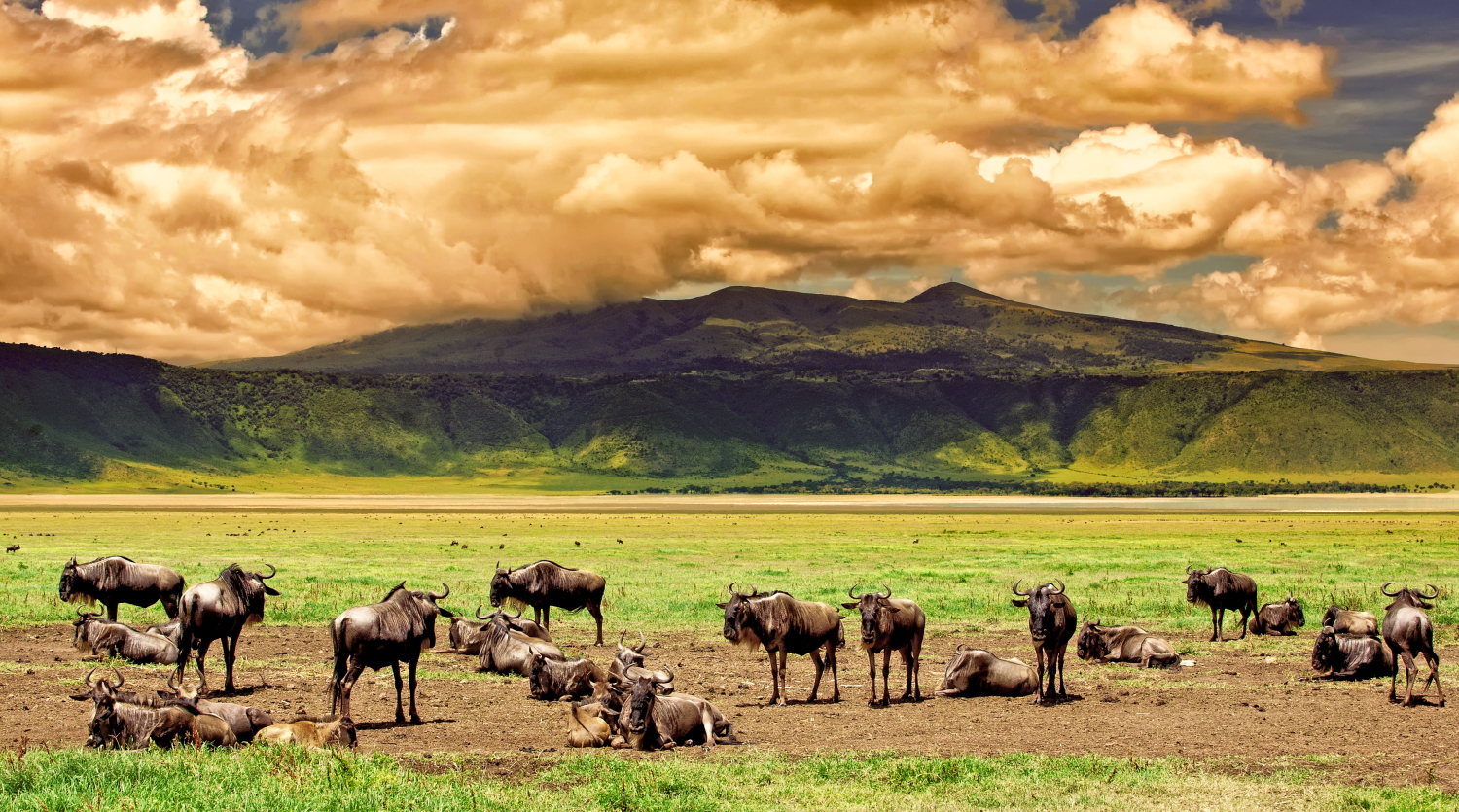
The crater floor contains a combination of grassland, woodland, wetlands, marshes and Lake Magadi. These habitats support large concentrations of herbivores and predators in a relatively compact area.
The crater covers about 260 km², while its walls rise to roughly 600 metres in places. This geography helps create a year-round wildlife environment and makes it possible to see a wide range of species during a single game drive.
The wider conservation area is even more significant. UNESCO recognizes Ngorongoro for its exceptional biodiversity, geological importance, archaeological evidence and cultural landscape.
Wildlife in Ngorongoro Crater
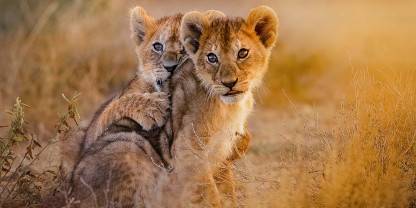
Wildlife is the main reason most visitors include Ngorongoro in a Tanzania safari. The crater supports an unusually high concentration of large mammals, making it one of the strongest locations in Tanzania for seeing several major safari species in a relatively short period.
| Category | Species Commonly Seen |
|---|---|
| Predators | Lions, spotted hyenas, jackals |
| Large herbivores | African buffalo, wildebeest, plains zebra, elephants, hippos |
| Rare / endangered | Black rhinoceros |
| Other wildlife | Gazelles, warthogs, waterbuck |
The black rhino is one of the most sought-after animals in the crater. Sightings are never guaranteed, but Ngorongoro is regarded as one of Tanzania's important places for seeing this endangered species. Lions and spotted hyenas are also regularly associated with the crater's wildlife experience, and buffalo and large herds of grazing animals are common across the open areas of the floor.
One useful distinction for visitors is that giraffes are not normally seen on the crater floor. They are present elsewhere in the wider Ngorongoro Conservation Area, but the steep crater walls make the floor unsuitable for regular giraffe movement.
Wildlife sightings remain unpredictable. Even in a high-density destination such as Ngorongoro, no ethical safari operator should promise a specific animal encounter.
Ngorongoro Crater Game Drives
The main activity inside the crater is a guided game drive on the crater floor. Most visitors descend from the crater rim in the morning and spend several hours exploring the grasslands, wetlands and woodland areas before ascending again.
Early starts are useful because wildlife activity can be strong in the cooler morning hours, while arriving early can also help travelers make better use of their limited time inside the crater.
The game drive is different from a Serengeti safari. The Serengeti offers enormous open landscapes and the possibility of spending long periods exploring different areas. Ngorongoro is more compact, with wildlife concentrated within the crater environment — making it particularly attractive to travelers who want to see a broad range of wildlife within a relatively short visit.
What About Safari Vehicles?
Ngorongoro has specific operating rules, so travelers should not assume that the vehicle experience is identical to every other Tanzanian safari destination. Recent traveler discussions consistently note that standard crater vehicles are enclosed rather than the fully open-sided vehicles sometimes used elsewhere in Africa. The roof can still provide excellent elevated viewing and photography opportunities.
Best Time to Visit Ngorongoro Crater
Ngorongoro Crater can be visited throughout the year. The best time depends on whether your priority is wildlife visibility, weather, scenery, birding or fewer visitors.
| Period | What to Expect |
|---|---|
| June – October (Dry Season) | Widely regarded as one of the strongest periods for wildlife viewing. Grass is generally shorter, rainfall is lower and animals can be easier to spot. Also part of the busiest safari period, so popular lodges and services can become busy. |
| November – May (Green Season) | Wetter months bring greener vegetation and more dramatic scenery. November through April can be productive for birdwatching thanks to migratory birds. April and May are typically quieter, though rainfall can be more frequent. |
There is therefore no single "bad" month for Ngorongoro. Wildlife viewing remains possible throughout the year.
Is Ngorongoro Crater Worth Visiting?
For most first-time Tanzania safari travelers, yes — particularly if seeing a high concentration of wildlife is a priority. The strongest reason to visit is not simply the crater scenery. It is the combination of:
- High wildlife density
- Strong chances of seeing predators
- Opportunities to see black rhino
- Big Five potential
- Distinctive volcanic geography
- Compact game-viewing area
- Easy combination with Serengeti and other Northern Circuit destinations
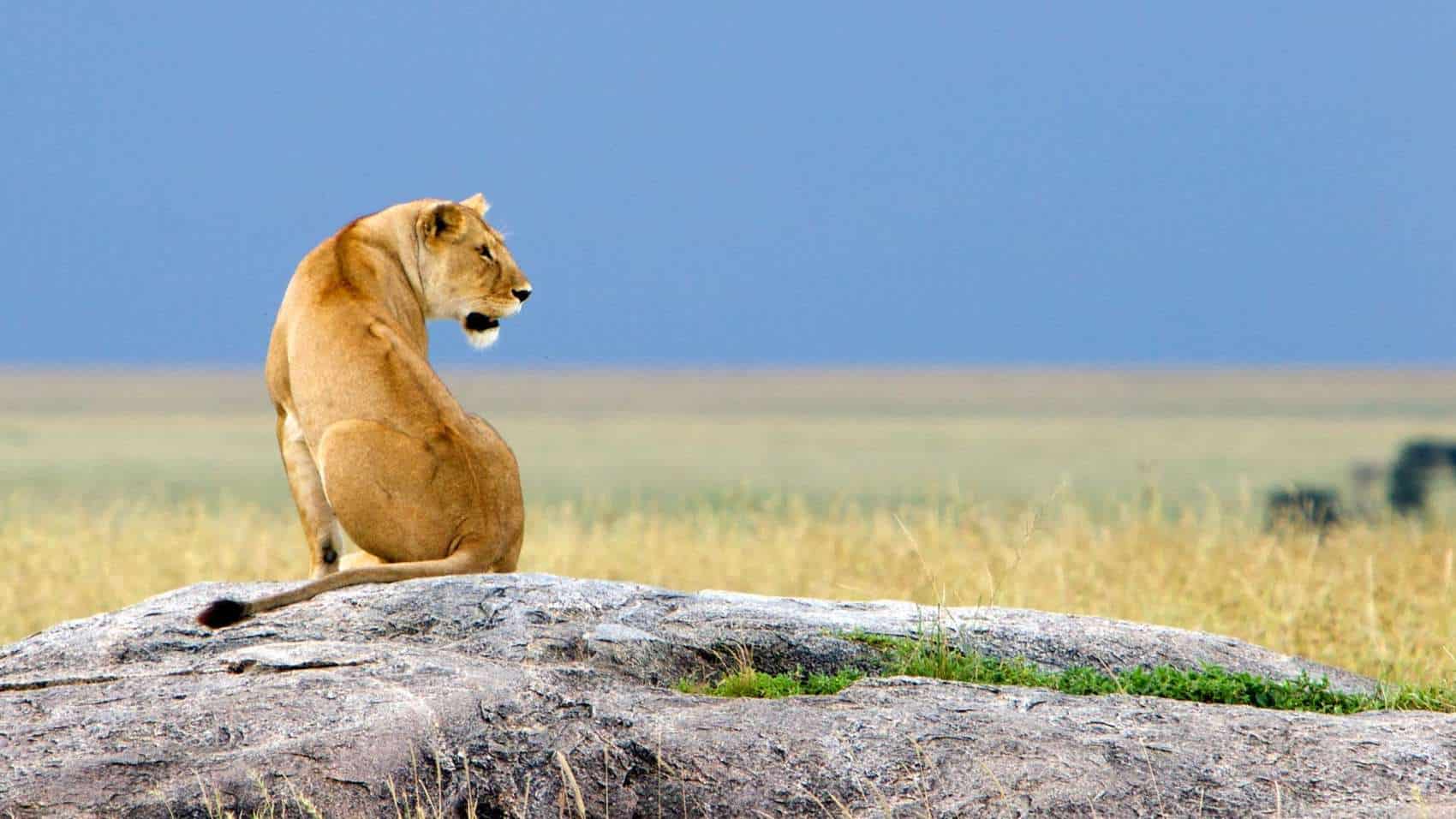
However, Ngorongoro has a genuine trade-off: crowding. Recent traveler reviews and discussions frequently praise the wildlife and scenery while criticizing congestion around popular sightings. SafariBookings' current review database gives Ngorongoro an overall user rating of 4.8/5, with particularly strong scores for wildlife and scenery, but recent travelers also describe busy viewing areas.
That means Ngorongoro and Serengeti should not be treated as interchangeable destinations. The crater is excellent for concentrated wildlife viewing; the Serengeti is better suited to travelers looking for expansive landscapes, longer game drives and a greater sense of space.
Ngorongoro Conservation Area Beyond the Crater
The crater is only one part of the larger Ngorongoro Conservation Area. The wider landscape includes highland forests, grasslands, volcanic craters, archaeological sites and communities.
Olduvai Gorge
Olduvai Gorge is one of East Africa's most important archaeological locations. Research in the wider Ngorongoro landscape has produced evidence spanning millions of years of human evolution. UNESCO identifies the area's archaeological record as one of its major reasons for World Heritage status, alongside biodiversity, geology and cultural values.
Maasai Culture
The Ngorongoro Conservation Area is also a living cultural landscape. Semi-nomadic Maasai pastoralists have traditionally lived alongside wildlife within the conservation area. Cultural tourism products in the wider area include Maasai cultural experiences, traditional art and performances, archaeological sites and other heritage attractions.
Visitors should approach cultural experiences respectfully and choose activities that provide genuine community participation and fair local benefit.
Ngorongoro Crater and the Serengeti
Ngorongoro and Serengeti are often combined because they provide contrasting safari experiences.
| Destination | Character |
|---|---|
| Ngorongoro | Compact, wildlife-dense and dominated by the dramatic crater landscape |
| Serengeti | Much larger, known for expansive plains, diverse habitats and the annual movements of wildebeest, zebra and other grazing animals |
A combined Serengeti and Ngorongoro safari therefore makes sense for travelers who want both concentrated game viewing and the broader wilderness experience of the Serengeti. The two destinations are also geographically connected through the Northern Tanzania safari route, making Ngorongoro a practical stop between Arusha and Serengeti for many overland itineraries.
Where to Stay Near Ngorongoro Crater
Accommodation choices are concentrated around the crater rim, Ngorongoro Highlands and nearby Karatu area.
Staying close to the crater can be useful for travelers who want an early descent to the crater floor. Lodges and camps on or near the rim can also provide access to views across the caldera.
Karatu provides another accommodation base outside the crater area and is often used by travelers combining Ngorongoro with other Northern Circuit destinations.
The right location depends on your safari route, budget and whether early access to the crater is more important than lodge facilities or a lower accommodation cost. Compare our budget, mid-range and luxury options to see what's typically included at each accommodation level.
How Many Days Do You Need for Ngorongoro?
A crater game drive can be completed within one day, but the amount of time you should allocate depends on the wider safari itinerary.
For travelers with limited time, one full crater game-drive day can provide a strong introduction to the destination. For a more relaxed Northern Tanzania safari, staying around the crater for one or two nights allows more time for the surrounding highlands and reduces the need to rush between destinations.
The bigger mistake is usually trying to fit too many destinations into too few days. Recent safari travelers have specifically highlighted long driving days and the value of allowing more time at each destination rather than treating the trip as a checklist.
Planning a Ngorongoro Safari
A Ngorongoro safari works particularly well as part of a Northern Tanzania itinerary rather than as an isolated destination. Popular combinations include:
| Combination | Best For |
|---|---|
| Tarangire + Ngorongoro + Serengeti | A classic Northern Circuit safari |
| Serengeti + Ngorongoro | Travelers prioritizing major wildlife destinations |
| Ngorongoro + Zanzibar | A safari-and-beach holiday |
| Tarangire + Ngorongoro | Shorter Tanzania safari itineraries |
The ideal route depends on your travel dates, starting point, safari style and how much time you want to spend driving versus exploring. Our family safaris and honeymoon safaris both commonly include Ngorongoro as a core stop. For travelers interested in the crater specifically, the most important planning decision is not simply choosing a "Ngorongoro safari package." It is deciding where Ngorongoro fits within the rest of the Tanzania safari route.
Explore nearby destinations:
Frequently Asked Questions About Ngorongoro Crater
Is Ngorongoro Crater a national park?
How big is Ngorongoro Crater?
Where is Ngorongoro Crater located?
What animals can you see in Ngorongoro Crater?
Can you see the Big Five in Ngorongoro?
What is the best month to visit Ngorongoro Crater?
How far is Ngorongoro Crater from Arusha?
Is Ngorongoro Crater crowded?
Is Ngorongoro Crater worth visiting?
Explore Tanzania's Northern Safari Destinations
Ngorongoro works best when considered as part of a wider Tanzania safari — combined with the Serengeti's expansive plains and Tarangire's elephants and baobabs. Tell us your dates and we'll build the route around them.
Get a Free Quote